Preston Robert Tisch Brain Tumor Center, Duke University Medical Center, Durham, NC, USA.
Department of Neurosurgery, Duke University Medical Center, Durham, NC, USA.
Nat Med. 2018 Sep;24(9):1459-1468. doi: 10.1038/s41591-018-0135-2. Epub 2018 Aug 13.
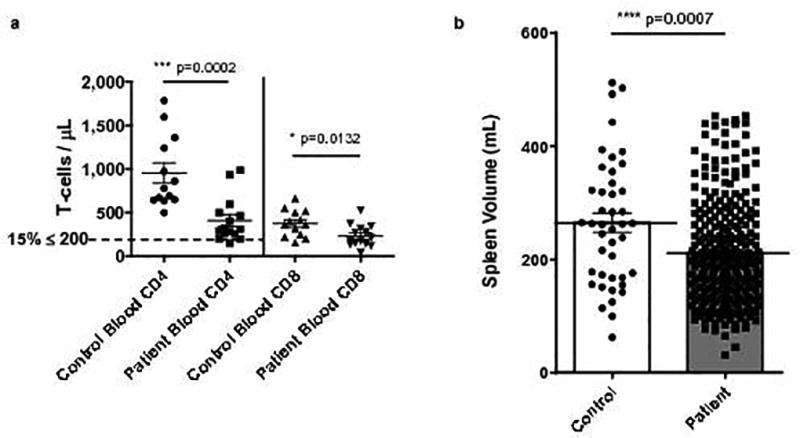
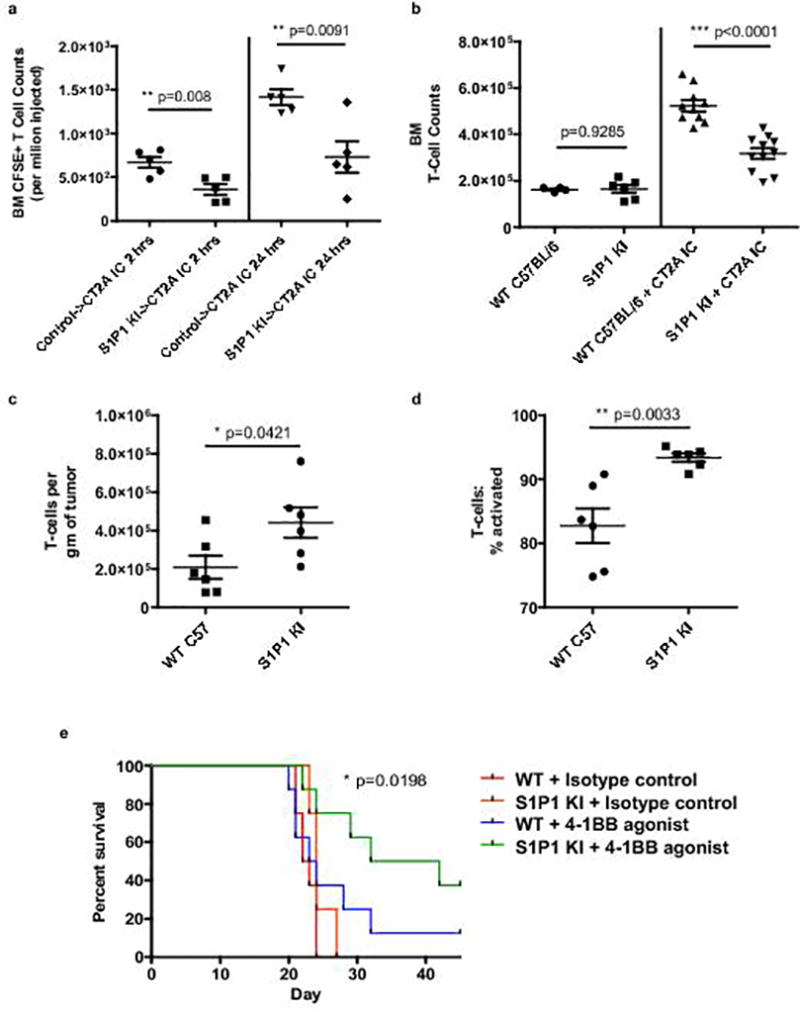
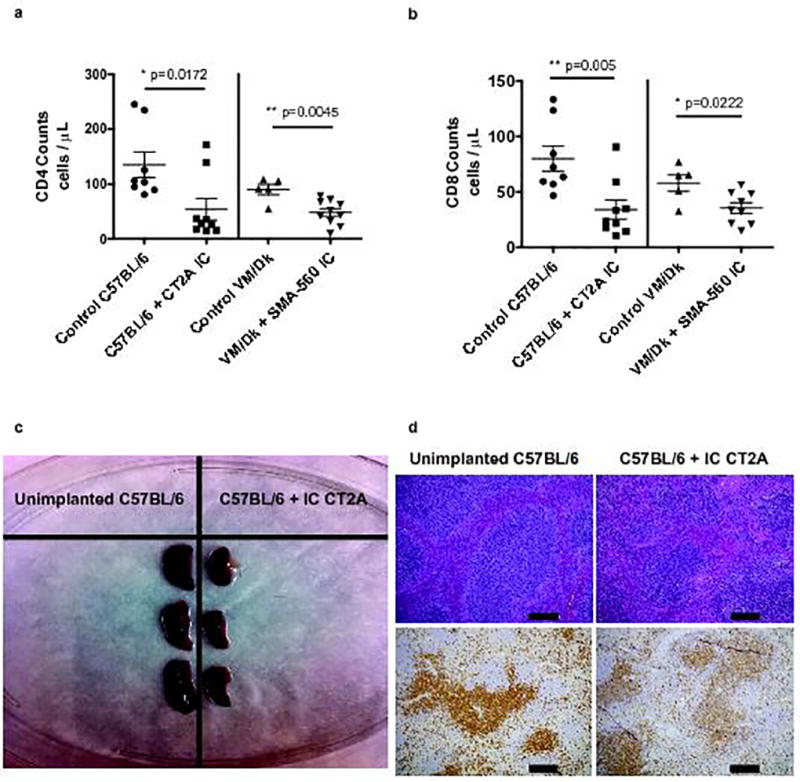
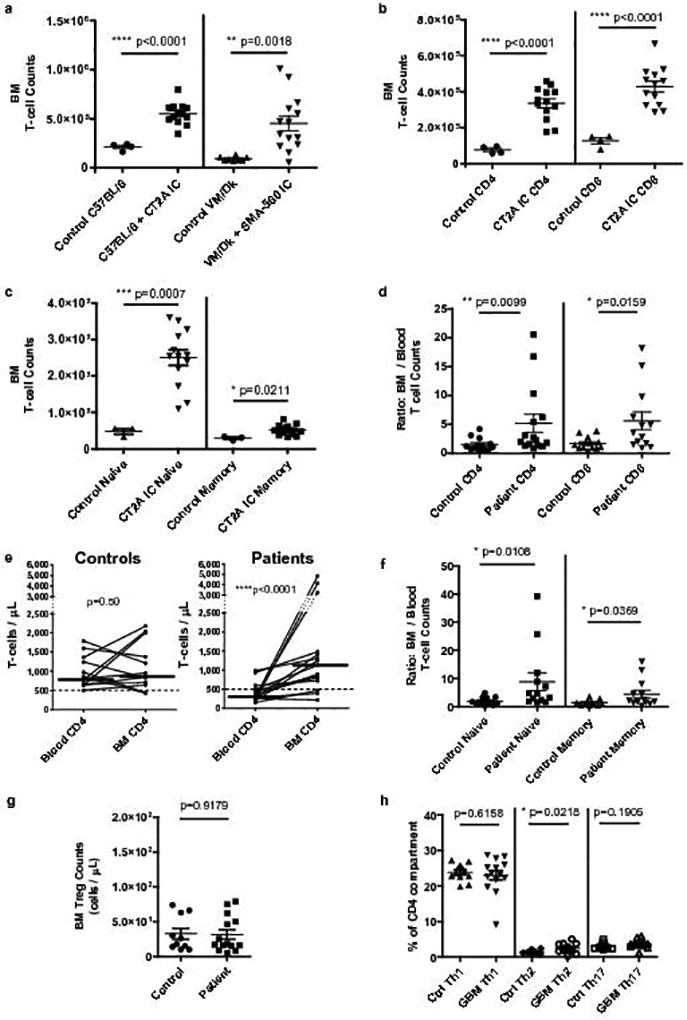
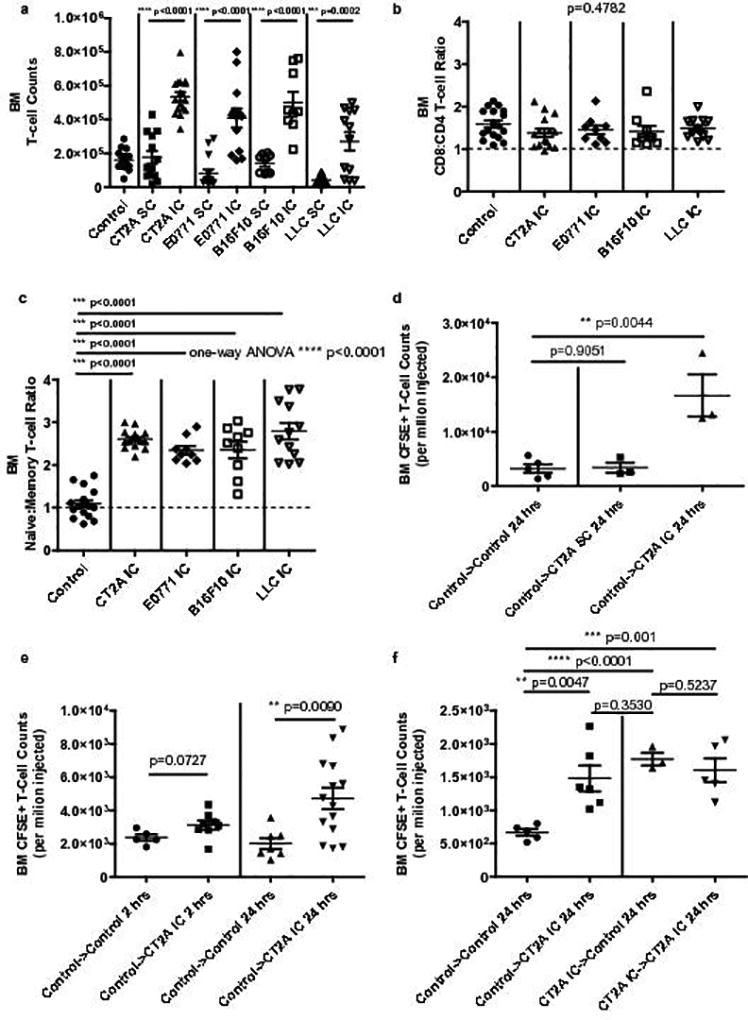
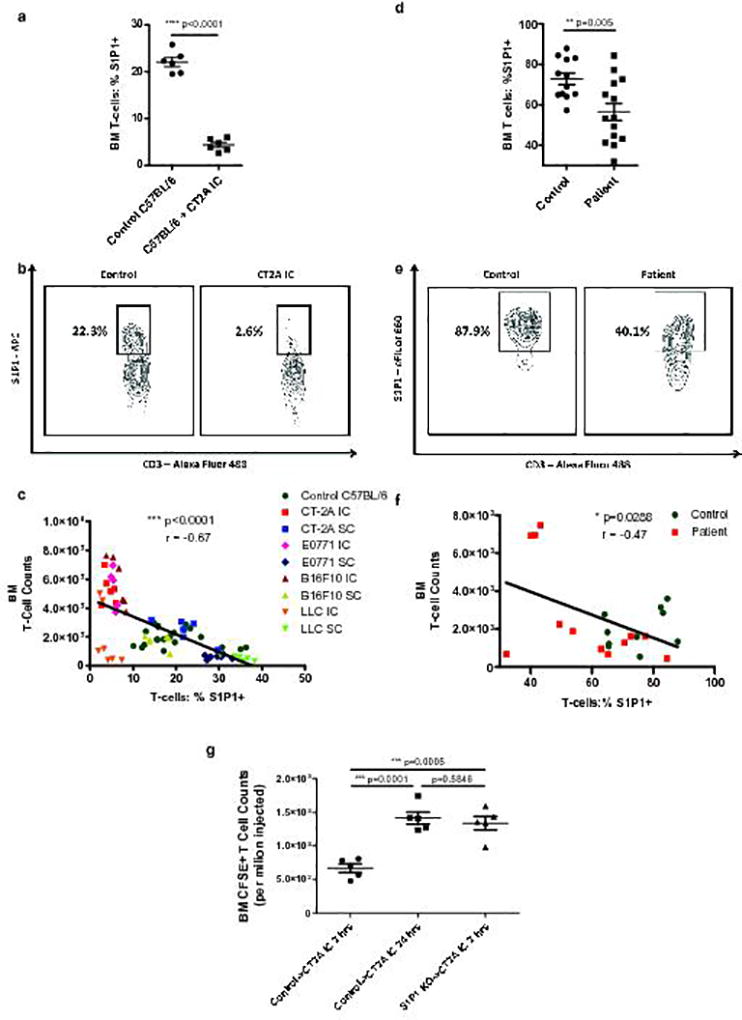
T cell dysfunction contributes to tumor immune escape in patients with cancer and is particularly severe amidst glioblastoma (GBM). Among other defects, T cell lymphopenia is characteristic, yet often attributed to treatment. We reveal that even treatment-naïve subjects and mice with GBM can harbor AIDS-level CD4 counts, as well as contracted, T cell-deficient lymphoid organs. Missing naïve T cells are instead found sequestered in large numbers in the bone marrow. This phenomenon characterizes not only GBM but a variety of other cancers, although only when tumors are introduced into the intracranial compartment. T cell sequestration is accompanied by tumor-imposed loss of S1P1 from the T cell surface and is reversible upon precluding S1P1 internalization. In murine models of GBM, hindering S1P1 internalization and reversing sequestration licenses T cell-activating therapies that were previously ineffective. Sequestration of T cells in bone marrow is therefore a tumor-adaptive mode of T cell dysfunction, whose reversal may constitute a promising immunotherapeutic adjunct.
T 细胞功能障碍导致癌症患者的肿瘤免疫逃逸,在胶质母细胞瘤(GBM)中尤为严重。除其他缺陷外,T 细胞减少是特征性的,但通常归因于治疗。我们揭示,即使是未经治疗的患者和患有 GBM 的小鼠也可能拥有艾滋病水平的 CD4 计数,以及收缩、T 细胞缺陷的淋巴器官。相反,大量未成熟的 T 细胞被发现被隔离在骨髓中。这种现象不仅存在于 GBM 中,而且存在于多种其他癌症中,但只有当肿瘤被引入颅内时才会出现。T 细胞隔离伴随着肿瘤从 T 细胞表面剥夺 S1P1,并在阻止 S1P1 内化后可逆转。在 GBM 的小鼠模型中,阻止 S1P1 内化和逆转隔离允许以前无效的 T 细胞激活疗法。因此,T 细胞在骨髓中的隔离是 T 细胞功能障碍的一种肿瘤适应性模式,其逆转可能构成一种有前途的免疫治疗辅助手段。