Department of Internal Medicine, Chonbuk National University Medical School, Jeonju, Jeollabuk‑do 54907, Republic of Korea.
Mol Med Rep. 2018 Oct;18(4):3665-3672. doi: 10.3892/mmr.2018.9350. Epub 2018 Aug 3.
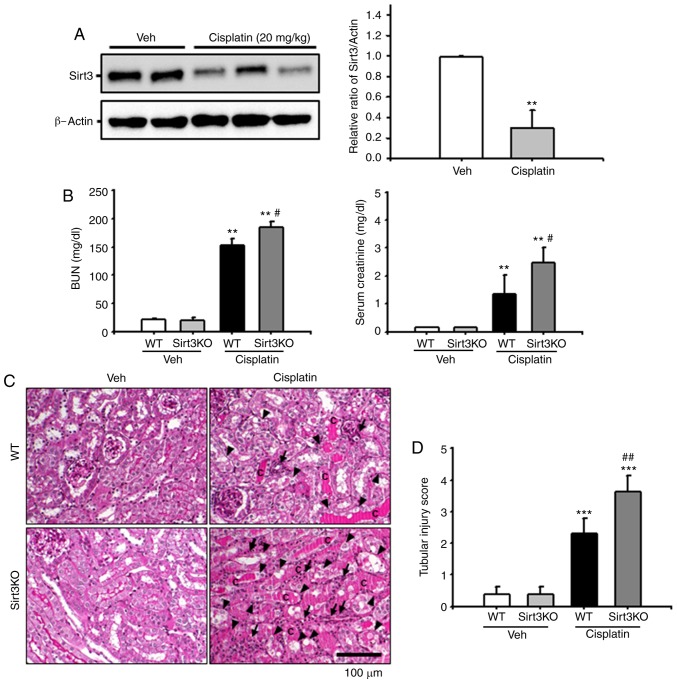
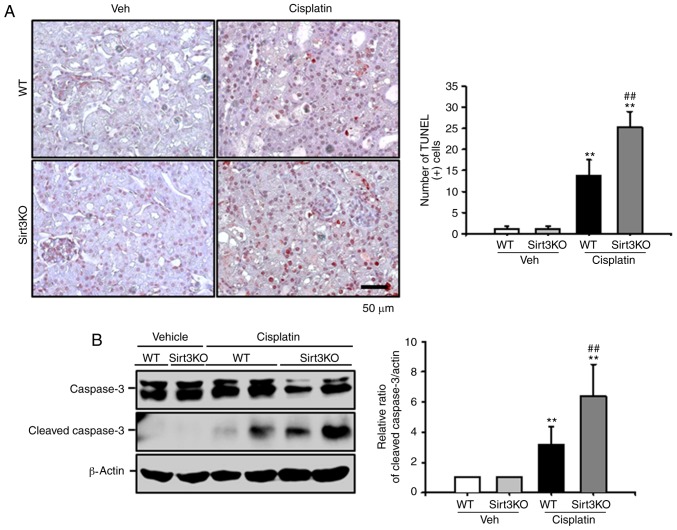
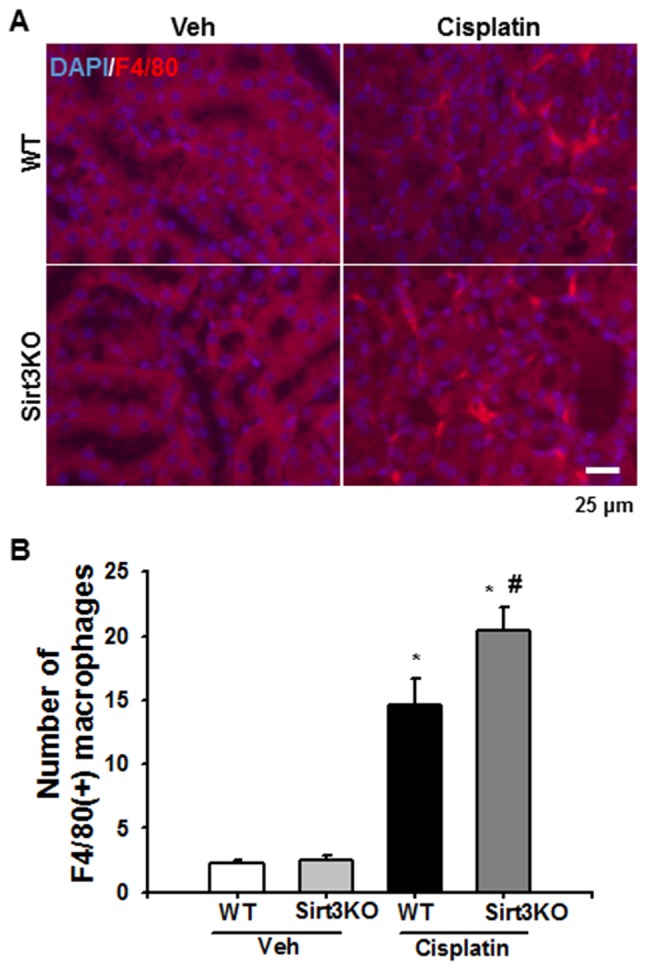
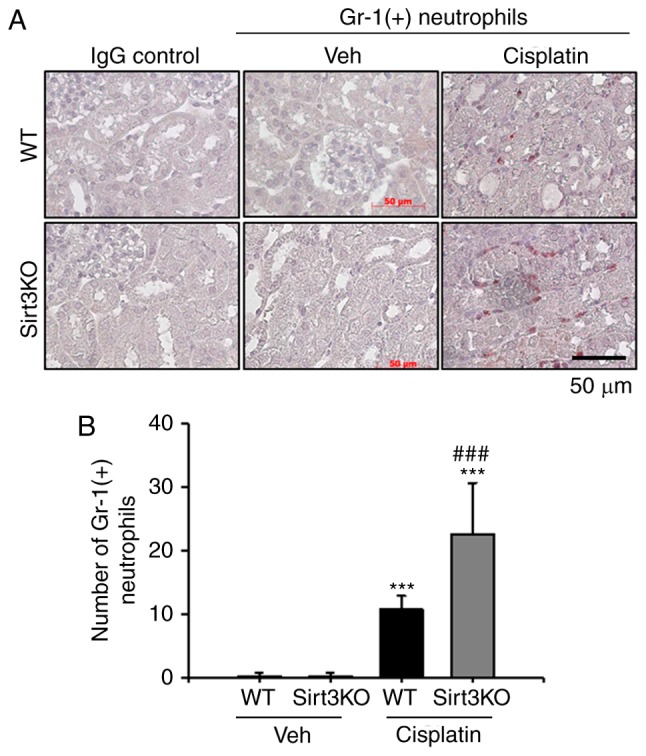
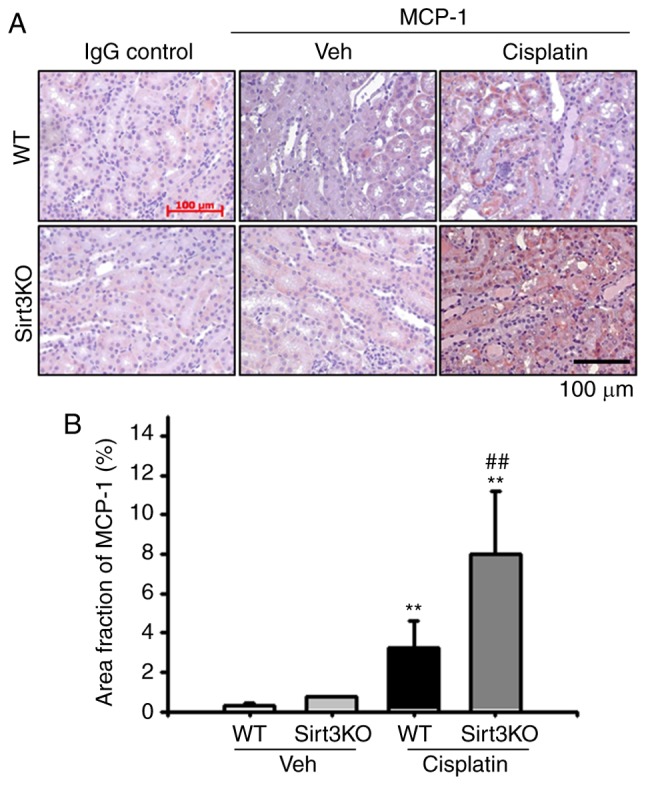
Cisplatin‑based chemotherapy is commonly used in the treatment of solid tumors; however, this agent is limited by its adverse effects on normal tissues, including the kidneys, ears and peripheral nerves. Mechanisms of cisplatin nephrotoxicity are proposed to involve oxidative stress, inflammation, cellular apoptosis and cell cycle regulation. Sirtuin 3 (Sirt3) is a member of the sirtuin family of NAD+‑dependent enzymes with homology to Saccharomyces cerevisiae gene silent information regulator 2. Sirt3 is located in mitochondria and is involved in mitochondrial energy metabolism and function; however, the role of Sirt3 in cisplatin nephrotoxicity remains unclear. In the present study, whether Sirt3 has anti‑inflammatory and anti‑apoptotic effects on cisplatin‑induced nephrotoxicity was investigated in mice. Sirt3 knockout mice (Sirt3(‑/‑)) and corresponding wild type mice were employed in the present study. Cisplatin nephrotoxicity was induced by intraperitoneal injection of cisplatin (20 mg/kg). After 3 days following cisplatin treatment, blood and kidney tissues were harvested. Renal function and histology were evaluated. Tubular apoptosis, cell adhesion molecule expression, and inflammatory cells were evaluated by immunohistochemistry and western blot analysis. Following the induction of cisplatin nephrotoxicity, renal function was significantly aggravated in Sirt3 knockout (KO) mice. Tubular injury and inflammatory cell infiltration were significantly increased in Sirt3KO mice compared with wild type mice. Terminal deoxynucleotidyl transferase‑mediated dUTP nick‑end label‑positive tubular cells and renal monocyte chemoattractant protein‑1 expression levels were increased in Sirt3KO mice compared with in wild type mice. In summary, the absence of Sirt3 aggravated in renal injury by increasing renal inflammation and tubular apoptosis. The results of the present study suggested that Sirt3 may have an important role in cisplatin‑induced nephrotoxicity.
顺铂为基础的化疗通常用于治疗实体瘤;然而,该药物受到其对正常组织的不良影响的限制,包括肾脏、耳朵和周围神经。顺铂肾毒性的机制被认为涉及氧化应激、炎症、细胞凋亡和细胞周期调节。沉默信息调节因子 2 同源物 3(Sirt3)是烟酰胺腺嘌呤二核苷酸(NAD+)依赖性酶家族的成员。Sirt3 位于线粒体中,参与线粒体能量代谢和功能;然而,Sirt3 在顺铂肾毒性中的作用尚不清楚。在本研究中,研究人员在小鼠中研究了 Sirt3 是否对顺铂诱导的肾毒性具有抗炎和抗凋亡作用。本研究采用 Sirt3 敲除(Sirt3(-/-))小鼠和相应的野生型小鼠。通过腹腔注射顺铂(20mg/kg)诱导顺铂肾毒性。顺铂处理 3 天后,采集血液和肾脏组织。评估肾功能和组织学。通过免疫组织化学和 Western blot 分析评估肾小管凋亡、细胞黏附分子表达和炎症细胞。在诱导顺铂肾毒性后,Sirt3 敲除(KO)小鼠的肾功能明显加重。与野生型小鼠相比,Sirt3KO 小鼠的肾小管损伤和炎症细胞浸润明显增加。Sirt3KO 小鼠的末端脱氧核苷酸转移酶介导的 dUTP 缺口末端标记阳性肾小管细胞和肾单核细胞趋化蛋白-1 表达水平增加。综上所述,Sirt3 的缺失通过增加肾脏炎症和肾小管凋亡加重了肾脏损伤。本研究结果表明,Sirt3 在顺铂诱导的肾毒性中可能具有重要作用。