Department of Connectomics, Max Planck Institute for Brain Research, Frankfurt, Germany.
Donders Institute, Faculty of Science, Radboud University, Nijmegen, Netherlands.
Elife. 2018 Aug 14;7:e38976. doi: 10.7554/eLife.38976.
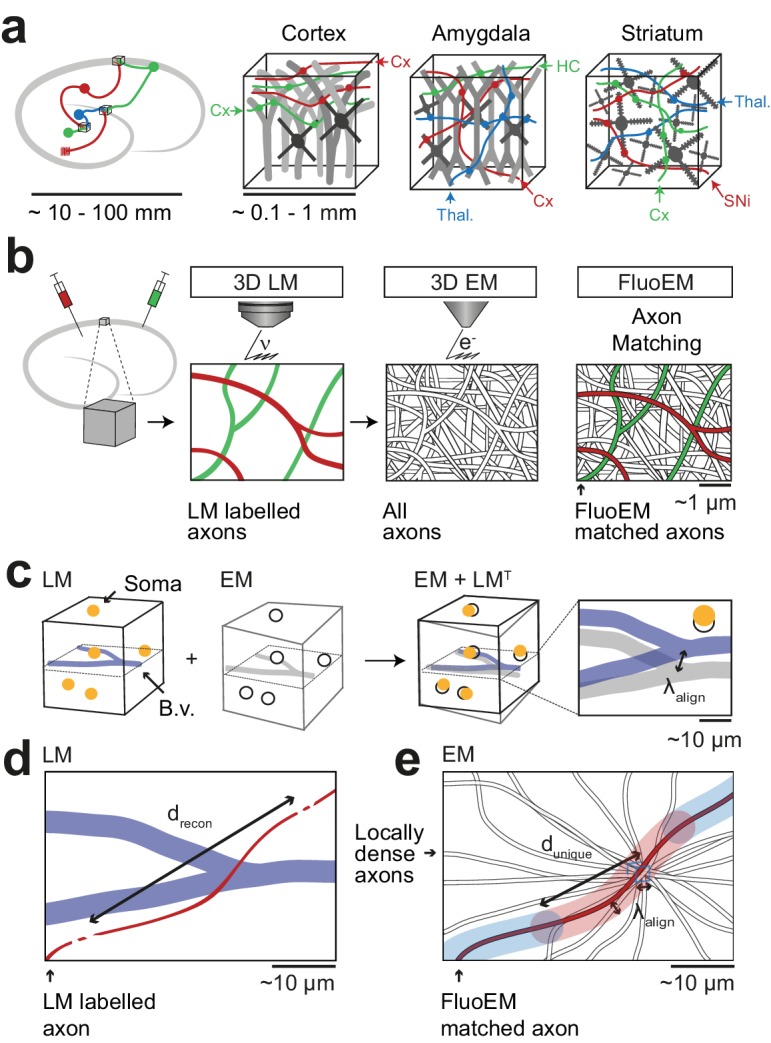
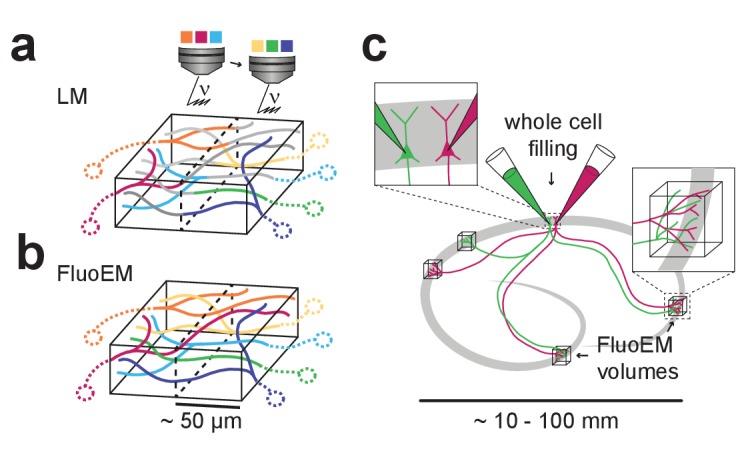
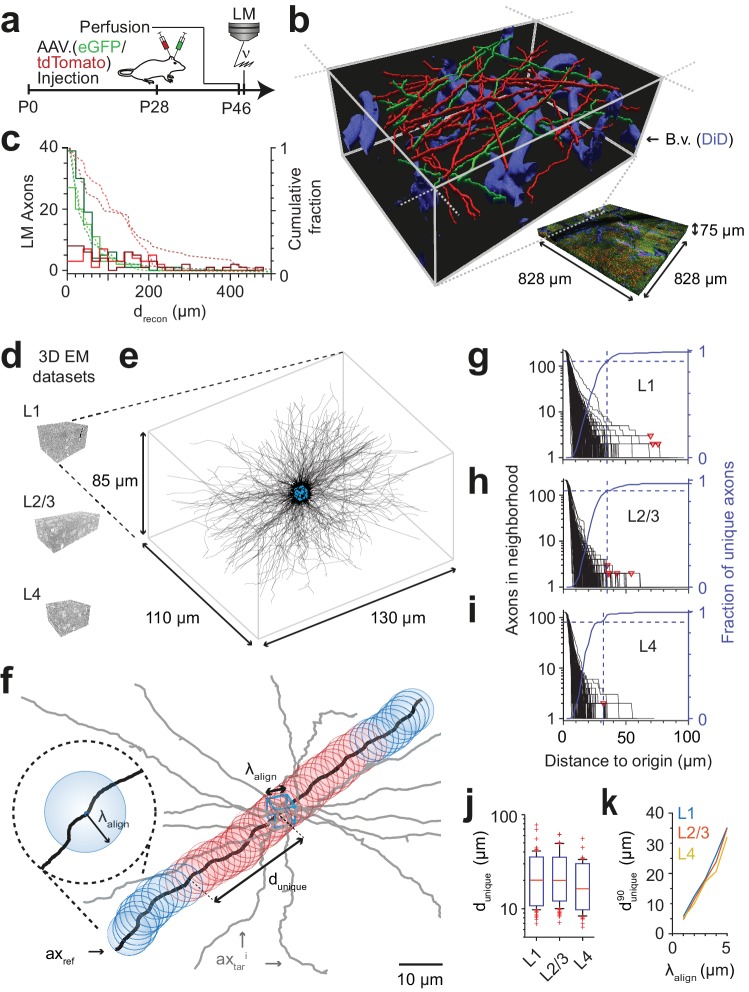
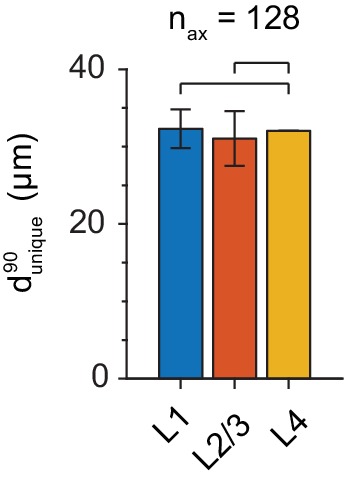
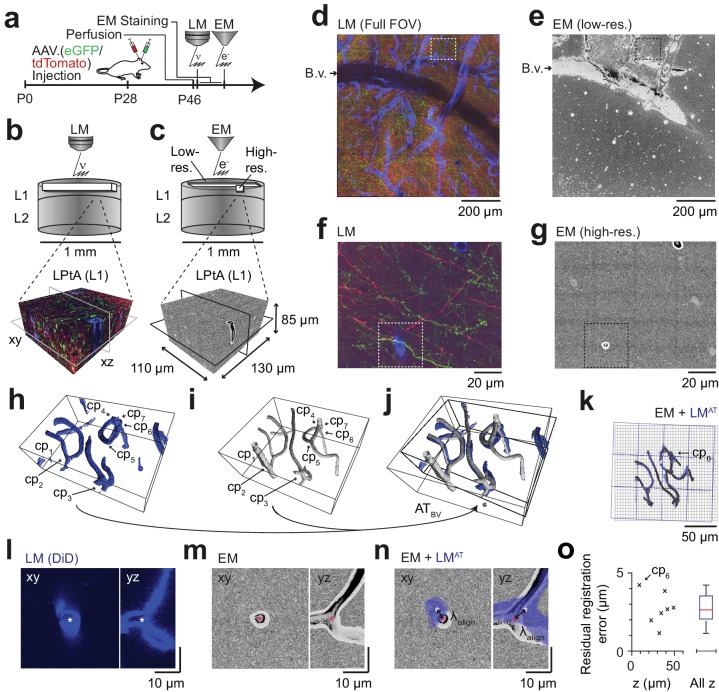
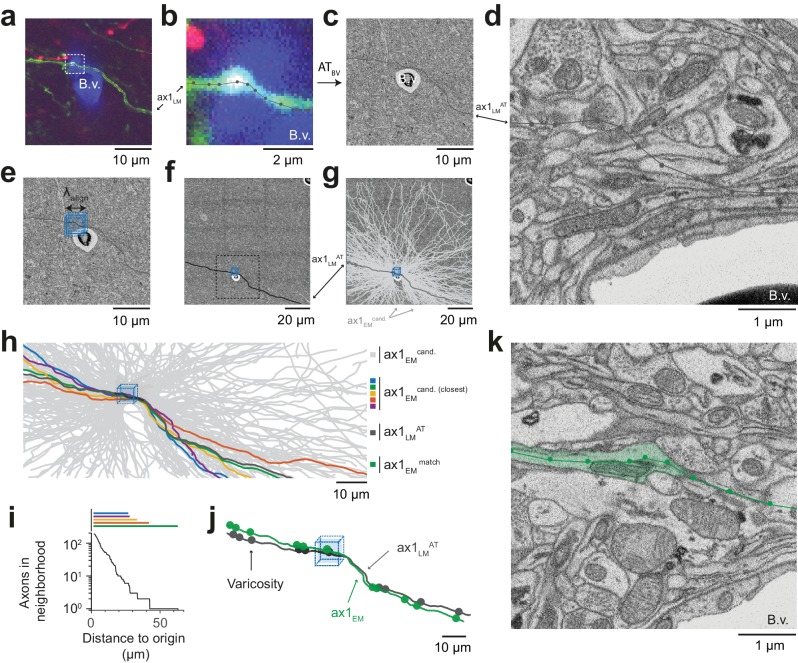
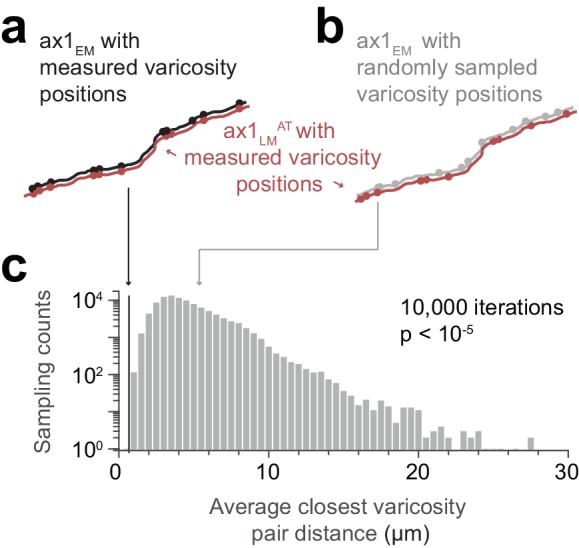
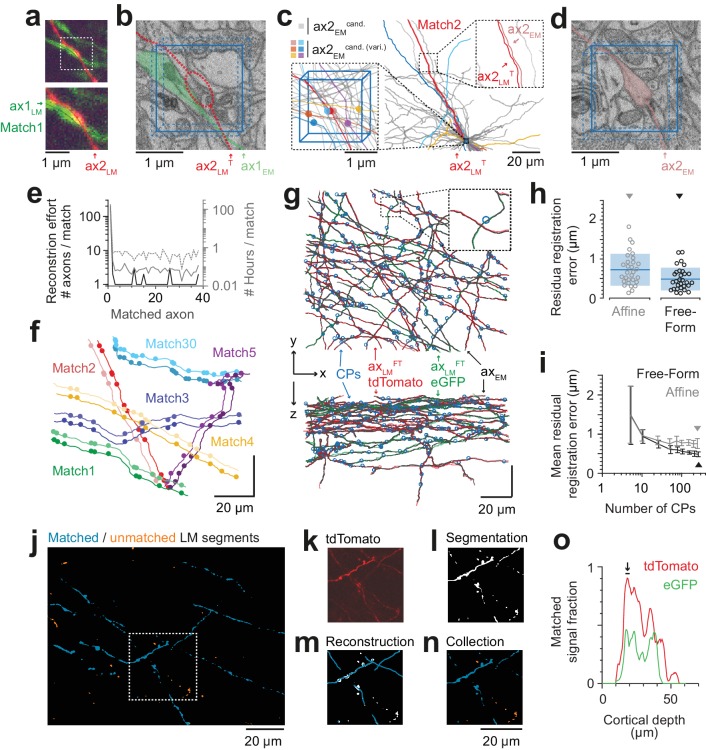
The labeling and identification of long-range axonal inputs from multiple sources within densely reconstructed electron microscopy (EM) datasets from mammalian brains has been notoriously difficult because of the limited color label space of EM. Here, we report FluoEM for the identification of multi-color fluorescently labeled axons in dense EM data without the need for artificial fiducial marks or chemical label conversion. The approach is based on correlated tissue imaging and computational matching of neurite reconstructions, amounting to a virtual color labeling of axons in dense EM circuit data. We show that the identification of fluorescent light- microscopically (LM) imaged axons in 3D EM data from mouse cortex is faithfully possible as soon as the EM dataset is about 40-50 µm in extent, relying on the unique trajectories of axons in dense mammalian neuropil. The method is exemplified for the identification of long-distance axonal input into layer 1 of the mouse cerebral cortex.
在哺乳动物大脑的密集重建电子显微镜 (EM) 数据集内,对来自多个来源的长程轴突输入进行标记和识别一直是一个难题,因为 EM 的颜色标签空间有限。在这里,我们报告了 FluoEM,用于在不需要人工基准标记或化学标签转换的情况下,识别密集 EM 数据中的多色荧光标记轴突。该方法基于组织的相关成像和神经突重建的计算匹配,相当于对密集 EM 电路数据中的轴突进行虚拟颜色标记。我们表明,只要 EM 数据集的范围约为 40-50 µm,就可以忠实地识别来自小鼠皮层的 3D EM 数据中荧光显微镜 (LM) 成像的轴突,这依赖于密集哺乳动物神经胶质中轴突的独特轨迹。该方法以识别长距离轴突输入到小鼠大脑皮层第 1 层为例进行了说明。