Department of Cardiovascular Biology and Medicine, Niigata University Graduate School of Medical and Dental Sciences, Niigata, Japan.
Bourbon Corporation, Niigata, Japan.
PLoS One. 2018 Aug 14;13(8):e0202051. doi: 10.1371/journal.pone.0202051. eCollection 2018.
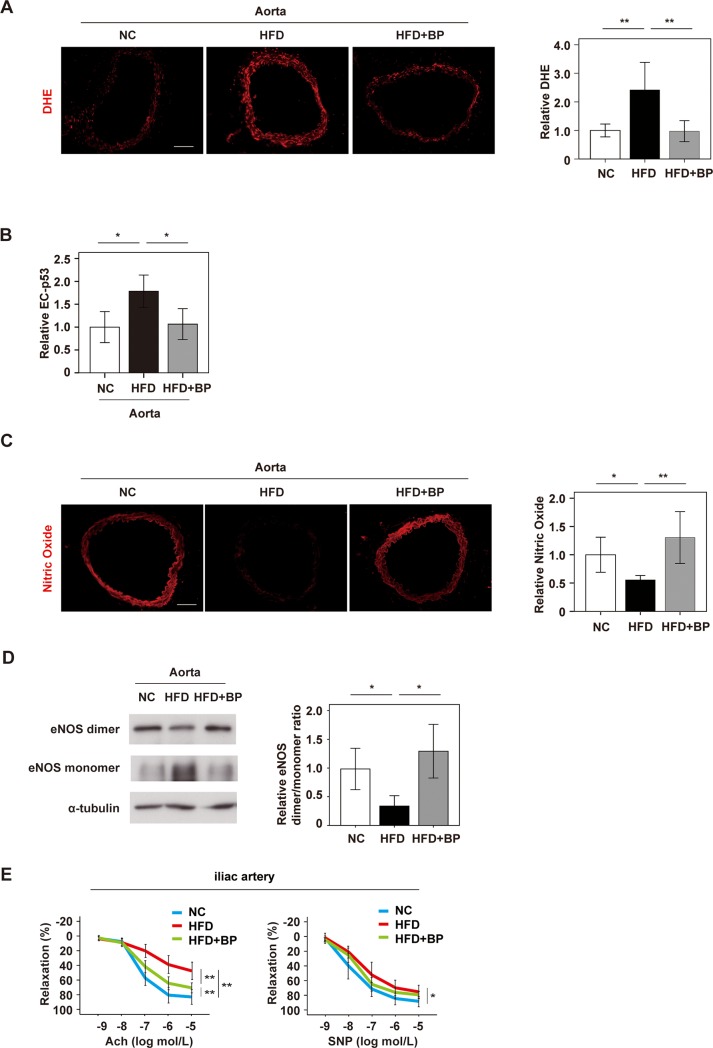
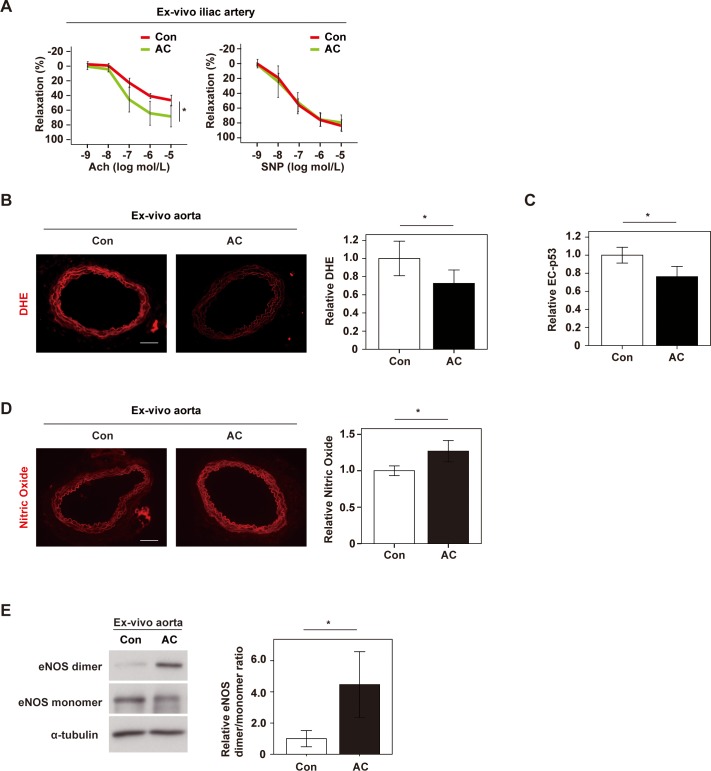
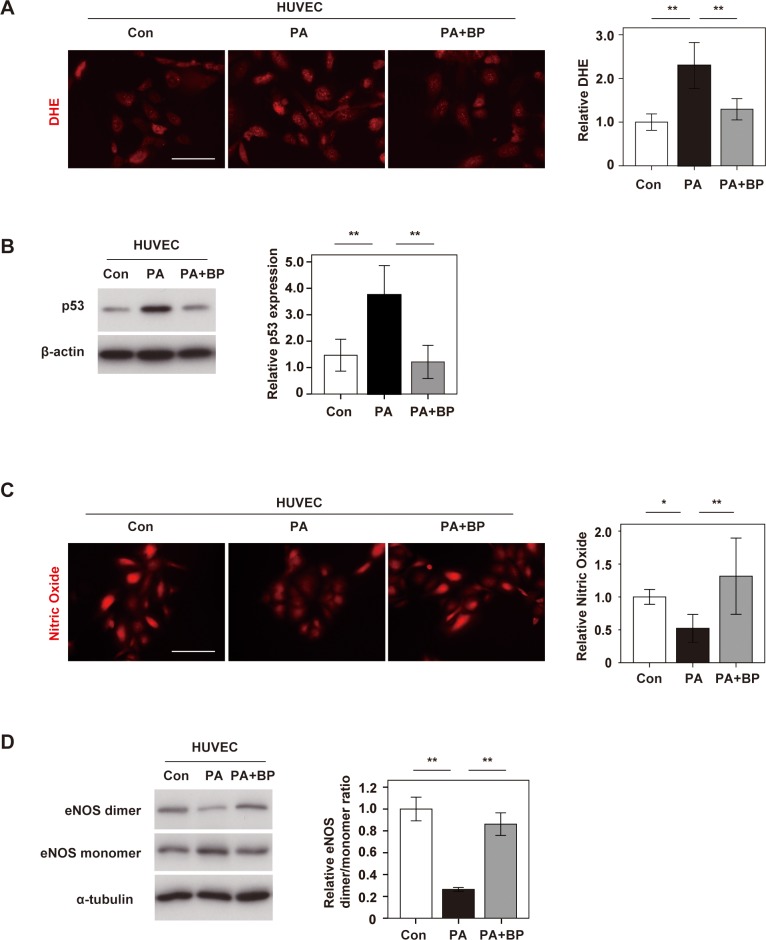
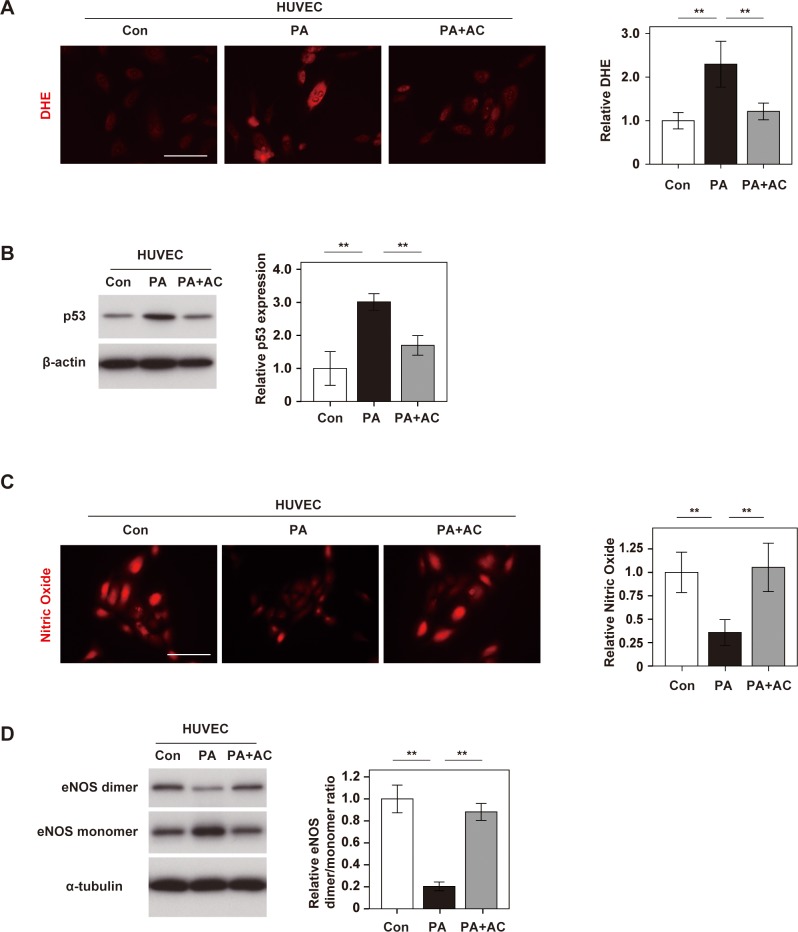
Endothelial cells have an important role in maintaining vascular homeostasis. Age-related disorders (including obesity, diabetes, and hypertension) or aging per se induce endothelial dysfunction that predisposes to the development of atherosclerosis. Polyphenols have been reported to suppress age-related endothelial cell disorders, but their role in vascular function is yet to be determined. We investigated the influence of boysenberry polyphenol on vascular health under metabolic stress in a murine model of dietary obesity. We found that administration of boysenberry polyphenol suppressed production of reactive oxygen species (ROS) and increased production of nitric oxide (NO) in the aorta. It has been reported that p53 induces cellular senescence and has a crucial role in age-related disorders, including heart failure and diabetes. Administration of boysenberry polyphenol significantly reduced the endothelial p53 level in the aorta and ameliorated endothelial cell dysfunction in iliac arteries under metabolic stress. Boysenberry polyphenol also reduced ROS and p53 levels in cultured human umbilical vein endothelial cells (HUVECs), while increasing NO production. Uncoupled endothelial nitric oxide synthase (eNOS monomer) is known to promote ROS production. We found that boysenberry polyphenol reduced eNOS monomer levels both in vivo and in vitro, along with an increase of eNOS dimerization. To investigate the components of boysenberry polyphenol mediating these favorable biological effects, we extracted the anthocyanin fractions. We found that anthocyanins contributed to suppression of ROS and p53, in association with increased NO production and eNOS dimerization. In an ex vivo study, anthocyanins promoted relaxation of iliac arteries from mice with dietary obesity. These findings indicate that boysenberry polyphenol and anthocyanins, a major component of this polyphenol, inhibit endothelial dysfunction and contribute to maintenance of vascular homeostasis.
内皮细胞在维持血管稳态方面发挥着重要作用。与年龄相关的疾病(包括肥胖、糖尿病和高血压)或衰老本身会导致内皮功能障碍,从而促使动脉粥样硬化的发生。多酚已被报道可抑制与年龄相关的内皮细胞紊乱,但它们对血管功能的作用尚未确定。我们在饮食肥胖的小鼠模型中研究了 boysenberry 多酚在代谢应激下对血管健康的影响。我们发现,boysenberry 多酚可抑制主动脉中活性氧(ROS)的产生并增加一氧化氮(NO)的产生。据报道,p53 诱导细胞衰老,并在与年龄相关的疾病(包括心力衰竭和糖尿病)中起关键作用。boysenberry 多酚可显著降低主动脉内皮 p53 水平,并改善代谢应激下髂动脉的内皮细胞功能障碍。boysenberry 多酚还可降低培养的人脐静脉内皮细胞(HUVEC)中的 ROS 和 p53 水平,同时增加 NO 的产生。已知不偶联的内皮一氧化氮合酶(eNOS 单体)可促进 ROS 的产生。我们发现,boysenberry 多酚可降低体内和体外的 eNOS 单体水平,同时增加 eNOS 二聚体化。为了研究 boysenberry 多酚中介导这些有利生物学效应的成分,我们提取了花色苷部分。我们发现花色苷可抑制 ROS 和 p53,同时增加 NO 的产生和 eNOS 二聚化。在一项离体研究中,花色苷可促进饮食肥胖小鼠髂动脉的舒张。这些发现表明,boysenberry 多酚和花色苷(这种多酚的主要成分)可抑制内皮功能障碍并有助于维持血管稳态。