Christodoulides Alexei, Gupta Neha, Yacoubian Vahe, Maithel Neil, Parker Jordan, Kelesidis Theodoros
David Geffen School of Medicine, University of California, Los Angeles, Los Angeles, CA, United States.
Front Microbiol. 2018 Jul 31;9:1682. doi: 10.3389/fmicb.2018.01682. eCollection 2018.
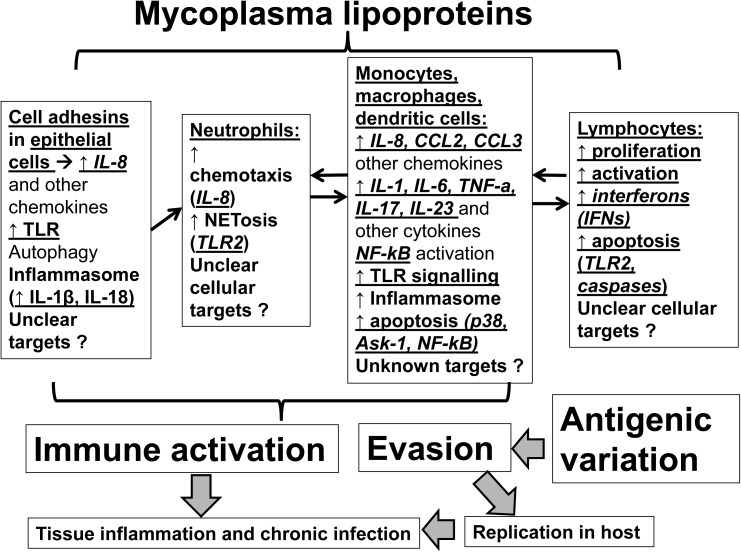
Mycoplasma infections, such as walking pneumonia or pelvic inflammatory diseases, are a major threat to public health. Despite their relatively small physical and genomic size, mycoplasmas are known to elicit strong host immune responses, generally inflammatory, while also being able to evade the immune system. The mycoplasma membrane is composed of approximately two-thirds protein and one-third lipid and contains several lipoproteins that are known to regulate host immune responses. Herein, the immunomodulatory effects of mycoplasma lipoproteins are reviewed. A better understanding of the immunomodulatory effects, both activating and evasive, of Mycoplasma surface lipoproteins will contribute to understanding mechanisms potentially relevant to mycoplasma disease vaccine development and treatment.
支原体感染,如支原体肺炎或盆腔炎,是对公众健康的重大威胁。尽管支原体的物理和基因组规模相对较小,但已知它们会引发强烈的宿主免疫反应,通常是炎症反应,同时还能够逃避免疫系统。支原体膜约由三分之二的蛋白质和三分之一的脂质组成,并含有几种已知可调节宿主免疫反应的脂蛋白。本文综述了支原体脂蛋白的免疫调节作用。更好地了解支原体表面脂蛋白的激活和逃避免疫调节作用,将有助于理解与支原体疾病疫苗开发和治疗潜在相关的机制。