Department of Orthopaedic Surgery and Biomedical Research Institute, Pusan National University Hospital, Busan, Republic of Korea.
Department of Orthopaedic Surgery, Myung Eun Hospital, Busan, Republic of Korea.
PLoS One. 2018 Aug 16;13(8):e0201801. doi: 10.1371/journal.pone.0201801. eCollection 2018.
Spinopelvic fixations involving the S2-alar-iliac (S2AI) and iliac screws are commonly used in various spinal fusion surgeries. This study aimed to compare the biomechanical characteristics, specifically the risk of screw and adjacent bone failures of S2AI screw fixation with those of iliac screw fixation using a finite element analysis (FEA).
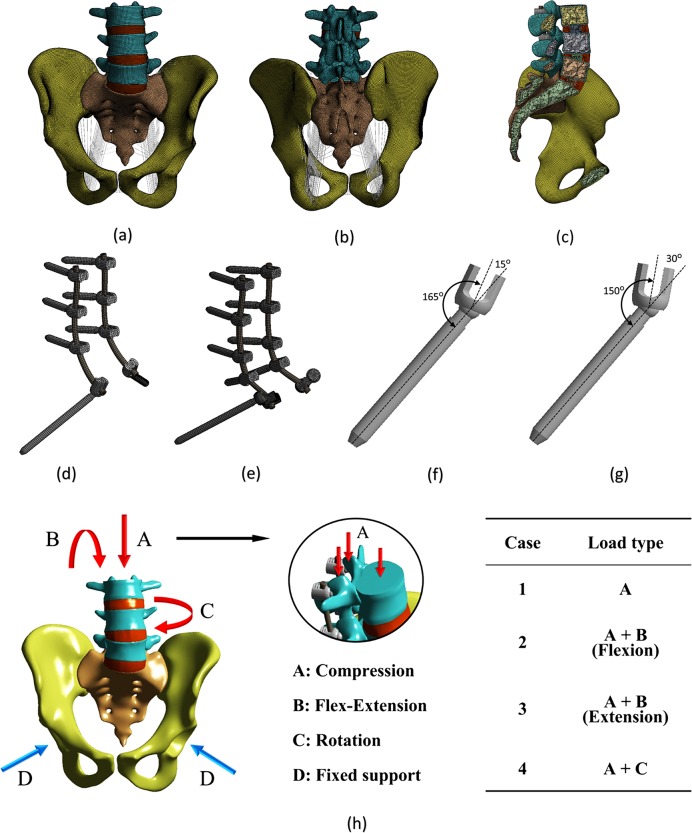
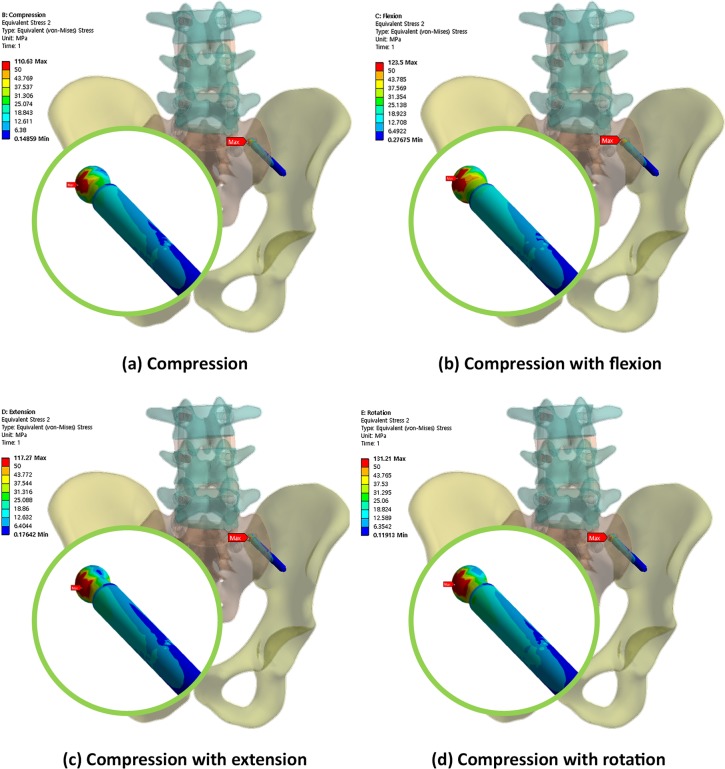
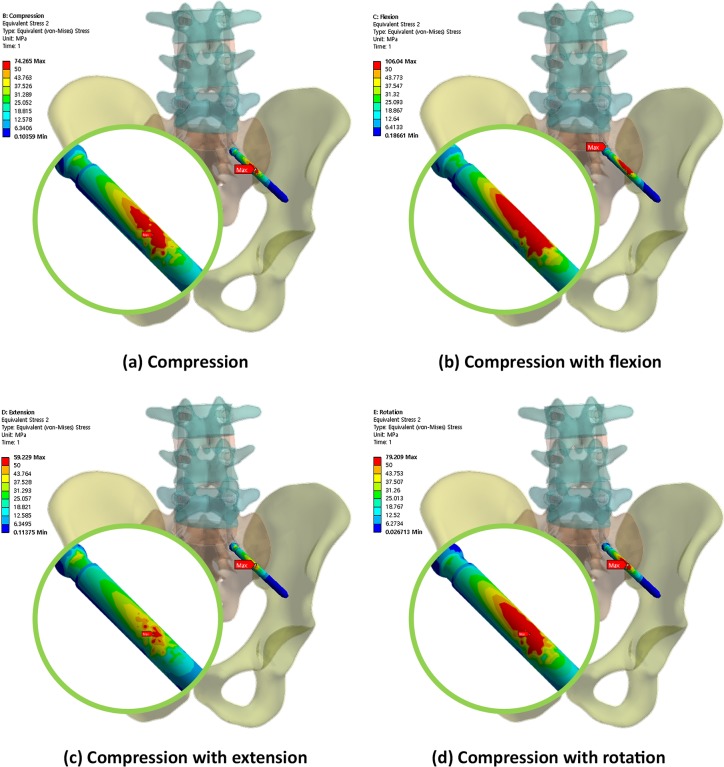
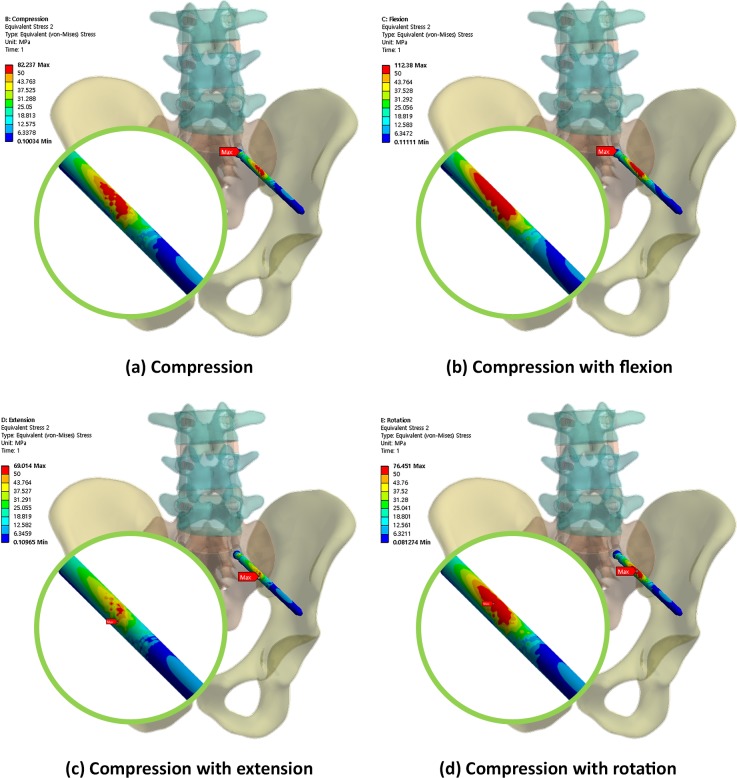
A three-dimensional finite element (FE) model of a healthy spinopelvis was generated. The pedicle screws were placed on the L3-S1 with three different lengths of the S2AI and iliac screws (60 mm, 75 mm, and 90 mm). In particular, two types of the S2AI screw, 15°- and 30°-angled polyaxial screw, were adopted. Physiological loads, such as a combination of compression, torsion, and flexion/extension loads, were applied to the spinopelvic FE model, and the stress distribution as well as the maximum von Mises equivalent stress values were calculated.
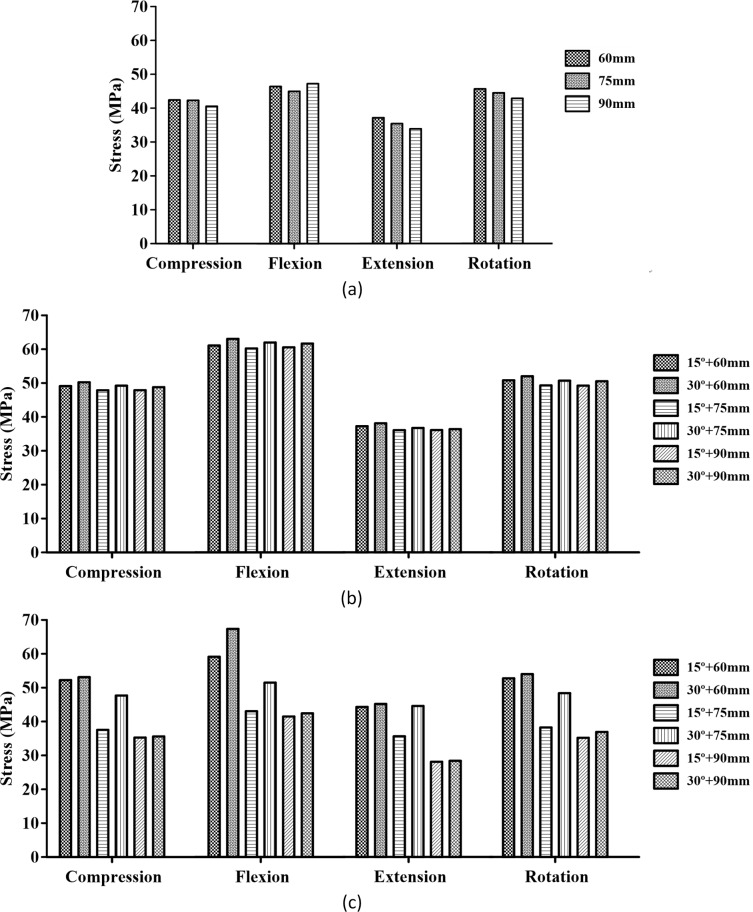
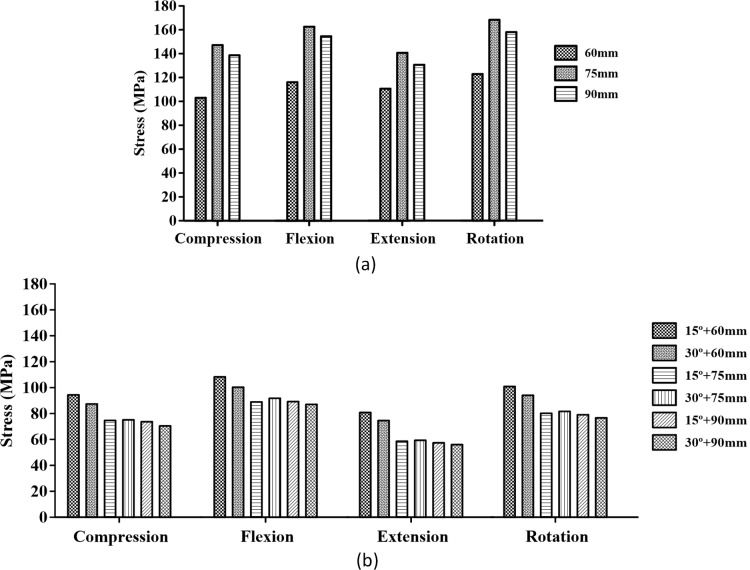
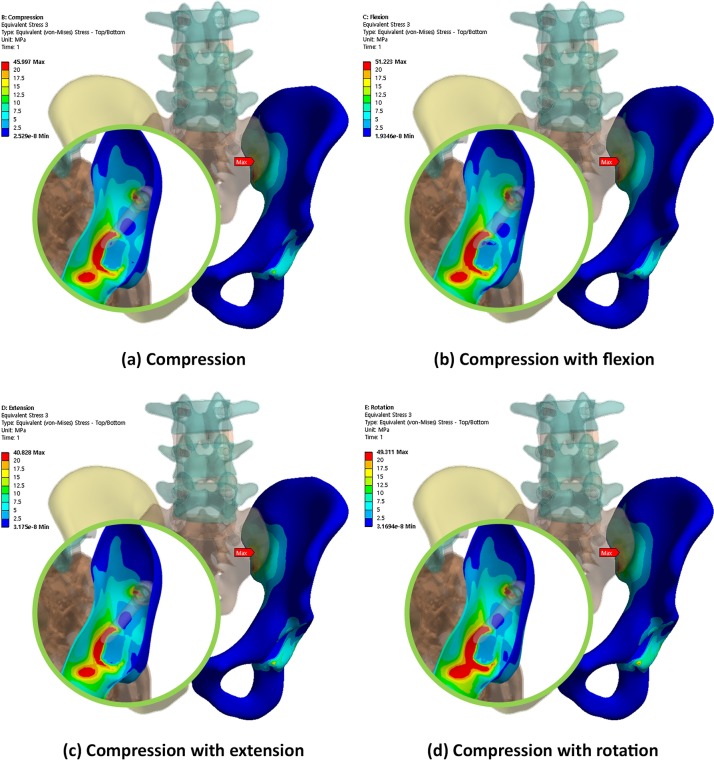
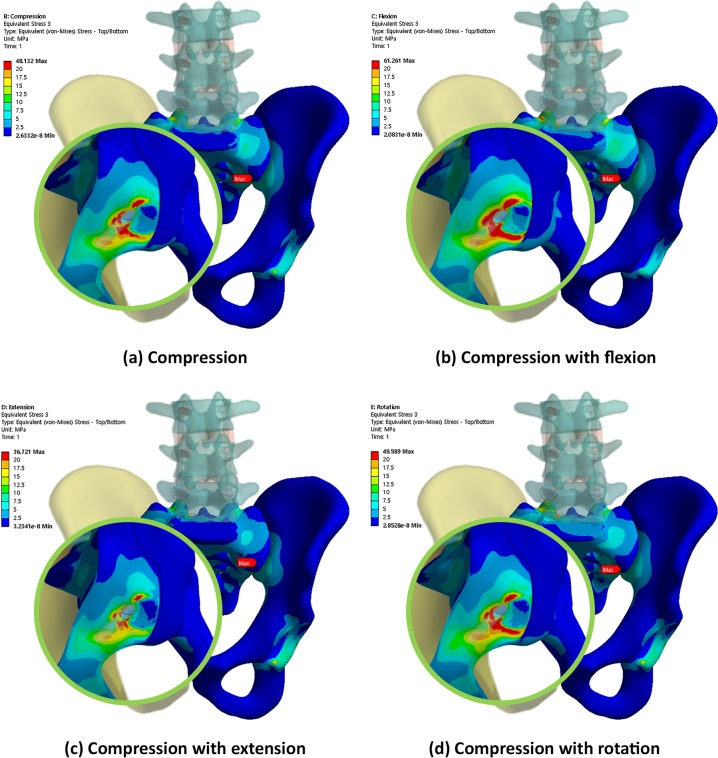
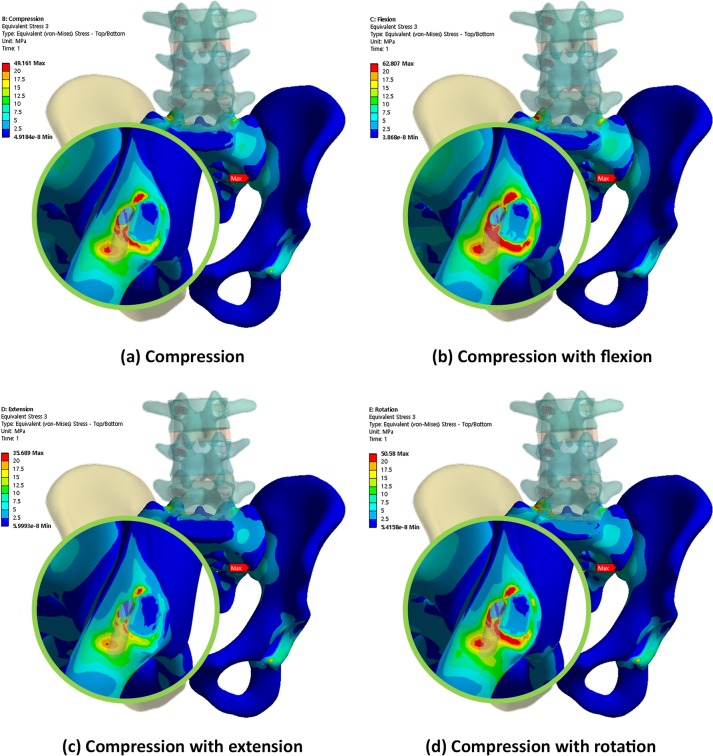
For the iliac screw, the highest stress on the screw was observed with the 75-mm screw, rather than the 60-mm screw. The bones around the iliac screw indicated that the maximum equivalent stress decreased as the screw length increased. For the S2AI screw, the lowest stress was observed in the 90-mm screw length with a 30° head angle. The bones around the S2AI screw indicated that the lowest stress was observed in the 90-mm screw length and a 15° head angle.
It was found that the S2AI screw, rather than the iliac screw, reduced the risk of implant failure for the spinopelvic fixation technique, and the 90-mm screw length with a 15° head angle for the S2AI screw could be biomechanically advantageous.
涉及 S2 翼状-髂骨(S2AI)和髂骨螺钉的脊柱骨盆固定术常用于各种脊柱融合手术。本研究旨在通过有限元分析(FEA)比较 S2AI 螺钉固定与髂骨螺钉固定的生物力学特性,特别是螺钉和相邻骨失效的风险。
生成了一个健康的脊柱骨盆的三维有限元(FE)模型。在 L3-S1 上放置了椎弓根螺钉,并使用了三种不同长度的 S2AI 和髂骨螺钉(60mm、75mm 和 90mm)。特别采用了两种类型的 S2AI 螺钉,即 15°和 30°多轴螺钉。对脊柱骨盆 FE 模型施加生理负荷,如压缩、扭转和屈伸负荷的组合,并计算了应力分布和最大 von Mises 等效应力值。
对于髂骨螺钉,75mm 螺钉的螺钉上应力最高,而不是 60mm 螺钉。髂骨螺钉周围的骨骼表明,随着螺钉长度的增加,最大等效应力减小。对于 S2AI 螺钉,30°头角的 90mm 螺钉长度的应力最低。S2AI 螺钉周围的骨骼表明,90mm 螺钉长度和 15°头角的应力最低。
研究发现,S2AI 螺钉而非髂骨螺钉降低了脊柱骨盆固定技术中植入物失效的风险,S2AI 螺钉的 90mm 螺钉长度和 15°头角在生物力学上具有优势。