Department of Food Science and Technology, Jomo Kenyatta University of Agriculture and Technology, P.O. Box 62000, Nairobi 00200, Kenya.
Oxid Med Cell Longev. 2018 Jul 9;2018:4321714. doi: 10.1155/2018/4321714. eCollection 2018.
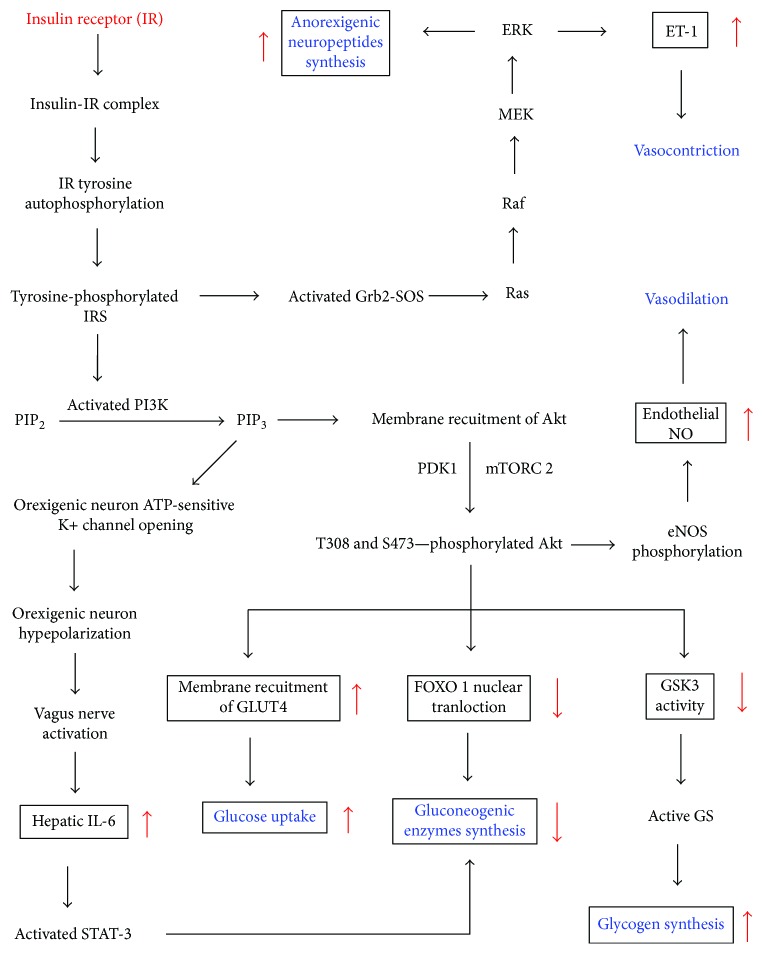
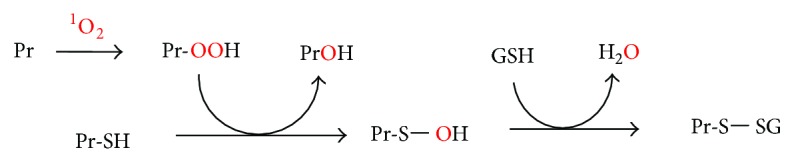
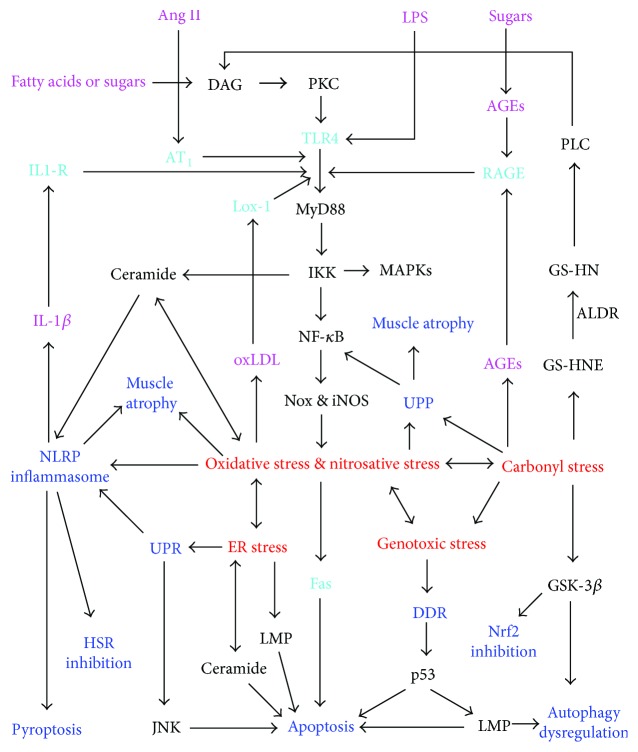
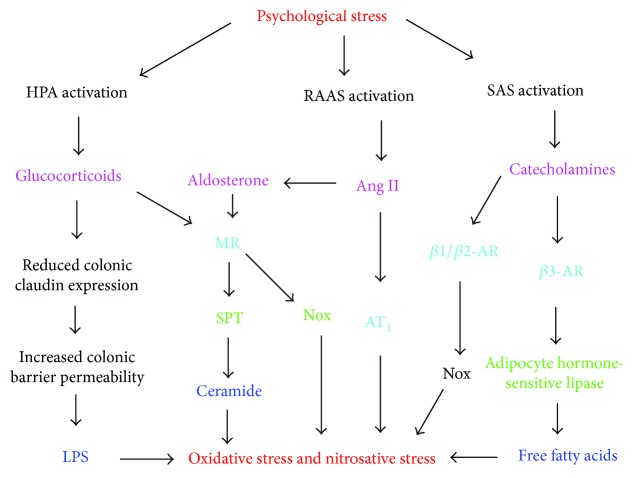
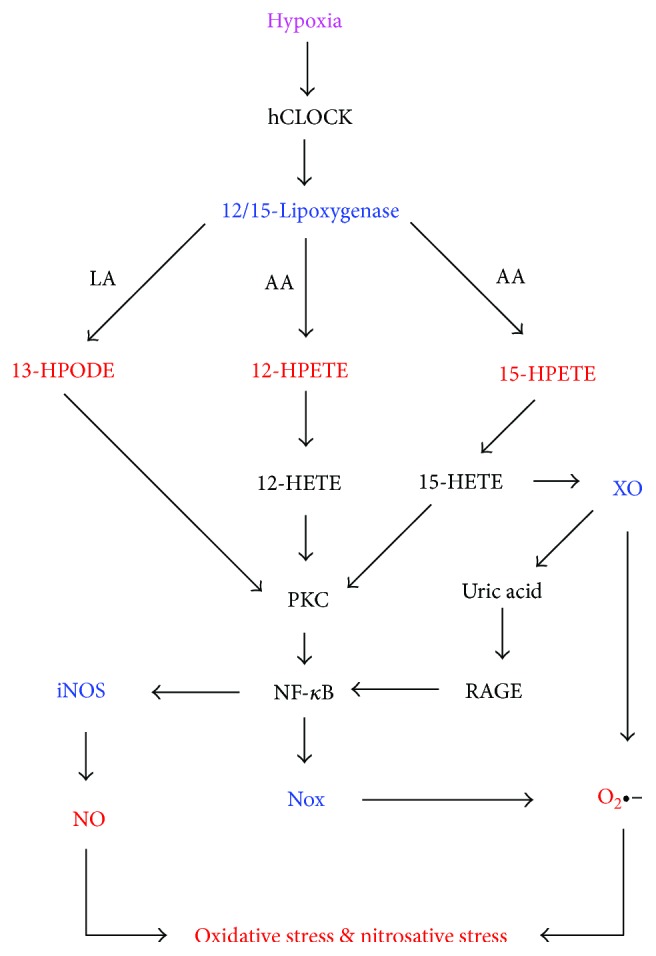
Insulin resistance (IR), a key component of the metabolic syndrome, precedes the development of diabetes, cardiovascular disease, and Alzheimer's disease. Its etiological pathways are not well defined, although many contributory mechanisms have been established. This article summarizes such mechanisms into the hypothesis that factors like nutrient overload, physical inactivity, hypoxia, psychological stress, and environmental pollutants induce a network of cellular stresses, stress responses, and stress response dysregulations that jointly inhibit insulin signaling in insulin target cells including endothelial cells, hepatocytes, myocytes, hypothalamic neurons, and adipocytes. The insulin resistance-inducing cellular stresses include oxidative, nitrosative, carbonyl/electrophilic, genotoxic, and endoplasmic reticulum stresses; the stress responses include the ubiquitin-proteasome pathway, the DNA damage response, the unfolded protein response, apoptosis, inflammasome activation, and pyroptosis, while the dysregulated responses include the heat shock response, autophagy, and nuclear factor erythroid-2-related factor 2 signaling. Insulin target cells also produce metabolites that exacerbate cellular stress generation both locally and systemically, partly through recruitment and activation of myeloid cells which sustain a state of chronic inflammation. Thus, insulin resistance may be prevented or attenuated by multiple approaches targeting the different cellular stresses and stress responses.
胰岛素抵抗(IR)是代谢综合征的一个关键组成部分,它先于糖尿病、心血管疾病和阿尔茨海默病的发生。其病因途径尚不清楚,尽管已经确定了许多促成机制。本文将这些机制归纳为一个假说,即营养物质过载、身体活动不足、缺氧、心理压力和环境污染物等因素会诱导细胞应激、应激反应和应激反应失调的网络,共同抑制包括内皮细胞、肝细胞、肌细胞、下丘脑神经元和脂肪细胞在内的胰岛素靶细胞中的胰岛素信号转导。引起胰岛素抵抗的细胞应激包括氧化应激、硝化应激、羰基/亲电子应激、遗传毒性应激和内质网应激;应激反应包括泛素-蛋白酶体途径、DNA 损伤反应、未折叠蛋白反应、细胞凋亡、炎性小体激活和细胞焦亡,而失调的反应包括热休克反应、自噬和核因子红细胞 2 相关因子 2 信号转导。胰岛素靶细胞还会产生代谢物,这些代谢物会加剧细胞应激的产生,无论是局部还是全身,部分原因是通过招募和激活髓样细胞来维持慢性炎症状态。因此,通过针对不同细胞应激和应激反应的多种方法,可能预防或减轻胰岛素抵抗。