Liaoning Laboratory of Cancer Genetics and Epigenetics and Department of Cell Biology, College of Basic Medical Sciences, Dalian Medical University, Dalian 116044, China.
Oxid Med Cell Longev. 2018 Jul 10;2018:6235417. doi: 10.1155/2018/6235417. eCollection 2018.
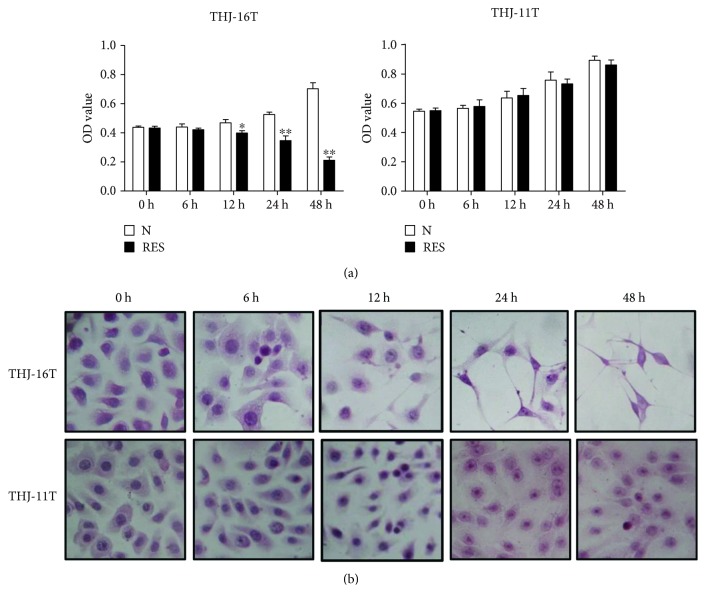
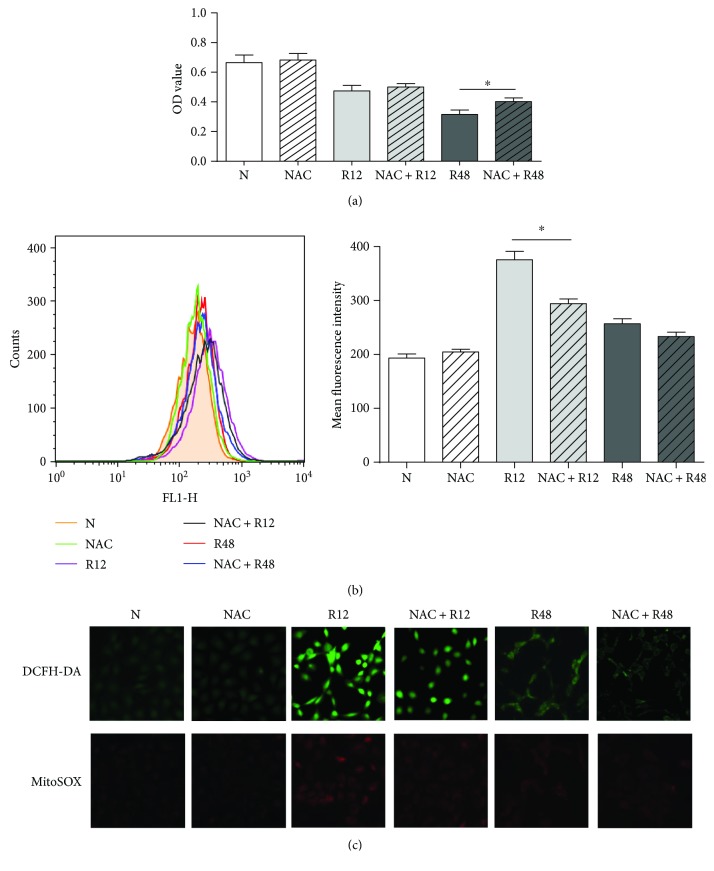
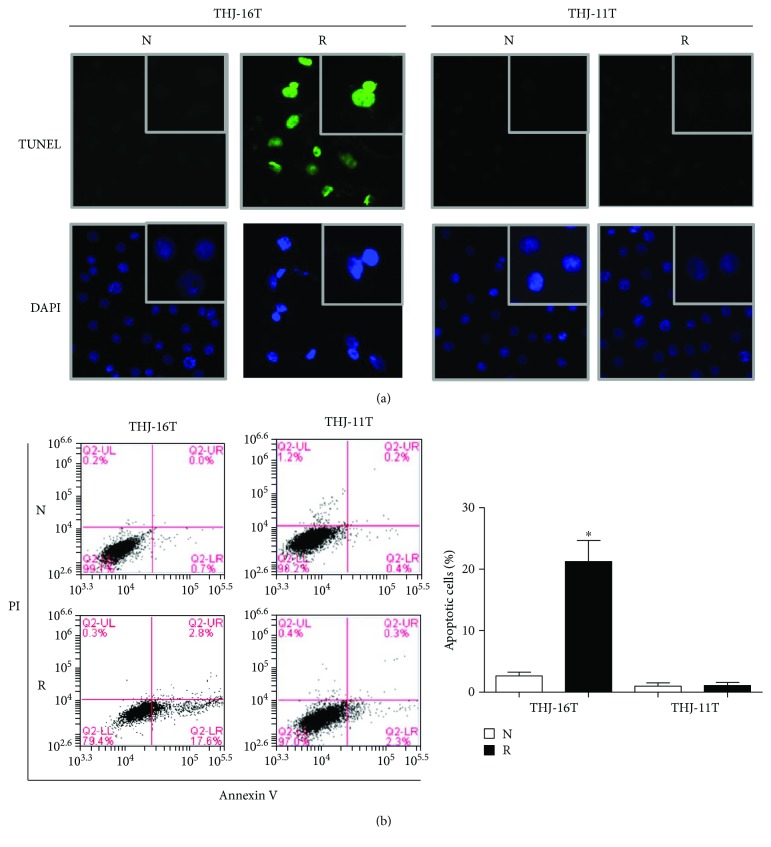
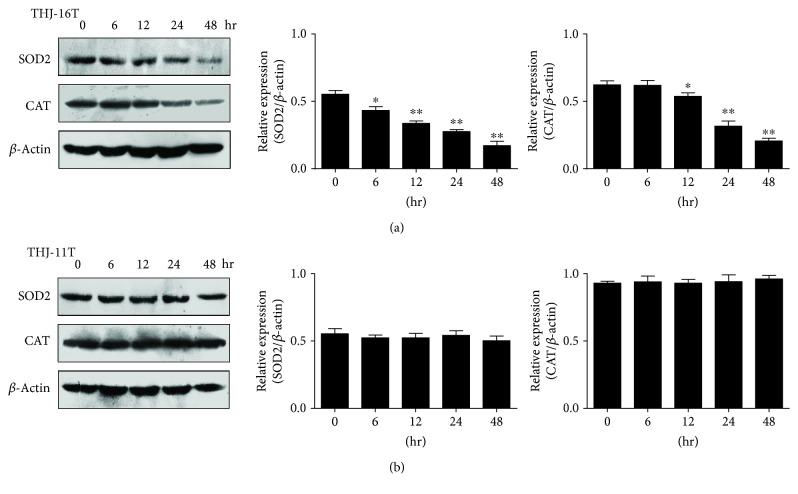
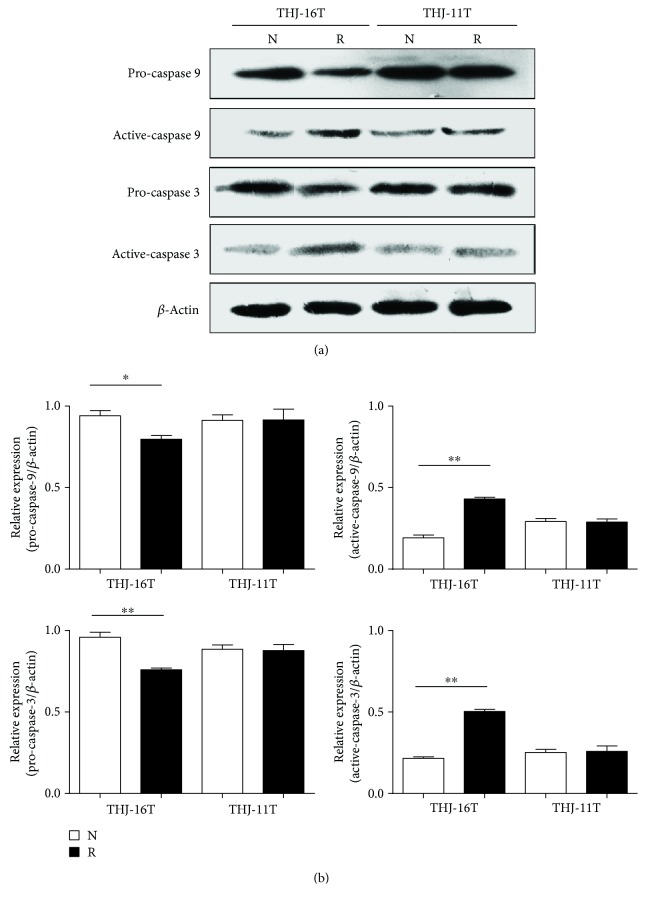
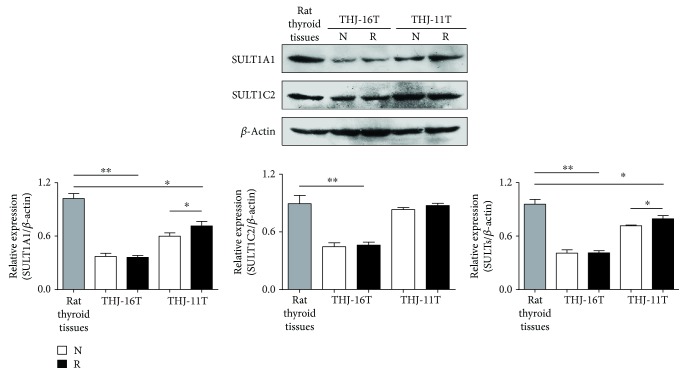
Anaplastic thyroid carcinoma (ATC) is the most lethal thyroid malignancy without a reliable therapeutic agent. Resveratrol possesses cancer-suppressive effects, while its effect(s) on ATC cells remains unknown. Because oxidative damage caused by increased reactive oxygen species (ROS) is one of the therapeutic effects of anticancer drugs and oxidative stress-caused mitochondria swelling is observed in resveratrol-treated cancer cells, the oxidative statuses and their relevance with resveratrol sensitivities are elucidated using THJ-16T and THJ-11T ATC cells established from two human anaplastic thyroid carcinoma cases. The results revealed that resveratrol-treated THJ-16T rather than THJ-11T cells showed remarkable growth arrest and extensive apoptosis accompanied with the elevated ROS generation and the attenuated superoxide dismutase 2 (SOD2) and catalase (CAT) levels. Mitochondrial impairment and the enhanced caspase-9/caspase-3 activation are found only in resveratrol-sensitive THJ-16T cells. Treatment with the antioxidant N-acetylcysteine (NAC) partly attenuated resveratrol-induced ROS generation and apoptosis of THJ-16T cells. The levels of resveratrol metabolic enzymes (SULT1A1 and SULT1C2) in THJ-16T cells were lower than those in THJ-11T cells and therefore reversely related with resveratrol sensitivities of ATC cells. Our findings demonstrate the ability of resveratrol to increase ROS generation and oxidative-related cellular lesions in resveratrol-sensitive THJ-16T cells presumably through activating the ROS-mitochondrial signal pathway. The levels of SULTs and ROS may reflect the response manners of ATC cells to resveratrol.
间变性甲状腺癌(ATC)是最致命的甲状腺恶性肿瘤,目前尚无可靠的治疗药物。白藜芦醇具有抗癌作用,但它对 ATC 细胞的作用尚不清楚。由于活性氧(ROS)增加引起的氧化损伤是抗癌药物治疗效果之一,并且在白藜芦醇处理的癌细胞中观察到由氧化应激引起的线粒体肿胀,因此使用从两个人类间变性甲状腺癌病例中建立的 THJ-16T 和 THJ-11T ATC 细胞来阐明其氧化状态及其与白藜芦醇敏感性的相关性。结果表明,白藜芦醇处理的 THJ-16T 细胞而不是 THJ-11T 细胞显示出明显的生长停滞和广泛的细胞凋亡,伴随着 ROS 生成的增加以及超氧化物歧化酶 2(SOD2)和过氧化氢酶(CAT)水平的降低。仅在白藜芦醇敏感的 THJ-16T 细胞中发现线粒体损伤和增强的半胱天冬酶-9/半胱天冬酶-3 激活。用抗氧化剂 N-乙酰半胱氨酸(NAC)处理可部分减弱 THJ-16T 细胞中白藜芦醇诱导的 ROS 生成和细胞凋亡。THJ-16T 细胞中白藜芦醇代谢酶(SULT1A1 和 SULT1C2)的水平低于 THJ-11T 细胞,因此与 ATC 细胞对白藜芦醇的敏感性呈反向相关。我们的发现表明,白藜芦醇能够通过激活 ROS-线粒体信号通路,在白藜芦醇敏感的 THJ-16T 细胞中增加 ROS 生成和与氧化相关的细胞损伤。SULTs 和 ROS 的水平可能反映了 ATC 细胞对白藜芦醇的反应方式。