Nakamura Takumi, Jimbo Kotori, Nakajima Kazuo, Tsuboi Takashi, Kato Tadafumi
Department of Life Sciences, Graduate School of Arts and Sciences, The University of Tokyo, Tokyo, Japan.
Laboratory for Molecular Dynamics of Mental Disorders, RIKEN Center for Brain Science, Wako, Japan.
Neuropsychopharmacol Rep. 2018 Dec;38(4):210-213. doi: 10.1002/npr2.12027. Epub 2018 Aug 17.
We previously performed the first trio-based exome study for bipolar disorder and identified 71 de novo mutations. Among these mutations, the only mutation located at the splice donor site was in UNC13B. We focused on and analyzed the functions of the mutation.
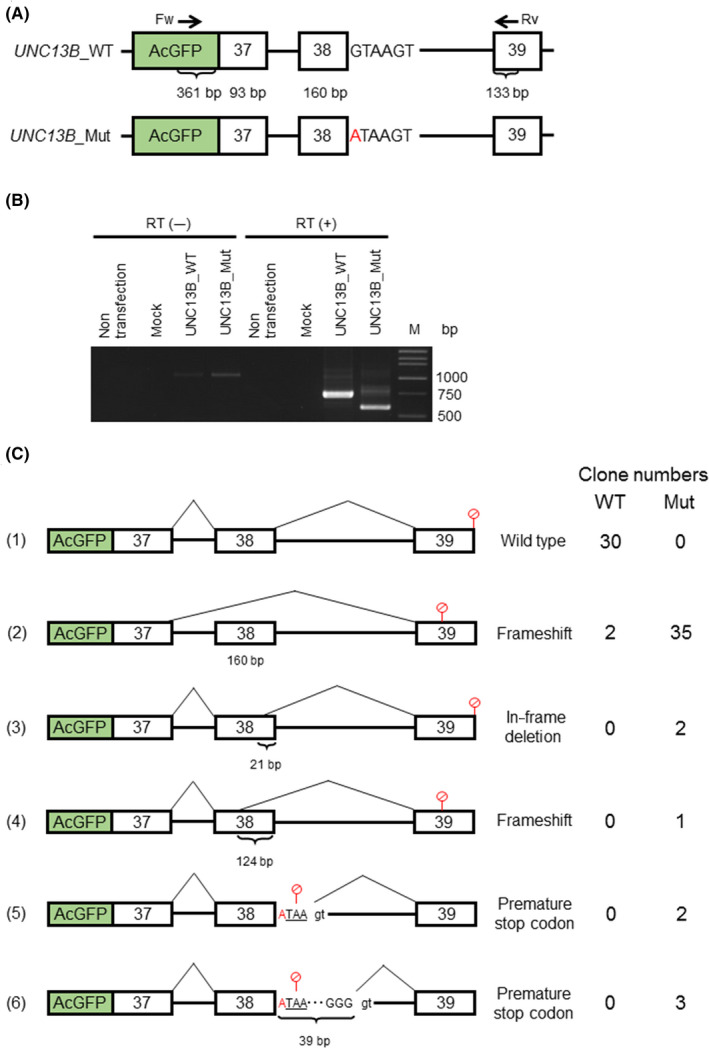
In order to analyze the functional alterations, due to the mutation, we performed a minigene splicing assay.
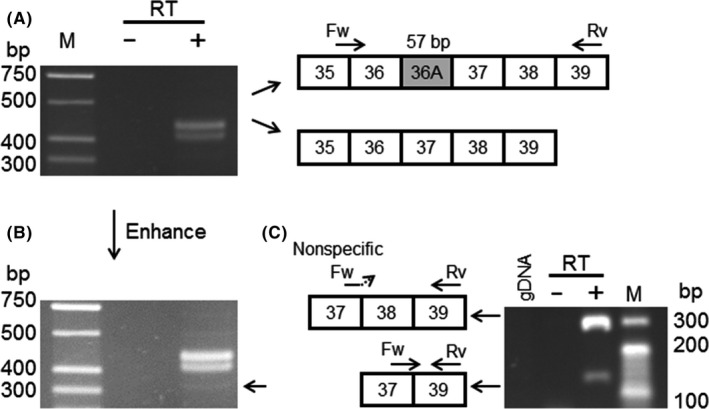
We found that the mutation caused the loss of a wild-type splicing variant, which was consistent with the computational splice prediction, and that an exon-skipping variant increased significantly. The exon-skipping variant also existed in the wild-type minigene, although it was rare. Hence, we validated the expression of the exon-skipping variant using total RNAs derived from the human cerebral cortex. We showed the possibility that the exon-skipping variant was rare, but expressed even in those that do not carry the mutation.
Based on our results, we suggest that an abnormal splicing pattern of UNC13B occurred in the patient, which could be related to the pathophysiology of bipolar disorder.
我们之前进行了首例基于三联体的双相情感障碍外显子组研究,并鉴定出71个新生突变。在这些突变中,唯一位于剪接供体位点的突变存在于UNC13B基因中。我们聚焦并分析了该突变的功能。
为了分析该突变引起的功能改变,我们进行了小基因剪接试验。
我们发现该突变导致一种野生型剪接变体缺失,这与计算机剪接预测结果一致,并且一种外显子跳跃变体显著增加。该外显子跳跃变体在野生型小基因中也存在,尽管很罕见。因此,我们使用源自人类大脑皮层的总RNA验证了外显子跳跃变体的表达。我们发现即使在不携带该突变的个体中,外显子跳跃变体也可能罕见但仍有表达。
基于我们的研究结果,我们认为该患者中UNC13B基因出现了异常剪接模式,这可能与双相情感障碍的病理生理学有关。