El-Chaer William Khalil, Moraes Clayton Franco, Nóbrega Otávio Toledo
University of Brasília (UnB), 70910-900 Brasília, DF, Brazil.
Catholic University of Brasília (UCB-DF), 71966-700 Brasília, DF, Brazil.
J Aging Res. 2018 Jul 10;2018:7681039. doi: 10.1155/2018/7681039. eCollection 2018.
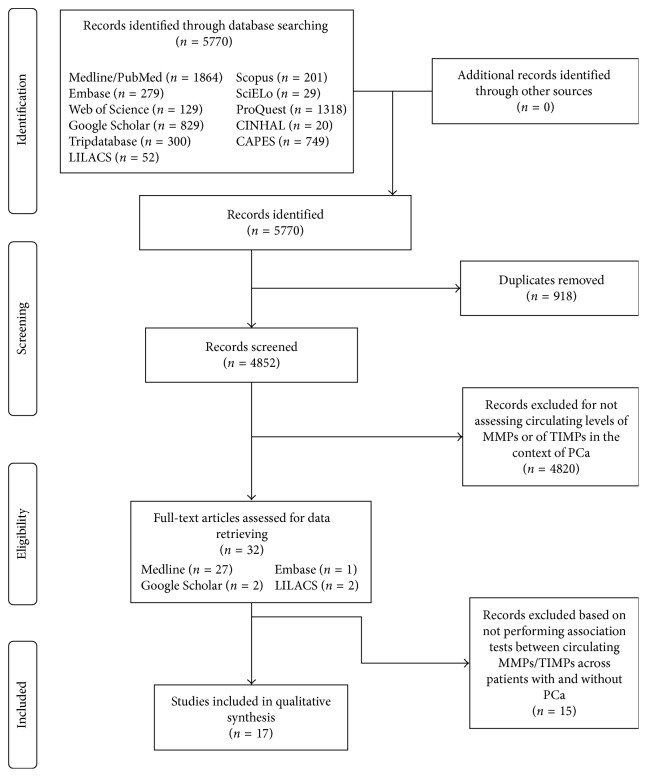
Although prostate cancer (PCa) is the sixth most common type of neoplasm in the world and the second in prevalence among men (10% of all cases), there is shortage of studies focused on primary prevention of the disorder as well as little understanding on its pathophysiology. Currently, the PCa screening tools are the prostate specific antigen (PSA) dosage conjugated to rectal examination and confirmed by prostate biopsy. Despite the name, the PSA presents reduced specificity, being necessary the identification of new biomarkers that allow an earlier and more precise diagnosis and even better prognosis. Several studies have associated matrix metalloproteinases (MMPs) and their tissue inhibitors (TIMPs) to PCa tumorigenesis and metastasis. Most of the studies so far have been carried out by investigating in situ expression of the metalloproteinases, either by transcriptional measures or by immunohistochemistry with biopsy or postoperative tissue. Investigations in human plasma and serum are scarce, and a bibliographical search resulted in 17 studies which are presented and interpreted herein. This narrative review discusses their settings and findings along with aspects related to circulating metalloproteinases as potential biomarkers for diagnosis or prognosis of the prostatic malignancy, expressing the authors' reticent view on their applicability due to the poor quality of evidence available.
尽管前列腺癌(PCa)是全球第六大常见肿瘤类型,在男性中的患病率位居第二(占所有病例的10%),但针对该疾病一级预防的研究匮乏,对其病理生理学的了解也很少。目前,前列腺癌的筛查工具是结合直肠指检的前列腺特异性抗原(PSA)检测,并通过前列腺活检进行确诊。尽管名为前列腺特异性抗原,但PSA的特异性较低,因此有必要识别新的生物标志物,以实现更早、更精确的诊断,甚至获得更好的预后。多项研究已将基质金属蛋白酶(MMPs)及其组织抑制剂(TIMPs)与前列腺癌的发生和转移联系起来。迄今为止,大多数研究都是通过转录测量或活检或术后组织的免疫组织化学来研究金属蛋白酶的原位表达。对人体血浆和血清的研究较少,通过文献检索得到了17项研究,本文将对这些研究进行介绍和解读。本叙述性综述讨论了这些研究的背景和结果,以及与循环金属蛋白酶作为前列腺恶性肿瘤诊断或预后潜在生物标志物相关的方面,并因现有证据质量较差,对其适用性表达了作者的保留意见。