Khan Muhammad Qamar, Kharaghani Davood, Ullah Sana, Waqas Muhammad, Abbasi Abdul Malik Rehan, Saito Yusuke, Zhu Chunhong, Kim Ick Soo
Nano Fusion Technology Research Group, Division of Frontier Fibers, Institute for Fiber Engineering IFES- Interdisciplinary Cluster for Cutting Edge Research ICCER, Shinshu University, Tokida 3-15-1, Ueda, Nagano 386-8567, Japan.
Faculty of Textile Engineering, National Textile University, Sheikhupura Road, Faisalabad 37610, Pakistan.
Nanomaterials (Basel). 2018 Aug 22;8(9):644. doi: 10.3390/nano8090644.
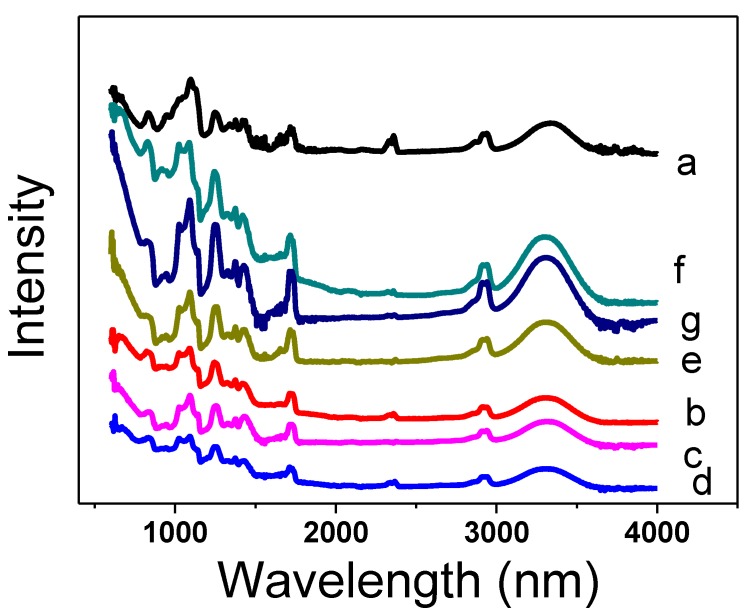
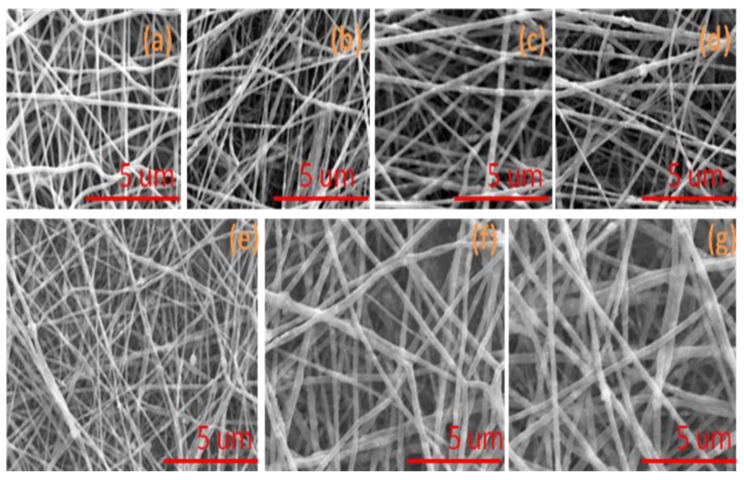
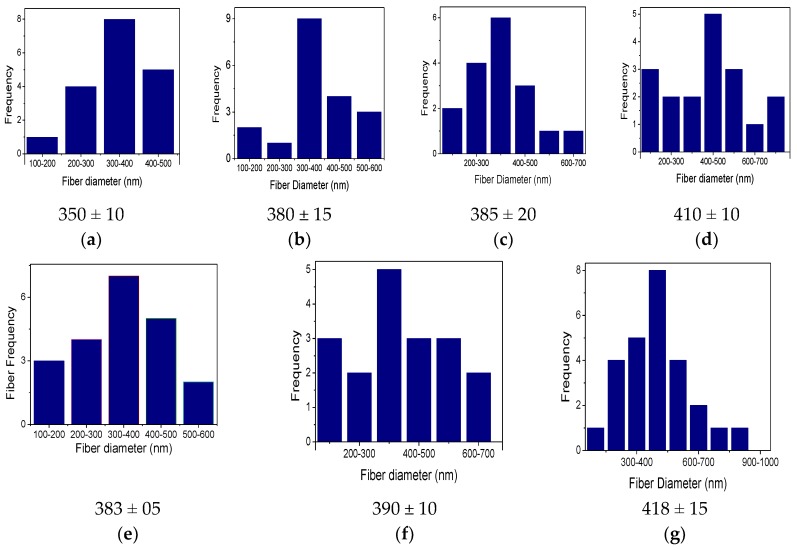
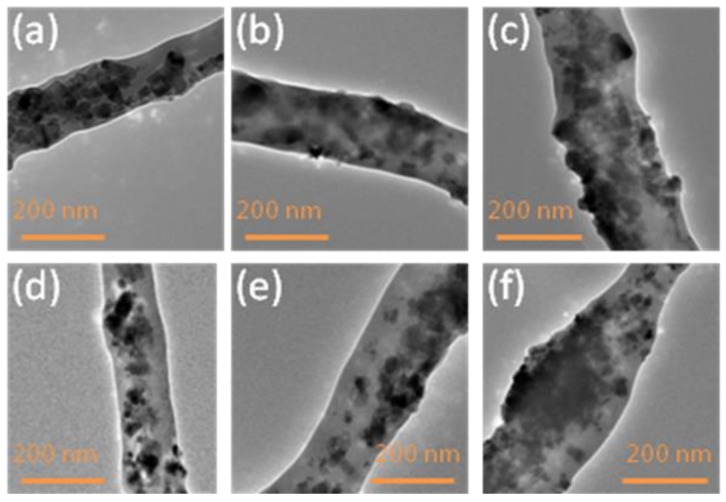
In this report, polyvinyl alcohol/zinoxide (PVA/ZnO) & polyvinyl alcohol/titanium dioxide (PVA/TiO₂) nanofibers were manufactured in three different concentrations of ZnO and TiO₂ NPs for the application of self-cleaning properties because metallic oxides, specifically ZnO & TiO₂, have the properties to remove the contaminants by hydroxyl radical (OH), which degrades the contaminants into small molecules and finally into CO₂ and H₂O. Therefore, these composites were manufactured by electrospinning. The resultant nanofibers were characterized for morphology by scan electron microscopy (SEM) & transmission electron microscopy (TEM), chemical interactions by Fourier-transform infrared (FT-IR) spectra, crystalline structure by X-ray diffraction (XRD) spectra water absorbency was evaluated by water contact angle, self-cleaning by solar simulator, and thermal degradation was done by thermogravimetric analysis (TGA) for the sake of nanoparticles the content. On the base of the characterization results it was concluded that these PVA/ZnO & PVA/TiO₂ nanofibers have self cleaning properties, but PVA/ZnO nanofibers have higher self-cleaning properties than PVA/TiO₂ nanofibers because PVA/ZnO nanofibers have 95% self-cleaning properties, which is higher than PVA/TiO₂ nanofibers.
在本报告中,制备了聚乙烯醇/氧化锌(PVA/ZnO)和聚乙烯醇/二氧化钛(PVA/TiO₂)纳米纤维,其中氧化锌和二氧化钛纳米颗粒(NPs)有三种不同浓度,用于自清洁性能的应用,因为金属氧化物,特别是氧化锌和二氧化钛,具有通过羟基自由基(OH)去除污染物的特性,该自由基可将污染物降解为小分子,最终降解为二氧化碳和水。因此,这些复合材料通过静电纺丝制备。通过扫描电子显微镜(SEM)和透射电子显微镜(TEM)对所得纳米纤维的形态进行表征,通过傅里叶变换红外(FT-IR)光谱表征化学相互作用,通过X射线衍射(XRD)光谱表征晶体结构,通过水接触角评估吸水性,通过太阳模拟器评估自清洁性能,并通过热重分析(TGA)分析纳米颗粒含量的热降解情况。根据表征结果得出结论,这些PVA/ZnO和PVA/TiO₂纳米纤维具有自清洁性能,但PVA/ZnO纳米纤维比PVA/TiO₂纳米纤维具有更高的自清洁性能,因为PVA/ZnO纳米纤维具有95%的自清洁性能,高于PVA/TiO₂纳米纤维。