Department of Microbiology, Boston University School of Medicine, 72 E. Concord St., Room L504, Boston, MA, 02118, USA.
Department of Molecular Genetics, University of Toronto, Room 4383, Medical Sciences Building, 1 King's College Circle, Toronto, ON, M5S1A8, Canada.
BMC Genomics. 2018 Aug 22;19(1):627. doi: 10.1186/s12864-018-5000-7.
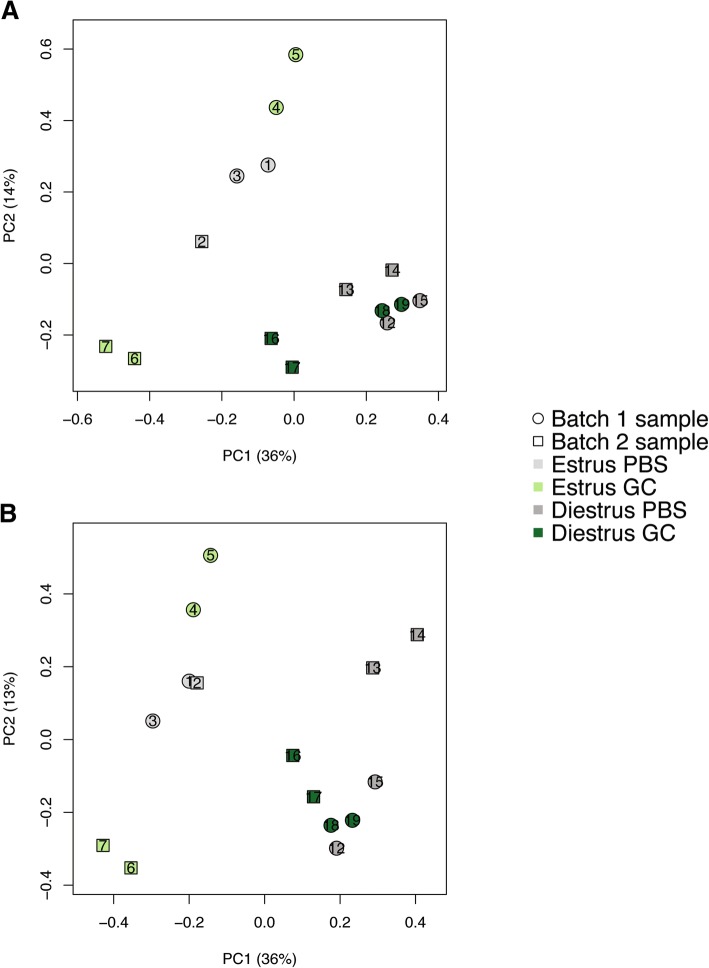
The emergence of fully antimicrobial resistant Neisseria gonorrhoeae has led global public health agencies to identify a critical need for next generation anti-gonococcal pharmaceuticals. The development and success of these compounds will rely upon valid pre-clinical models of gonorrhoeae infection. We recently developed and reported the first model of upper genital tract gonococcal infection. During initial characterization, we observed significant reproductive cycle-based variation in infection outcome. When uterine infection occurred in the diestrus phase, there was significantly greater pathology than during estrus phase. The aim of this study was to evaluate transcriptional profiles of infected uterine tissue from mice in either estrus or diestrus phase in order to elucidate possible mechanisms for these differences.
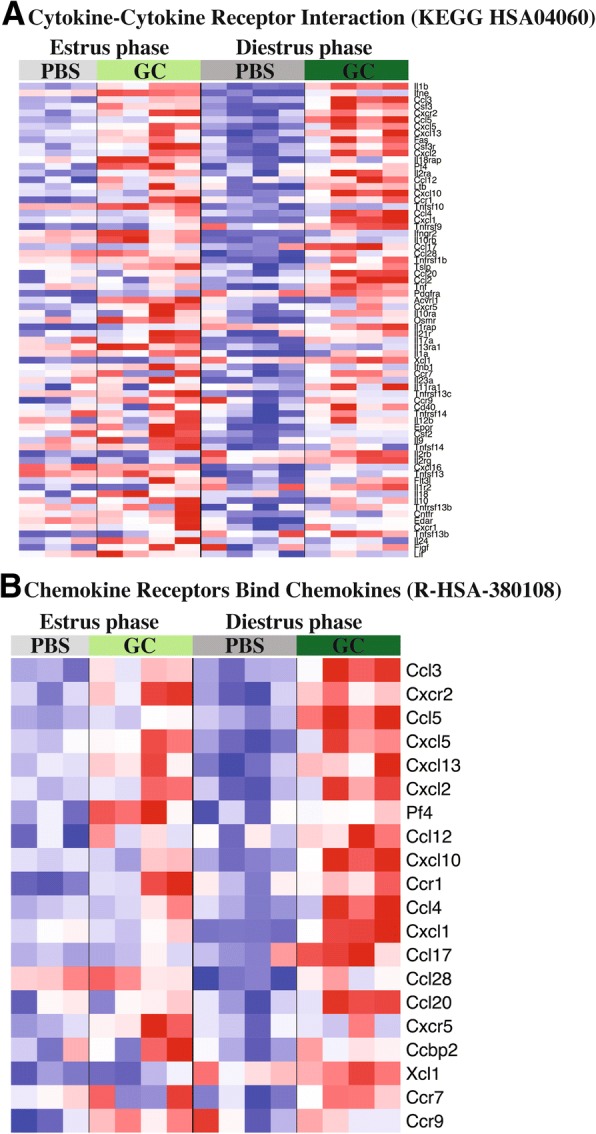
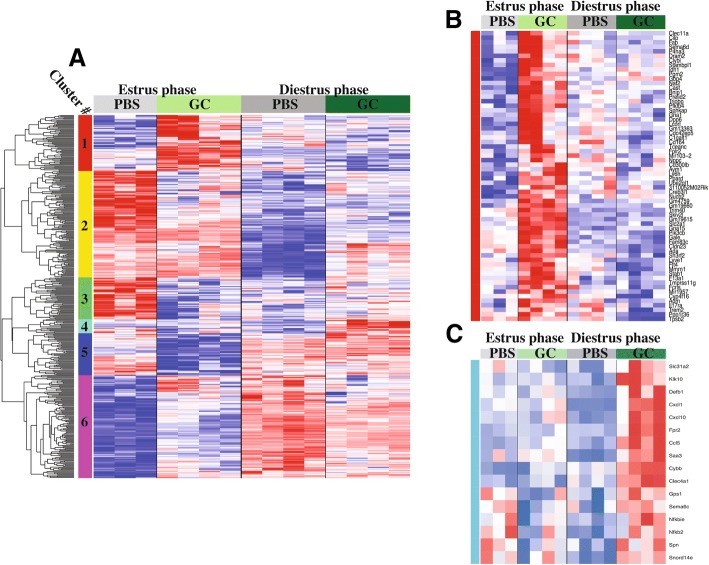
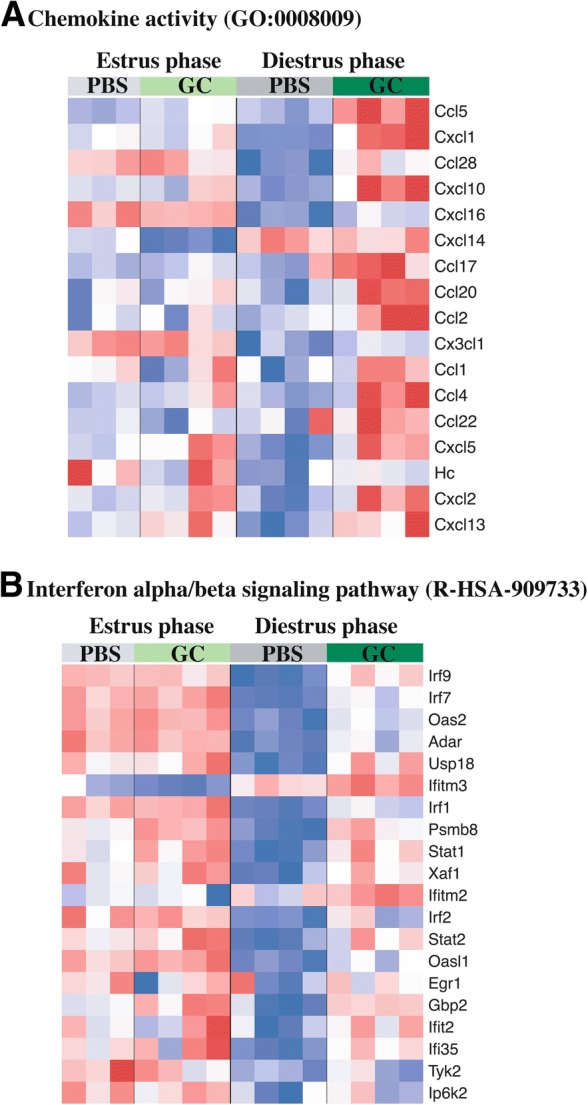
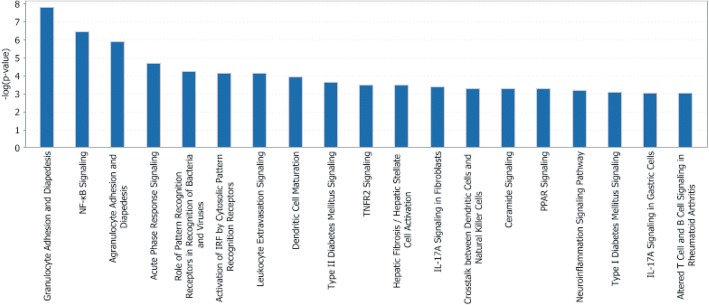
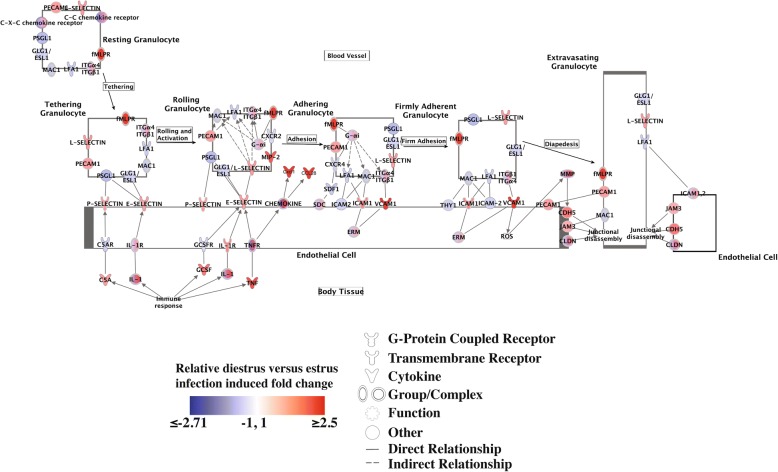
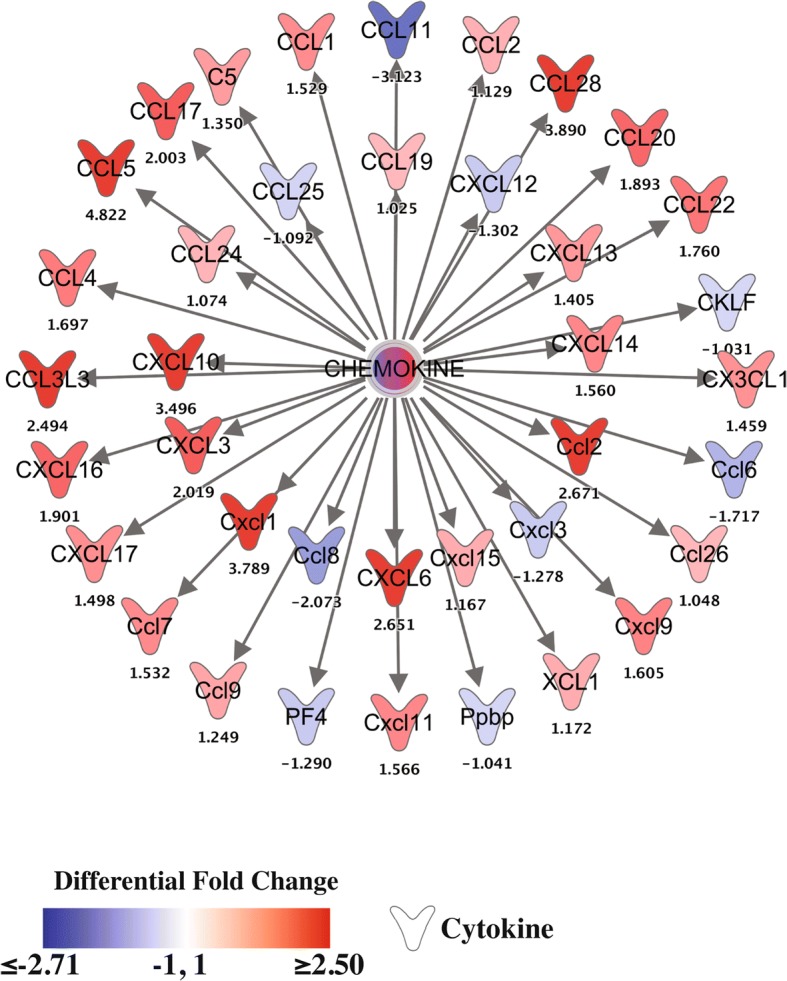
Genes and biological pathways with phase-independent induction during infection showed a chemokine dominant cytokine response to Neisseria gonorrhoeae. Despite general induction being phase-independent, this common anti-gonococcal response demonstrated greater induction during diestrus phase infection. Greater activity of granulocyte adhesion and diapedesis regulators during diestrus infection, particularly in chemokines and diapedesis regulators, was also shown. In addition to a greater induction of the common anti-gonococcal response, Gene Set Enrichment Analysis identified a diestrus-specific induction of type-1 interferon signaling pathways.
This transcriptional analysis of murine uterine gonococcal infection during distinct points in the natural reproductive cycle provided evidence for a common anti-gonococcal response characterized by significant induction of granulocyte chemokine expression and high proinflammatory mediators. The basic biology of this host response to N. gonorrhoeae in estrus and diestrus is similar at the pathway level but varies drastically in magnitude. Overlaying this, we observed type-1 interferon induction specifically in diestrus infection where greater pathology is observed. This supports recent work suggesting this pathway has a significant, possibly host-detrimental, function in gonococcal infection. Together these findings lay the groundwork for further examination of the role of interferons in gonococcal infection. Additionally, this work enables the implementation of the diestrus uterine infection model using the newly characterized host response as a marker of pathology and its prevention as a correlate of candidate vaccine efficacy and ability to protect against the devastating consequences of N. gonorrhoeae-associated sequelae.
完全抗药性淋病奈瑟菌的出现,促使全球公共卫生机构认识到迫切需要开发新一代抗淋病药物。这些化合物的开发和成功将依赖于有效的淋病感染临床前模型。我们最近开发并报告了首例上生殖道淋病感染模型。在最初的特征描述中,我们观察到感染结果与生殖周期有显著的变化。当子宫感染发生在动情间期时,其病理比在动情期时更为严重。本研究的目的是评估处于动情期或动情间期的感染子宫组织的转录谱,以阐明这些差异的可能机制。
在感染过程中具有与周期无关诱导的基因和生物学途径显示出对淋病奈瑟菌的趋化因子优势细胞因子反应。尽管总体诱导与周期无关,但这种常见的抗淋病反应在动情间期感染时的诱导更为明显。在动情间期感染时,粒细胞黏附和出芽调节剂的活性也更高,特别是在趋化因子和出芽调节剂中。除了更为明显的共同抗淋病反应诱导外,基因集富集分析还确定了动情期特异性的 1 型干扰素信号通路诱导。
在自然生殖周期的不同点对小鼠子宫淋病奈瑟菌感染进行的转录分析提供了证据,证明存在一种常见的抗淋病反应,其特征是粒细胞趋化因子表达和高促炎介质的显著诱导。在发情期和动情间期,宿主对淋病奈瑟菌的这种基本生物学反应在途径水平上相似,但在幅度上有很大差异。在此基础上,我们观察到 1 型干扰素在动情间期感染中特异性诱导,在这种情况下观察到更严重的病理。这支持了最近的研究工作,表明该途径在淋病奈瑟菌感染中具有重要的、可能对宿主有害的功能。这些发现为进一步研究干扰素在淋病奈瑟菌感染中的作用奠定了基础。此外,这项工作可以使用新表征的宿主反应作为病理学的标志物,并将其作为候选疫苗疗效和预防淋病奈瑟菌相关后遗症的能力的相关性,来实施动情间期子宫感染模型。