Department of Pharmacy and Biotechnology (FaBiT), University of Bologna, 40126 Bologna, Italy.
Department of Experimental, Diagnostic and Specialty Medicine (DIMES), University of Bologna, 40138 Bologna, Italy.
Nutrients. 2018 Aug 22;10(9):1141. doi: 10.3390/nu10091141.
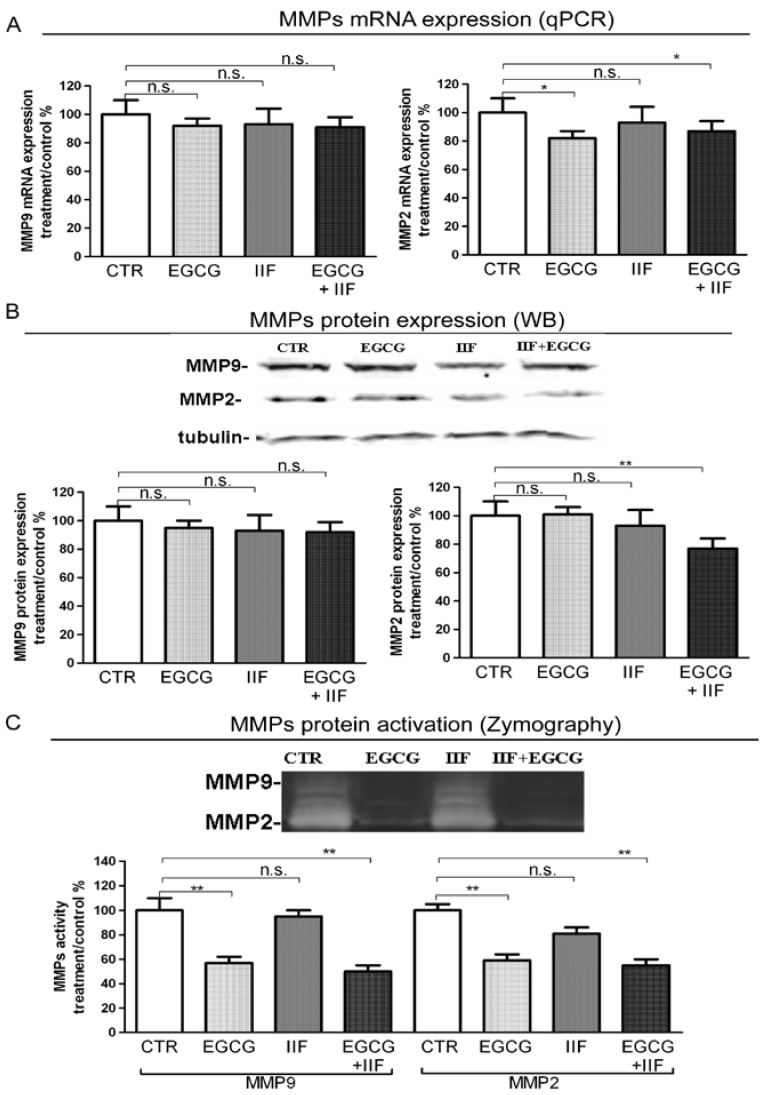
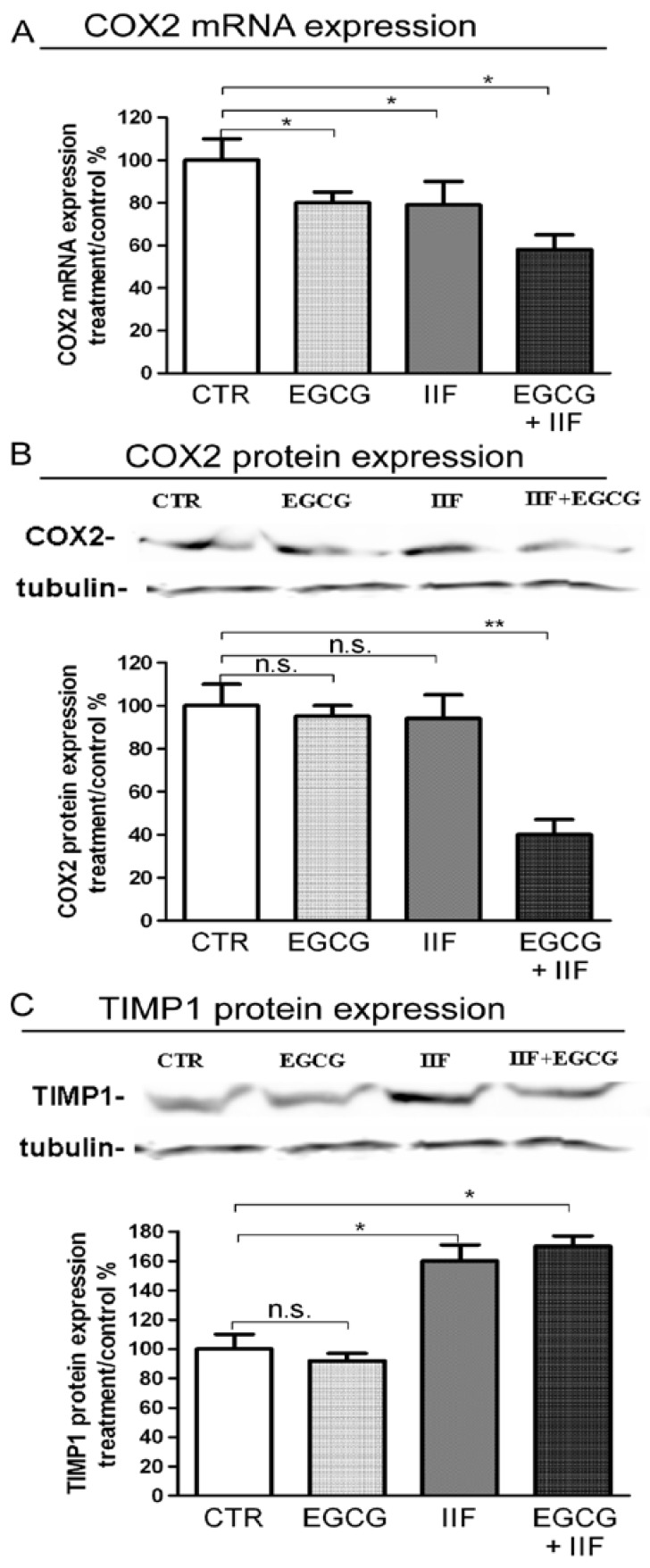
We conducted an in vitro study combining a rexinoid, 6-OH-11-O-hydroxyphenanthrene (IIF), and epigallocatechin-3-gallate (EGCG), which is the main catechin of green tea, on BE(2)-C, a neuroblastoma cell line representative of the high-risk group of patients. Neuroblastoma is the most common malignancy of childhood: high-risk patients, having N-MYC over-expression, undergo aggressive therapy and show high mortality or an increased risk of secondary malignancies. Retinoids are used in neuroblastoma therapy with incomplete success: the association of a second molecule might improve the efficacy. BE(2)-C cells were treated by EGCG and IIF, individually or in combination: cell viability, as evaluated by 3-(4,5-dimethylthiazol-2-yl)-2,5-diphenyl tetrazolium bromide (MTT) assay, was reduced, EGCG+IIF being the most effective treatment. Apoptosis occurred and the EGCG+IIF treatment decreased N-MYC protein expression and molecular markers of invasion (MMP-2, MMP-9 and COX-2). Zymography demonstrated nearly 50% inhibition of MMP activity. When BE(2)-C cells were grown in non-adherent conditions to enrich the tumor-initiating cell population, BE(2)-C-spheres were obtained. After 48 h and 72 h treatment, EGCG+IIF limited BE(2)-C-sphere formation and elicited cell death with a reduction of N-MYC expression. We concluded that the association of EGCG to IIF might be applied without toxic effects to overcome the incomplete success of retinoid treatments in neuroblastoma patients.
我们进行了一项体外研究,将一种类视黄醇化合物 6-OH-11-O-羟基菲(IIF)和表没食子儿茶素没食子酸酯(EGCG),绿茶的主要儿茶素,联合用于 BE(2)-C 神经母细胞瘤细胞系,该细胞系代表了高危组患者。神经母细胞瘤是儿童最常见的恶性肿瘤:N-MYC 过表达的高危患者接受强化治疗,死亡率高或二次恶性肿瘤风险增加。类视黄醇用于神经母细胞瘤治疗,但效果并不完全理想:联合使用第二种分子可能会提高疗效。BE(2)-C 细胞分别用 EGCG 和 IIF 以及联合处理:通过 3-(4,5-二甲基噻唑-2-基)-2,5-二苯基四氮唑溴盐(MTT)测定评估细胞活力,发现 EGCG+IIF 是最有效的治疗方法。发生了细胞凋亡,EGCG+IIF 治疗降低了 N-MYC 蛋白表达和侵袭分子标志物(MMP-2、MMP-9 和 COX-2)。凝胶酶谱显示 MMP 活性几乎抑制了 50%。当 BE(2)-C 细胞在非贴壁条件下生长以富集肿瘤起始细胞群时,获得了 BE(2)-C 球体。经过 48 小时和 72 小时的处理,EGCG+IIF 限制了 BE(2)-C 球体的形成并诱导了细胞死亡,同时降低了 N-MYC 的表达。我们得出结论,将 EGCG 与 IIF 联合应用可能不会产生毒性作用,从而克服视黄醇类药物在神经母细胞瘤患者治疗中的不完全成功。