Wu Yu, Wang Wei, Peng Xiang-Mei, He Yi, Xiong Yi-Xiao, Liang Hui-Fang, Chu Liang, Zhang Bi-Xiang, Ding Ze-Yang, Chen Xiao-Ping
Hepatic Surgery Center, Tongji Hospital, Tongji Medical College, Huazhong University of Science and Technology, Wuhan, China.
Department of Nephrology, Liyuan Hospital, Tongji Medical College, Huazhong University of Science and Technology, Wuhan, China.
Front Pharmacol. 2018 Aug 8;9:877. doi: 10.3389/fphar.2018.00877. eCollection 2018.
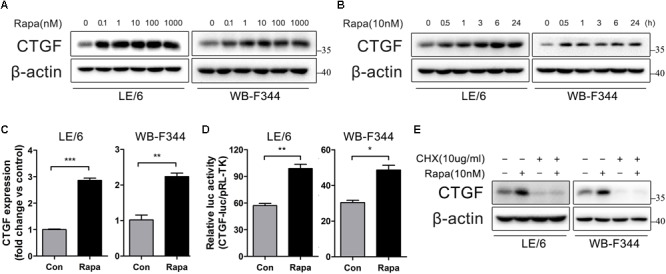
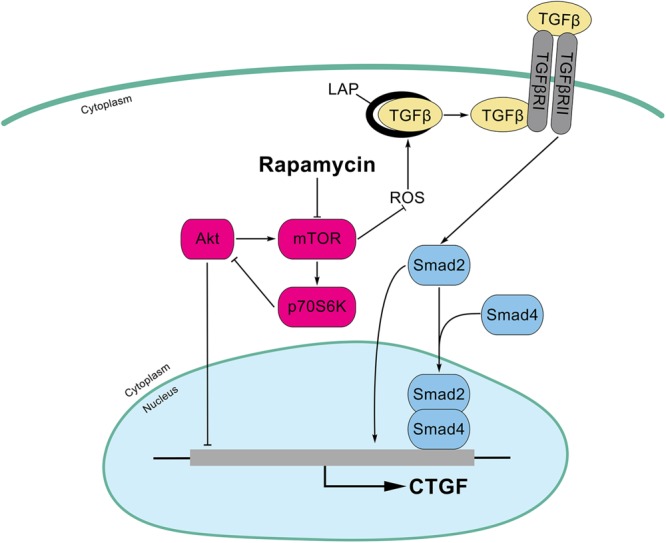
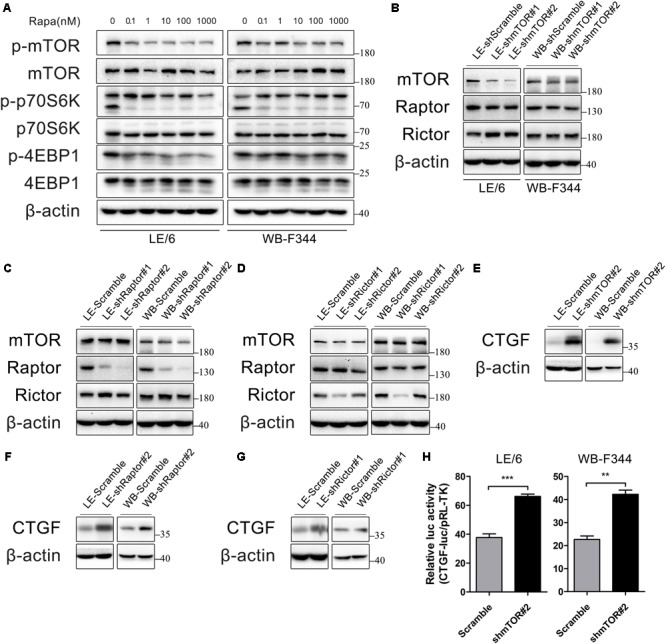
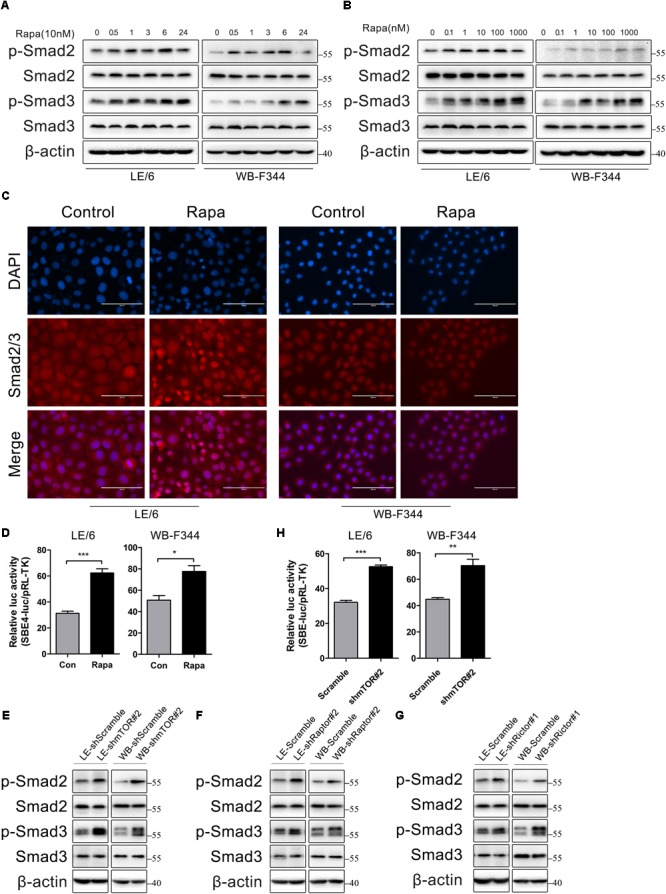
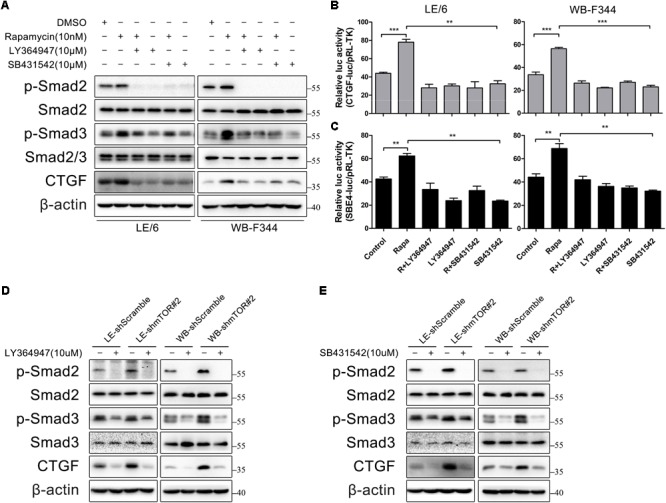
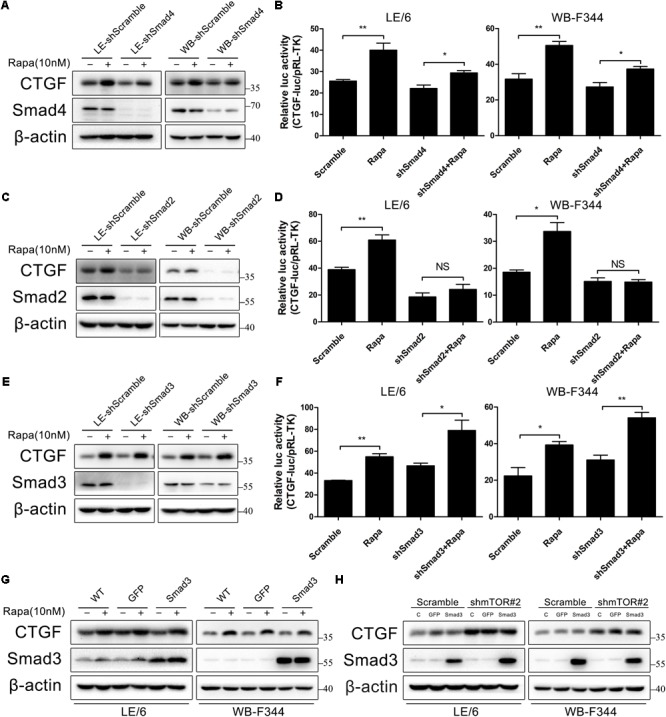
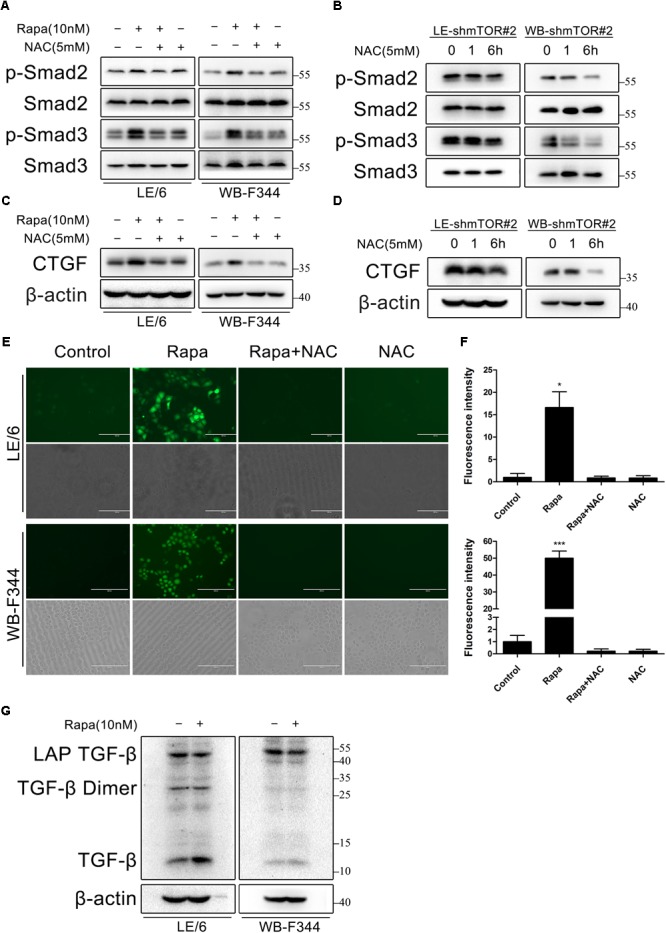
Rapamycin (sirolimus) is a mTOR kinase inhibitor and is widely used as an immunosuppressive drug to prevent graft rejection in organ transplantation currently. However, some recent investigations have reported that it had profibrotic effect in the progression of organ fibrosis, and its precise role in the liver fibrosis is still poorly understood. Here we showed that rapamycin upregulated connective tissue growth factor (CTGF) expression at the transcriptional level in hepatic progenitor cells (HPCs). Using lentivirus-mediated small hairpin RNA (shRNA) we demonstrated that knockdown of mTOR, Raptor, or Rictor mimicked the effect of rapamycin treatment. Mechanistically, inhibition of mTOR activity with rapamycin resulted in a hyperactive PI3K-Akt pathway, whereas this activation inhibited the expression of CTGF in HPCs. Besides, rapamycin activated the TGF-β-Smad signaling, and TGF-β receptor type I (TGFβRI) serine/threonine kinase inhibitors completely blocked the effects of rapamycin on HPCs. Moreover, Smad2 was involved in the induction of CTGF through rapamycin-activated TGF-β-Smad signaling as knockdown completely blocked CTGF induction, while knockdown of Smad4 expression partially inhibited induction, whereas Smad3 knockdown had no effect. Rapamycin also induced ROS generation and latent TGF-β activation which contributed to TGF-β-Smad signaling. In conclusion, this study demonstrates that rapamycin upregulates CTGF in HPCs and suggests that rapamycin has potential fibrotic effect in liver.
雷帕霉素(西罗莫司)是一种mTOR激酶抑制剂,目前作为免疫抑制药物广泛用于预防器官移植中的移植物排斥反应。然而,最近一些研究报道,它在器官纤维化进展中具有促纤维化作用,其在肝纤维化中的具体作用仍知之甚少。在此我们表明,雷帕霉素在肝祖细胞(HPCs)中在转录水平上调结缔组织生长因子(CTGF)的表达。使用慢病毒介导的小发夹RNA(shRNA),我们证明敲低mTOR、Raptor或Rictor可模拟雷帕霉素处理的效果。机制上,雷帕霉素抑制mTOR活性导致PI3K-Akt途径过度活跃,而这种激活抑制了HPCs中CTGF的表达。此外,雷帕霉素激活TGF-β-Smad信号通路,I型TGF-β受体(TGFβRI)丝氨酸/苏氨酸激酶抑制剂完全阻断了雷帕霉素对HPCs的作用。此外,Smad2通过雷帕霉素激活的TGF-β-Smad信号通路参与CTGF的诱导,因为敲低完全阻断了CTGF的诱导,而敲低Smad4表达部分抑制诱导,而敲低Smad3则无作用。雷帕霉素还诱导ROS生成和潜伏TGF-β激活,这有助于TGF-β-Smad信号通路。总之,本研究表明雷帕霉素上调HPCs中的CTGF,并提示雷帕霉素在肝脏中具有潜在的纤维化作用。