Li Shan, Yang Chun, Fang Xi, Zhan Gaofeng, Huang Niannian, Gao Jie, Xu Hui, Hashimoto Kenji, Luo Ailin
Department of Anesthesiology, Tongji Hospital, Tongji Medical College, Huazhong University of Science and Technology, Wuhan, China.
Division of Clinical Neuroscience, Center for Forensic Mental Health, Chiba University, Chiba, Japan.
Front Pharmacol. 2018 Aug 8;9:887. doi: 10.3389/fphar.2018.00887. eCollection 2018.
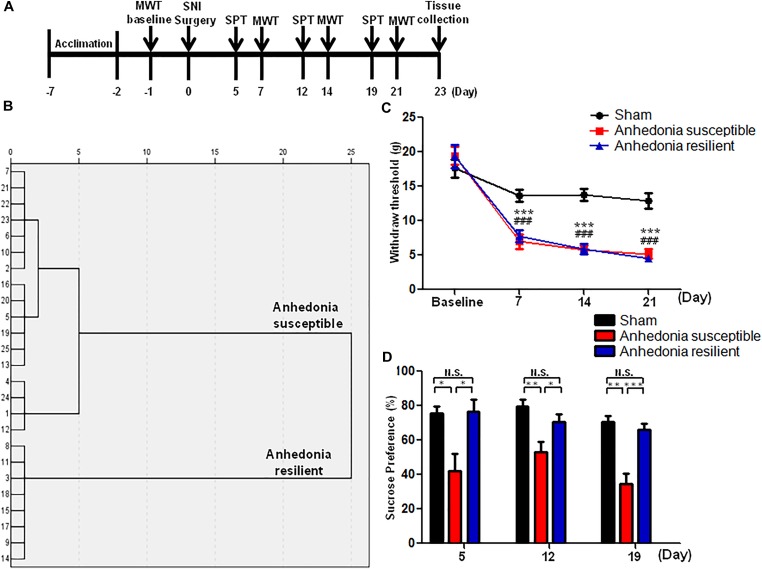
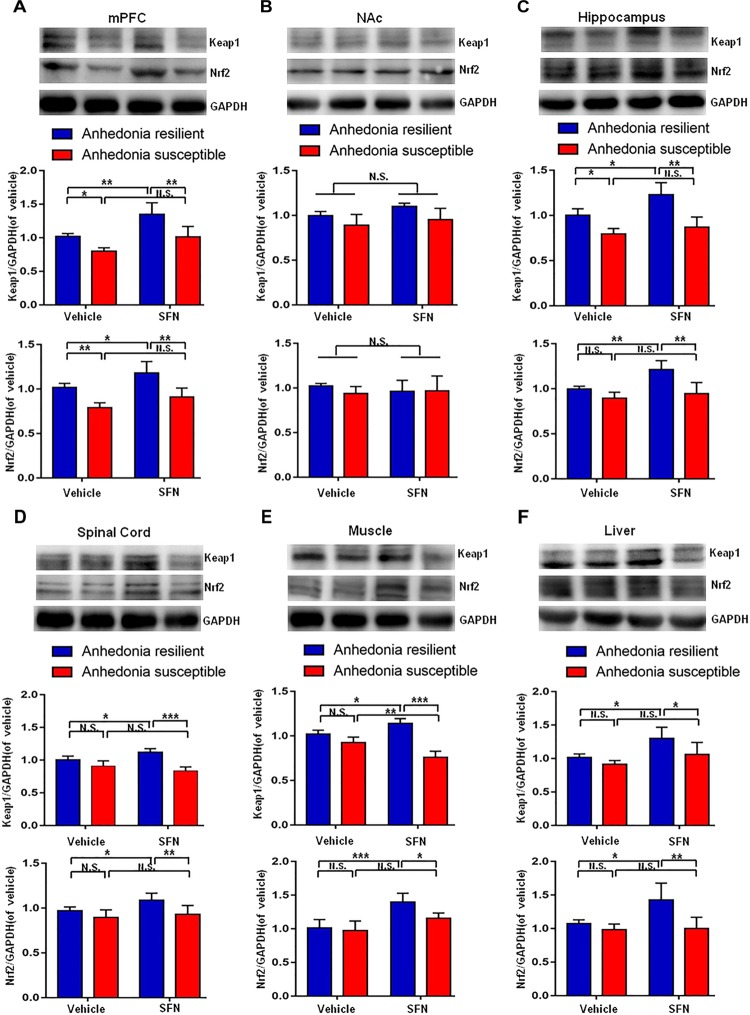
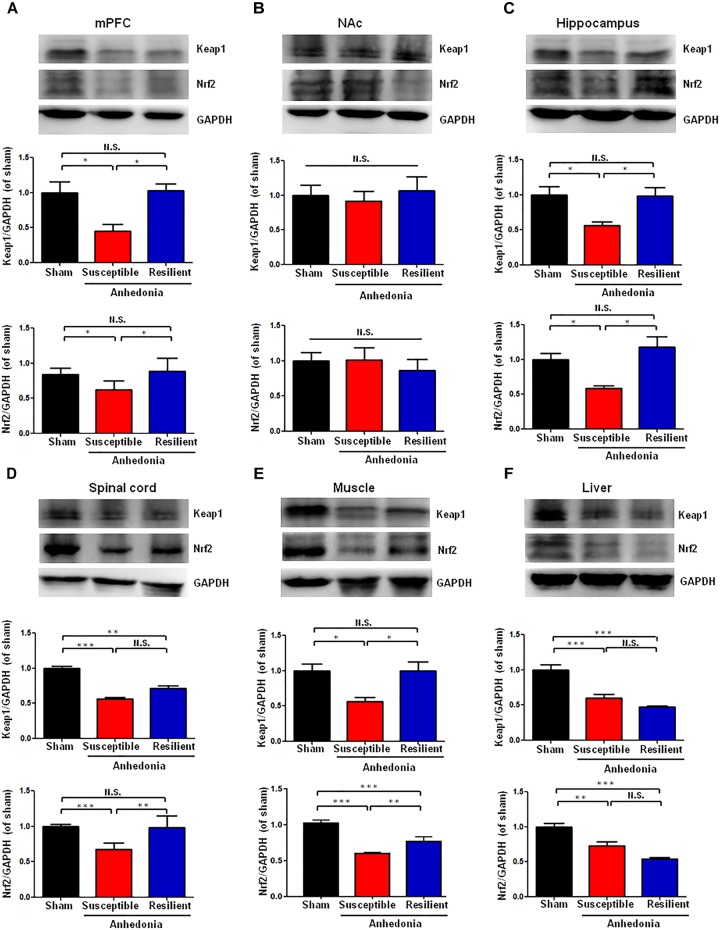
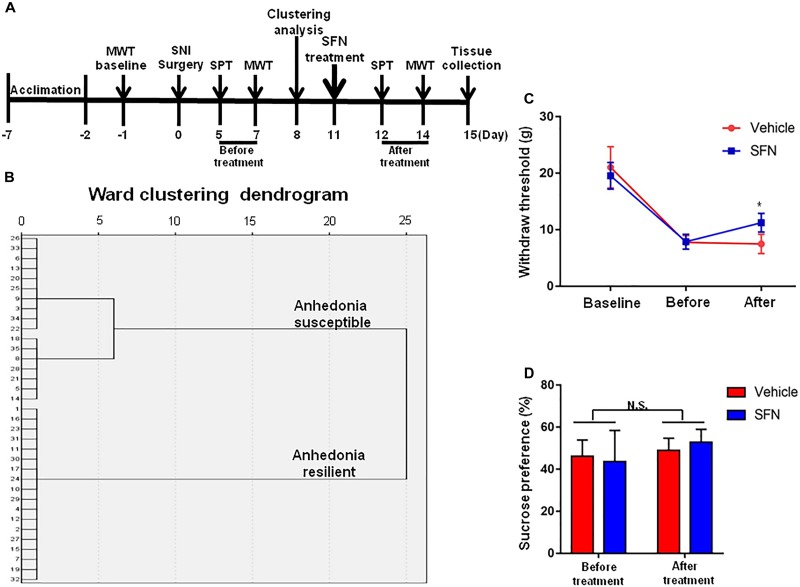
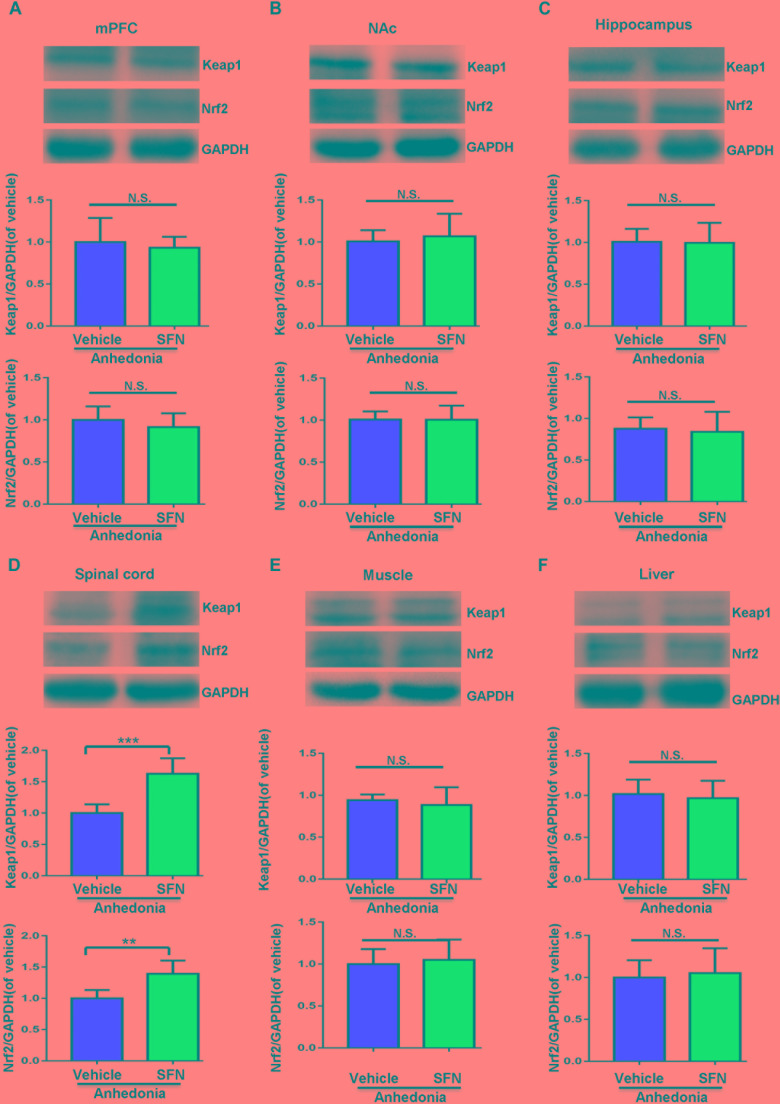
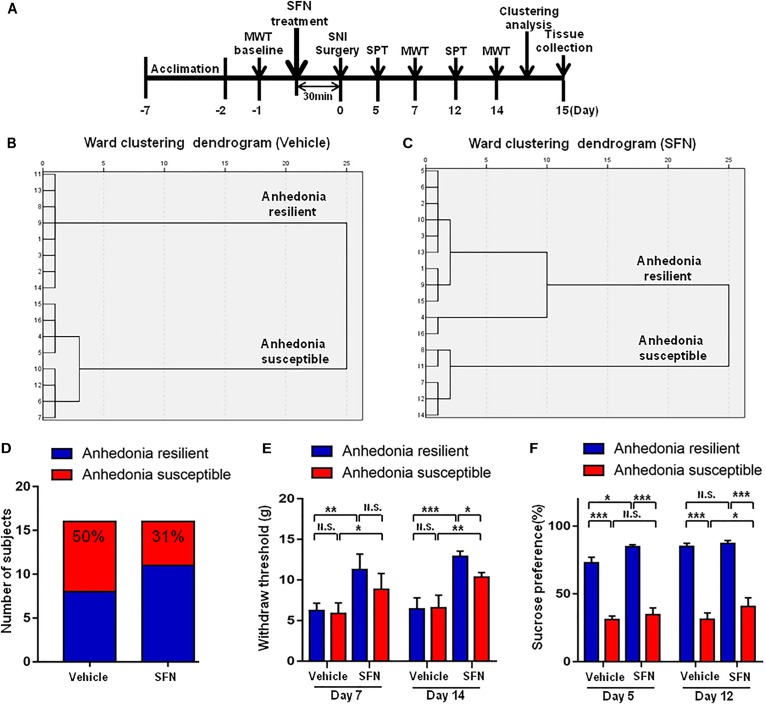
Patients with chronic neuropathic pain frequently suffer from symptoms of anhedonia (loss of pleasure), which is a core clinical manifestation of depression. Accumulating studies have shown the beneficial effects of the natural compound sulforaphane (SFN), an activator of nuclear factor (erythroid-derived 2)-like 2 (Nrf2), on depression-like phenotype through a potent anti-inflammatory effect. However, it is unknown whether SFN confers beneficial effects in neuropathic pain-associated anhedonia. Spared nerve injury (SNI) is classical rodent model of chronic neuropathic pain. We here used a rat model of SNI. Hierarchical cluster analysis of sucrose preference test (SPT) results was used to classify the SNI rats with or without an anhedonia phenotype. Nrf2 protein expression was significantly decreased in the medial prefrontal cortex (mPFC), hippocampus, spinal cord, and skeletal muscle, but not in the nucleus accumbens, in anhedonia-susceptible rats compared with sham or anhedonia-resistant rats. The expression of Kelch-like erythroid cell-derived protein with CNC homology (ECH)-associated protein 1 (Keap1), a partner of Nrf2, in mPFC, hippocampus, and muscle of anhedonia-susceptible rats was also significantly lower than that in sham or anhedonia-resilient rats. Subsequent SFN administration after SNI surgery exerted therapeutic effects on reduced mechanical withdrawal threshold (MWT) scores, but not on sucrose preference, through the normalization of Keap1-Nrf2 signaling in the spinal cords of anhedonia-susceptible rats. Interestingly, treatment with SFN 30 min prior to SNI surgery significantly attenuated reduced MWT scores and sucrose preference, and restored tissue Keap1 and Nrf2 levels. In conclusion, this study suggests that decreased Keap1-Nrf2 signaling in mPFC, hippocampus, and muscle may contribute to anhedonia susceptibility post-SNI surgery, and that SFN exerts beneficial effects in SNI rats by normalization of decreased Keap1-Nrf2 signaling.
慢性神经性疼痛患者经常遭受快感缺失(愉悦感丧失)症状的折磨,这是抑郁症的核心临床表现。越来越多的研究表明,天然化合物萝卜硫素(SFN)作为核因子(红系衍生2)样2(Nrf2)的激活剂,通过强大的抗炎作用,对抑郁样表型具有有益影响。然而,尚不清楚SFN是否对神经性疼痛相关的快感缺失具有有益作用。 spared神经损伤(SNI)是慢性神经性疼痛的经典啮齿动物模型。我们在此使用了SNI大鼠模型。通过对蔗糖偏好试验(SPT)结果进行层次聚类分析,对有无快感缺失表型的SNI大鼠进行分类。与假手术组或抗快感缺失大鼠相比,快感缺失易感大鼠的内侧前额叶皮质(mPFC)、海马体、脊髓和骨骼肌中的Nrf2蛋白表达显著降低,但伏隔核中未降低。快感缺失易感大鼠的mPFC、海马体和肌肉中,与Nrf2相关的kelch样红系细胞衍生蛋白1(Keap1)的表达也显著低于假手术组或抗快感缺失大鼠。SNI手术后给予SFN对降低的机械性撤腿阈值(MWT)评分具有治疗作用,但对蔗糖偏好无治疗作用,这是通过使快感缺失易感大鼠脊髓中的Keap1-Nrf2信号正常化实现的。有趣的是,在SNI手术前30分钟用SFN治疗可显著减轻降低的MWT评分和蔗糖偏好,并恢复组织中Keap1和Nrf2水平。总之,本研究表明,mPFC、海马体和肌肉中Keap1-Nrf2信号的降低可能导致SNI手术后的快感缺失易感性,并且SFN通过使降低的Keap1-Nrf2信号正常化,对SNI大鼠具有有益作用。