Vieira Fernando G, Hatzipetros Theo, Thompson Kenneth, Moreno Andy J, Kidd Joshua D, Tassinari Valerie R, Levine Beth, Perrin Steven, Gill Alan
ALS Therapy Development Institute, USA.
IBRO Rep. 2017 Mar 12;2:47-53. doi: 10.1016/j.ibror.2017.03.001. eCollection 2017 Jun.
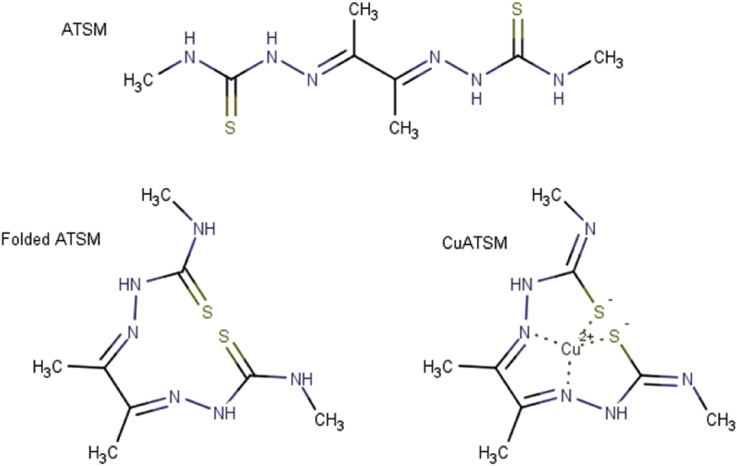
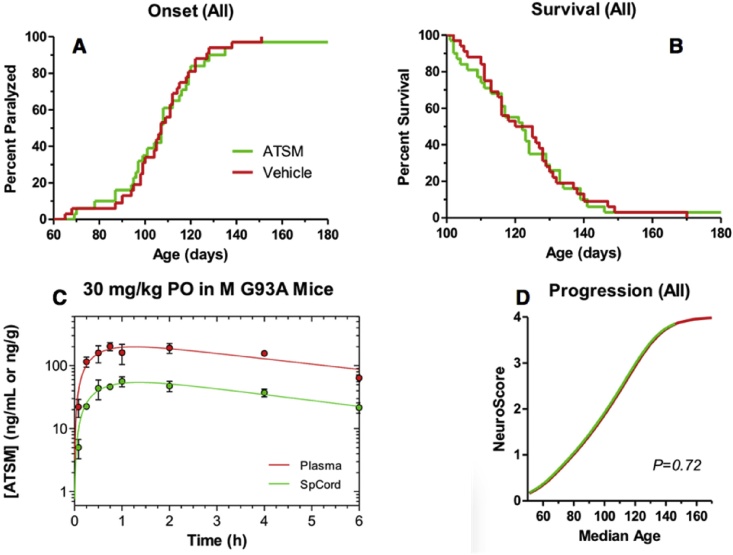
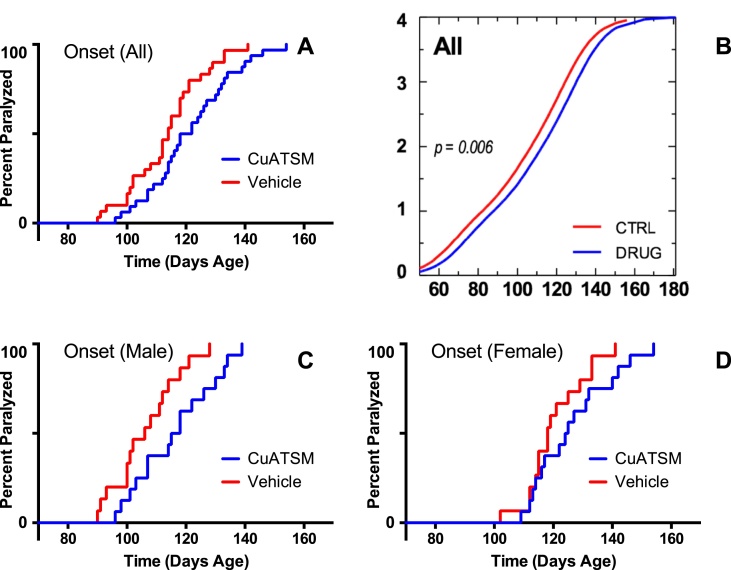
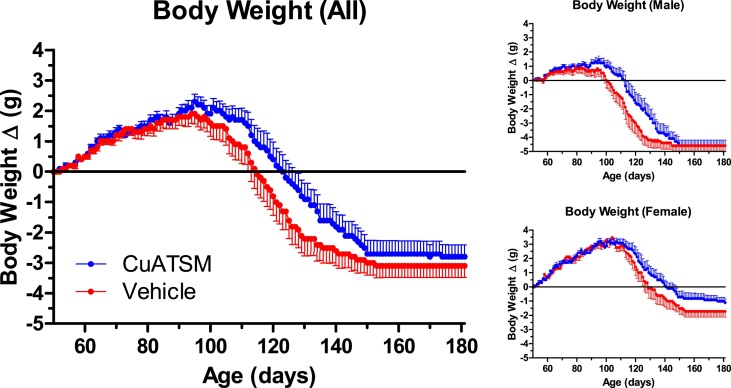
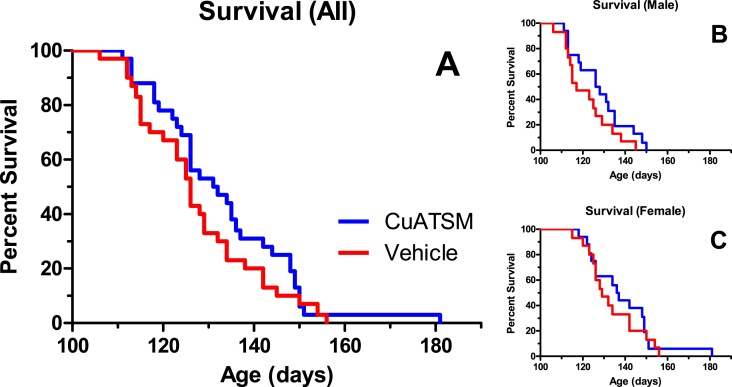
A copper chelator known as diacetylbis(N(4)-methylthiosemicarbazonato) copper II (CuATSM), has been reported to be efficacious in multiple transgenic SOD1 models of amyotrophic lateral sclerosis (ALS), a fatal neurodegenerative disorder affecting motor neurons. Here we report that we also observed CuATSM efficacy on disease onset and progression in a standardized litter-matched and gender-balanced efficacy study using B6SJL-SOD1G93A/1Gur mice. We also report improved survival trends with CuATSM treatment. In addition, we report a lack of efficacy by unmetallated ATSM in the same model using the same standardized study design. These results add to existing evidence supporting an efficacious role for copper delivery using chaperone molecules in mouse models of ALS.
一种名为二乙酰双(N(4)-甲基硫代氨基脲基)铜II(CuATSM)的铜螯合剂,据报道在肌萎缩侧索硬化症(ALS)的多种转基因SOD1模型中有效,ALS是一种影响运动神经元的致命神经退行性疾病。在此我们报告,在一项使用B6SJL-SOD1G93A/1Gur小鼠的标准化同窝匹配且性别均衡的疗效研究中,我们也观察到了CuATSM对疾病发病和进展的疗效。我们还报告了CuATSM治疗使存活趋势得到改善。此外,我们报告在使用相同标准化研究设计的同一模型中,未金属化的ATSM没有疗效。这些结果为现有的证据增添了内容,支持在ALS小鼠模型中使用分子伴侣进行铜传递具有有效作用。