Department of Engineering, University of Roma TRE, via Vito Volterra 62, Rome, Italy.
School of Electrical & Electronic Engineering, University College Dublin, Belfield, Dublin 4, Ireland.
Sci Rep. 2018 Aug 23;8(1):12657. doi: 10.1038/s41598-018-31174-2.
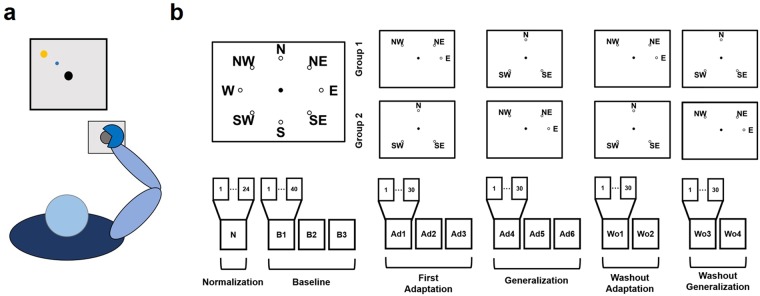
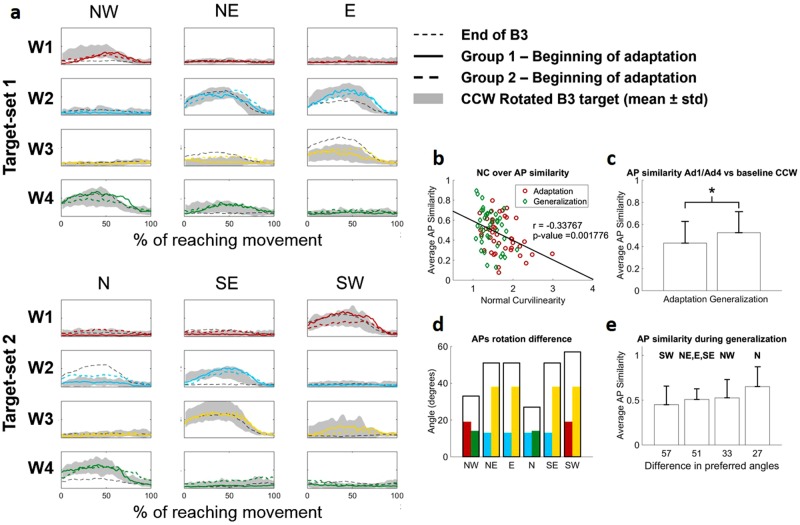
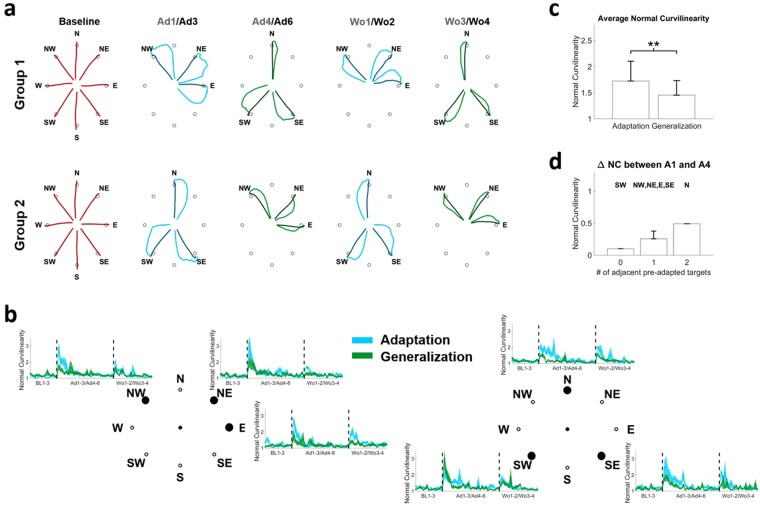
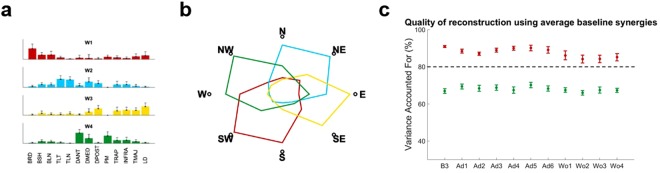
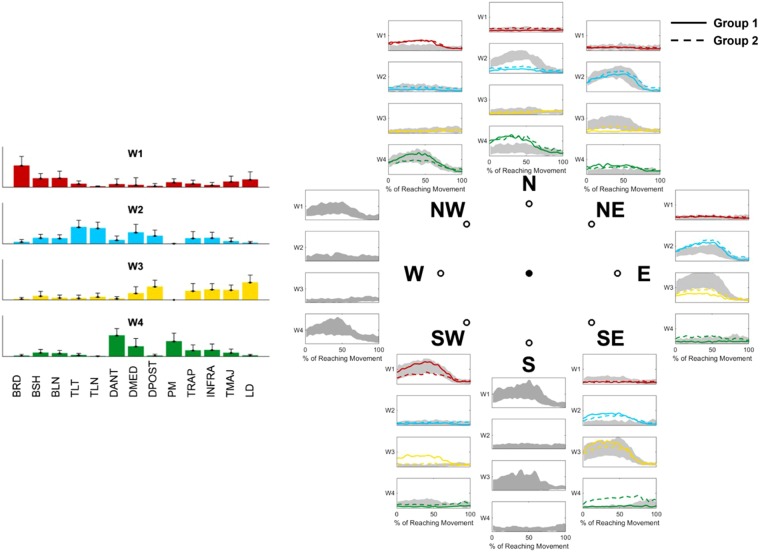
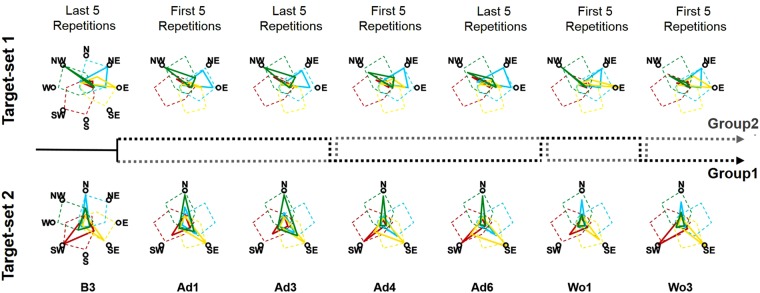
Humans can adapt their motor commands in response to alterations in the movement environment. This is achieved by tuning different motor primitives, generating adaptations that can be generalized also to relevant untrained scenarios. A theory of motor primitives has shown that natural movements can be described as combinations of muscle synergies. Previous studies have shown that motor adaptations are achieved by tuning the recruitment of robust synergy modules. Here we tested if: 1) different synergistic tunings can be achieved in response to the same perturbations applied with different orders of exposure; 2) different synergistic tunings can explain different patterns of generalization of adaptation. We found that exposing healthy individuals to two visuomotor rotation perturbations covering different parts of the same workspace in a different order resulted in different tunings of the activation of the same set of synergies. Nevertheless, these tunings resulted in the same net biomechanical adaptation patterns. We also show that the characteristics of the different tunings correlate with the presence and extent of generalization of adaptation to untrained portions of the workspace. Our results confirm synergies as invariant motor primitives whose recruitment is dynamically tuned during motor adaptations.
人类可以根据运动环境的变化调整运动指令。这是通过调整不同的运动基元来实现的,从而产生可以推广到相关未训练场景的适应性变化。运动基元理论表明,自然运动可以描述为肌肉协同作用的组合。先前的研究表明,运动适应性是通过调整稳健协同模块的募集来实现的。在这里,我们测试了以下两种情况:1)是否可以通过不同的顺序施加相同的运动环境变化来实现不同的协同调整;2)不同的协同调整是否可以解释适应的不同泛化模式。我们发现,将健康个体暴露于两种视觉运动旋转扰动中,这两种扰动以不同的顺序覆盖相同工作空间的不同部分,会导致同一组协同作用的激活发生不同的调整。然而,这些调整会导致相同的净生物力学适应模式。我们还表明,不同调整的特征与适应到工作空间未训练部分的存在和程度相关。我们的研究结果证实了协同作用作为不变的运动基元,其募集在运动适应过程中是动态调整的。