Kobayashi Mamiko, Mikami Daisuke, Uwada Junsuke, Yazawa Takashi, Kamiyama Kazuko, Kimura Hideki, Taniguchi Takanobu, Iwano Masayuki
Department of Nephrology, Faculty of Medical Sciences, University of Fukui, Fukui, Japan.
Division of Cellular Signal Transduction, Department of Biochemistry, Asahikawa Medical University, Asahikawa, Japan.
Oncotarget. 2018 Jul 31;9(59):31342-31354. doi: 10.18632/oncotarget.25809.
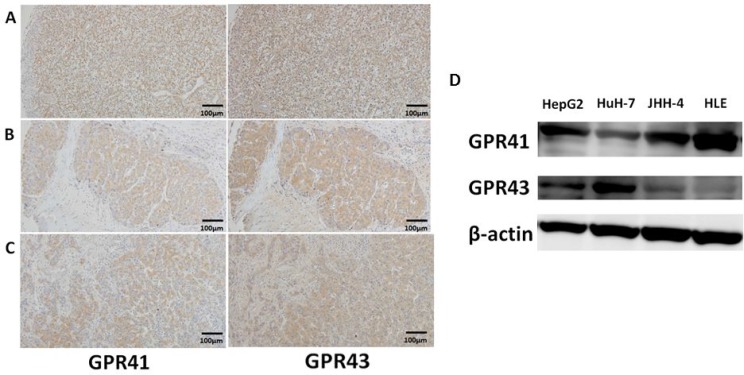
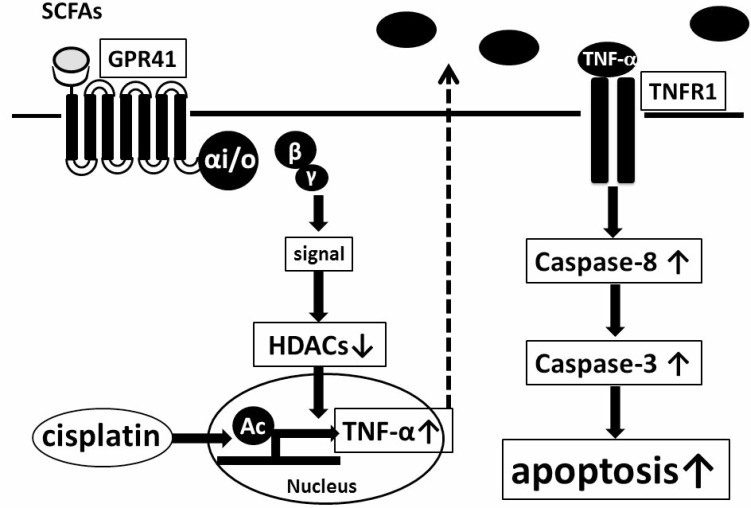
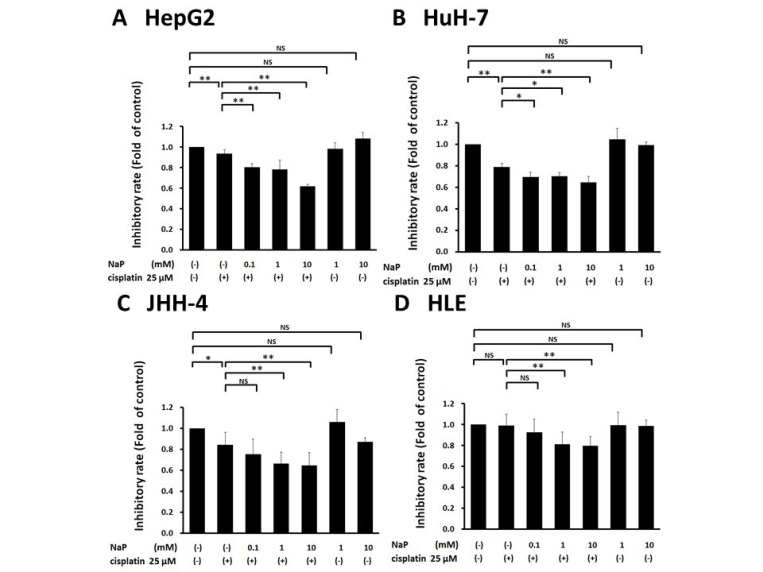
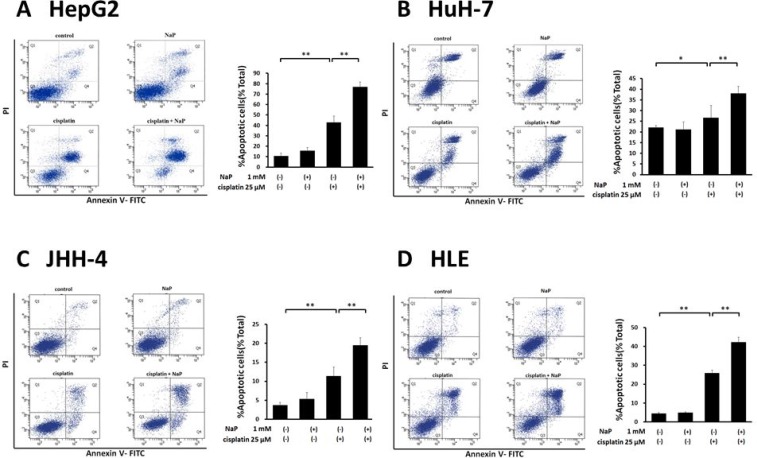
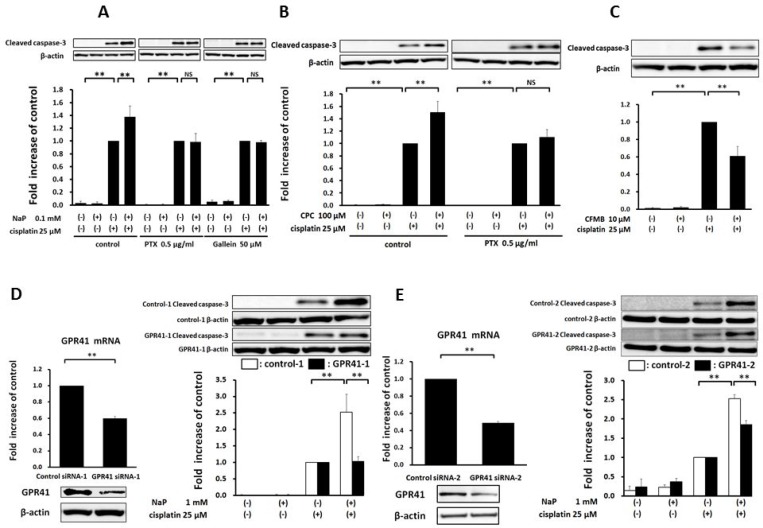
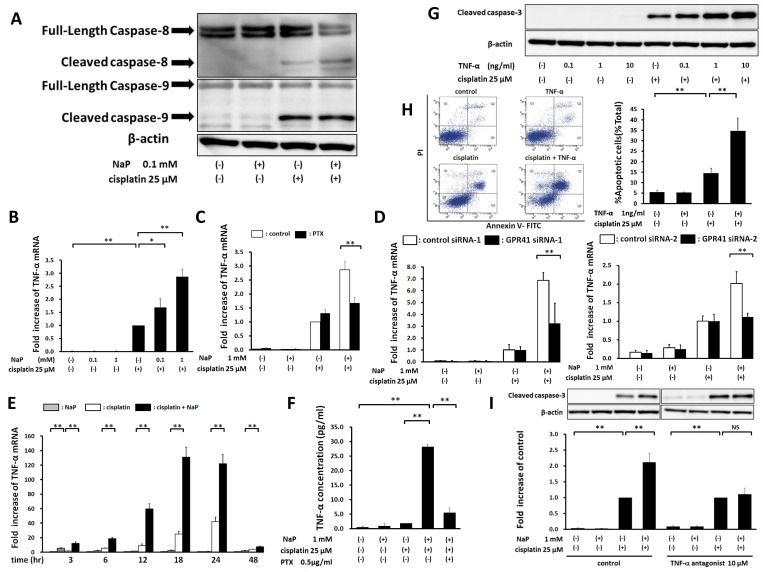
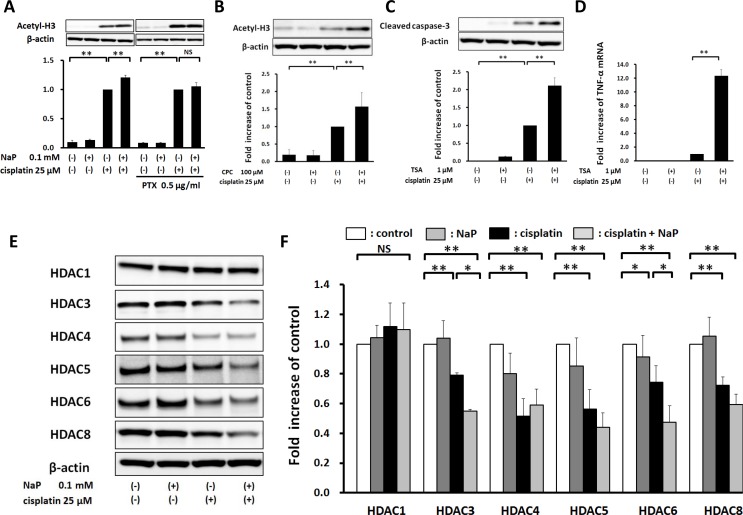
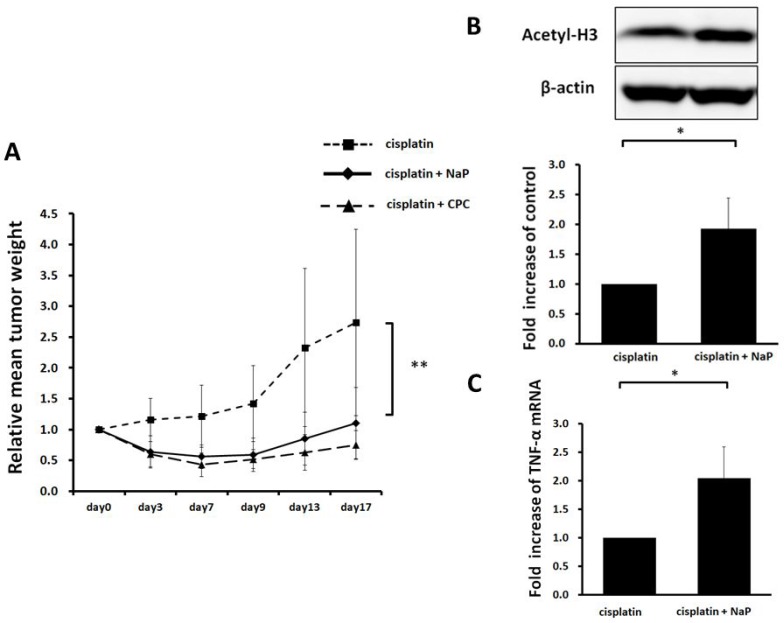
Short-chain fatty acids (SCFAs) such as acetate, propionate, and butyrate are generated by microbial fermentation of indigestible fiber by gut flora. SCFAs are ligands of two orphan G protein-coupled receptors, GPR41 and GPR43, that modulate cell proliferation and induce apoptosis. However, it is unclear if SCFAs enhance the effects of chemotherapy in a GPR41- or GPR43-dependent manner. The aim of this study was to investigate whether SCFAs, and particularly propionate, activate GPR41 or GPR43, and thereby enhance the antitumor effects of cisplatin in HepG2 human hepatocellular carcinoma (HCC) cells. The inhibitory effects of propionate and cisplatin on proliferation of HCC cells were determined by MTS assay. Changes in apoptosis rate were analyzed by flow cytometry. The effects of combined propionate and cisplatin on these properties in HCC cells were significantly higher than those of cisplatin alone. With combined treatment, the levels of cleaved caspase-3, active caspase-3 forms, and acetylated histone H3 were enhanced in a GPR41-dependent manner; expression of histone deacetylases (HDAC) 3, 4, 5, 6, 8 proteins was significantly reduced; and induction of TNF-α expression was significantly enhanced. These results suggest that propionate and cisplatin synergistically and significantly induce apoptosis of HepG2 cells by increasing expression of autocrine TNF-α via reduction of HDACs through GPR41 signaling. From clinical and translational perspectives, our data suggest that a combination of propionate with cisplatin may have better therapeutic effects on HCC compared with conventional treatment, and that a selective GPR41 agonist may be a candidate as an adjuvant therapeutic agent for HCC.
短链脂肪酸(SCFAs),如乙酸盐、丙酸盐和丁酸盐,是由肠道菌群对难消化纤维进行微生物发酵产生的。SCFAs是两种孤儿G蛋白偶联受体GPR41和GPR43的配体,可调节细胞增殖并诱导细胞凋亡。然而,尚不清楚SCFAs是否以GPR41或GPR43依赖的方式增强化疗效果。本研究的目的是探讨SCFAs,尤其是丙酸盐,是否激活GPR41或GPR43,从而增强顺铂对人肝癌(HCC)HepG2细胞的抗肿瘤作用。通过MTS法测定丙酸盐和顺铂对HCC细胞增殖的抑制作用。通过流式细胞术分析凋亡率的变化。丙酸盐和顺铂联合处理对HCC细胞这些特性的影响明显高于单独使用顺铂。联合处理时,裂解的半胱天冬酶-3、活性半胱天冬酶-3形式和乙酰化组蛋白H3的水平以GPR41依赖的方式升高;组蛋白脱乙酰酶(HDAC)3、4、5、6、8蛋白的表达显著降低;肿瘤坏死因子-α(TNF-α)表达的诱导显著增强。这些结果表明,丙酸盐和顺铂通过GPR41信号通路降低HDACs,增加自分泌TNF-α的表达,协同并显著诱导HepG2细胞凋亡。从临床和转化的角度来看,我们的数据表明,与传统治疗相比,丙酸盐与顺铂联合使用可能对HCC具有更好的治疗效果,并且选择性GPR41激动剂可能作为HCC的辅助治疗药物。