Division of Infectious Diseases and Geographic Medicine, Department of Medicine, School of Medicine, Stanford University, Stanford, CA 94305.
Department of Statistics, Stanford University, Stanford, CA 94305.
J Immunol. 2018 Oct 1;201(7):2117-2131. doi: 10.4049/jimmunol.1800161. Epub 2018 Aug 24.
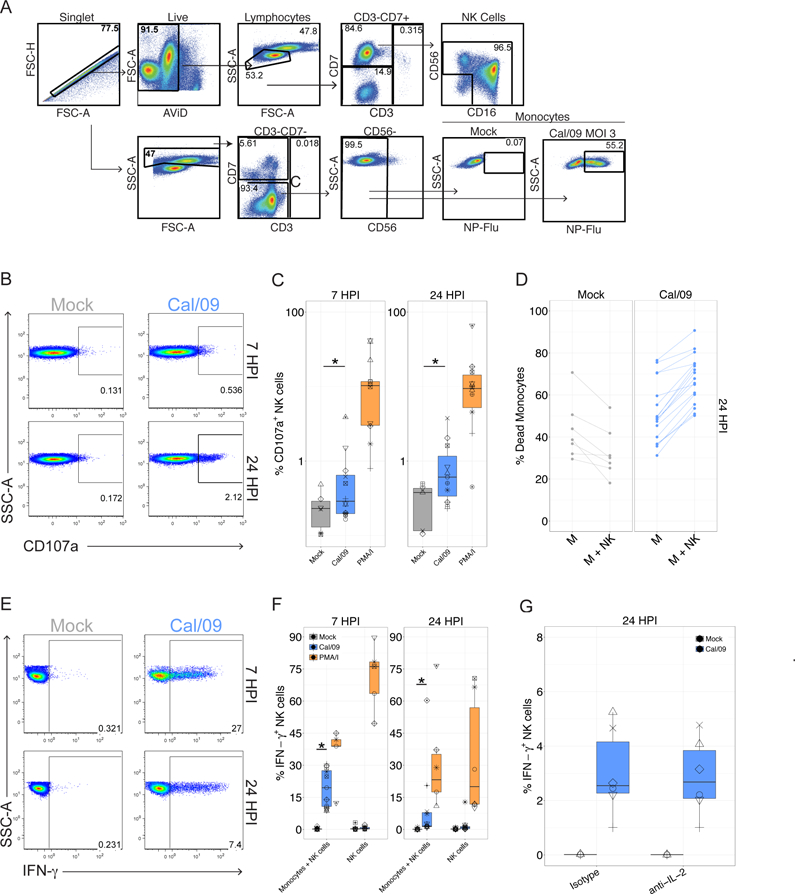
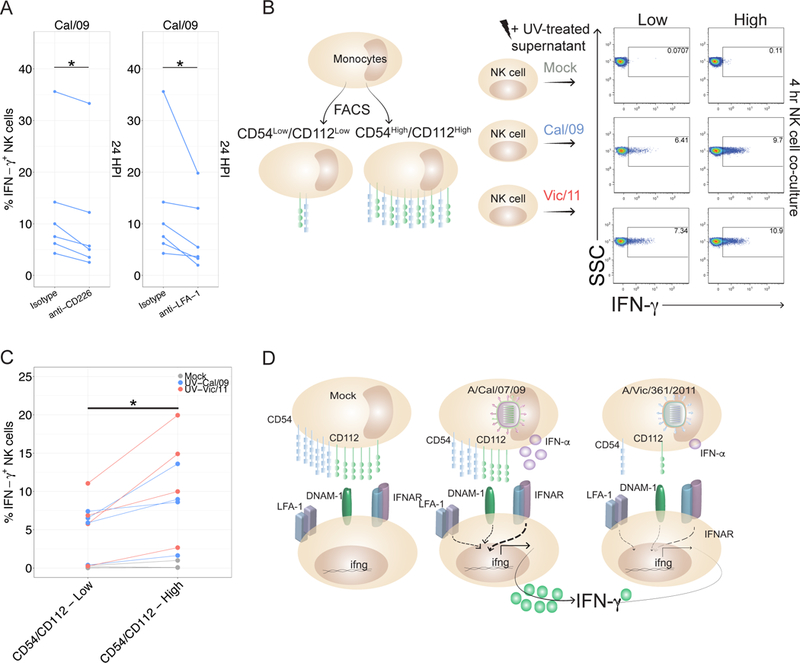
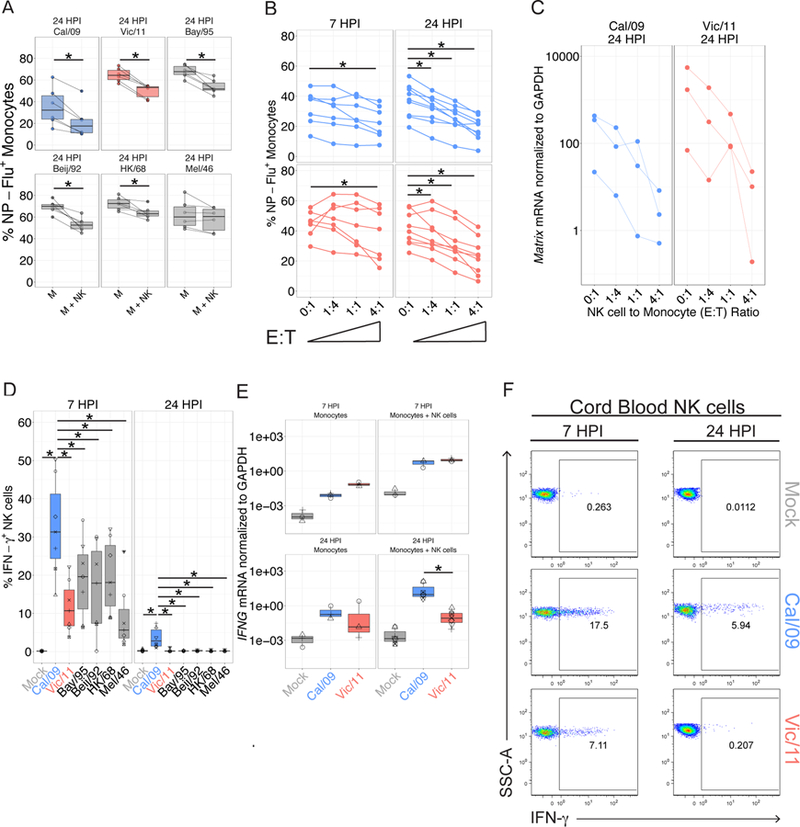
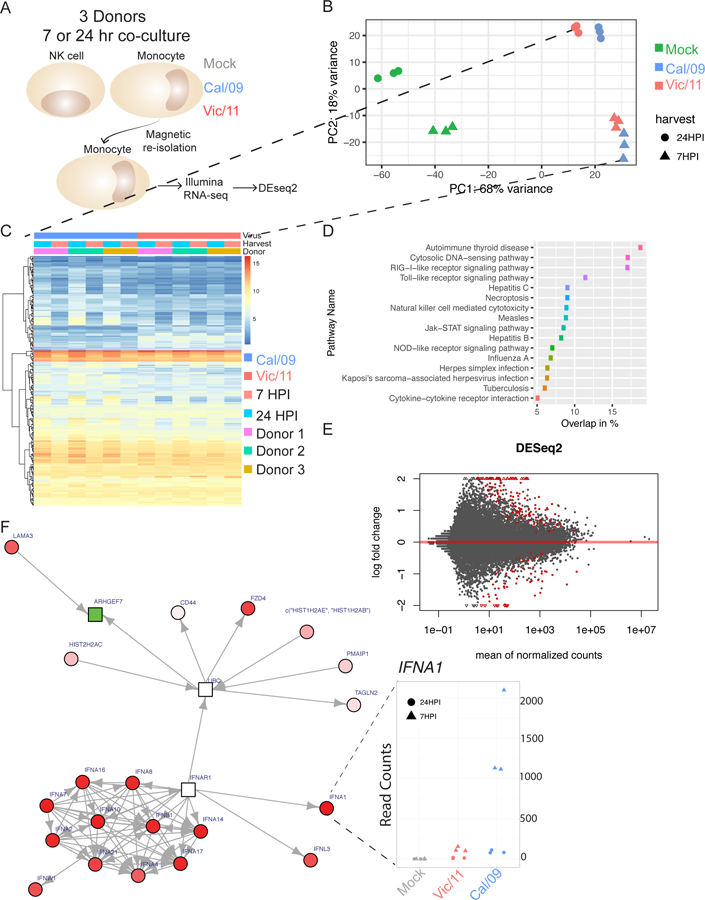
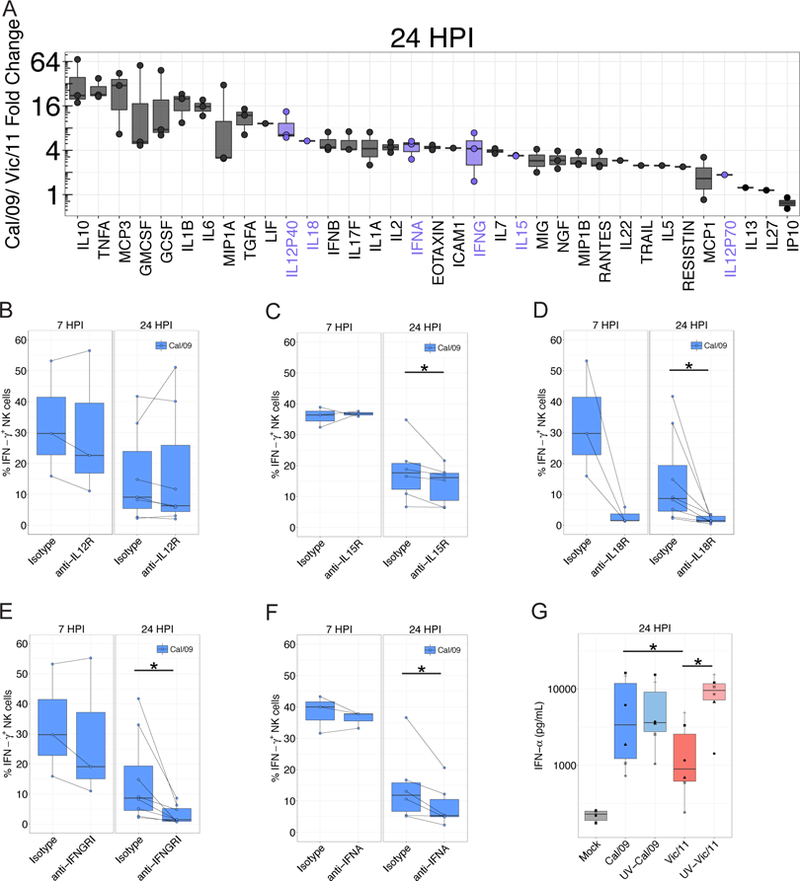
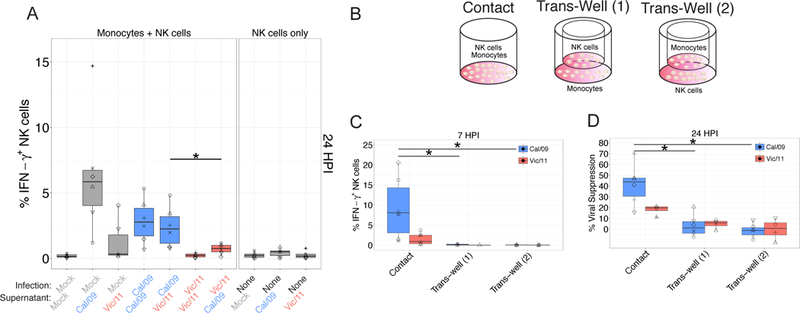
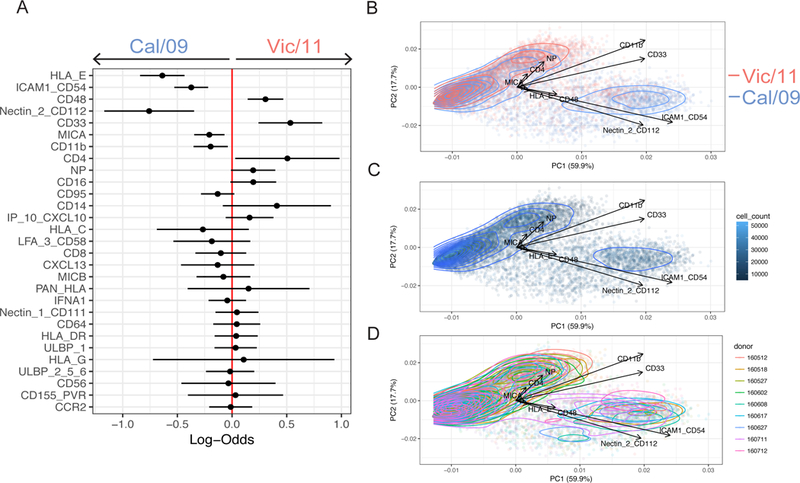
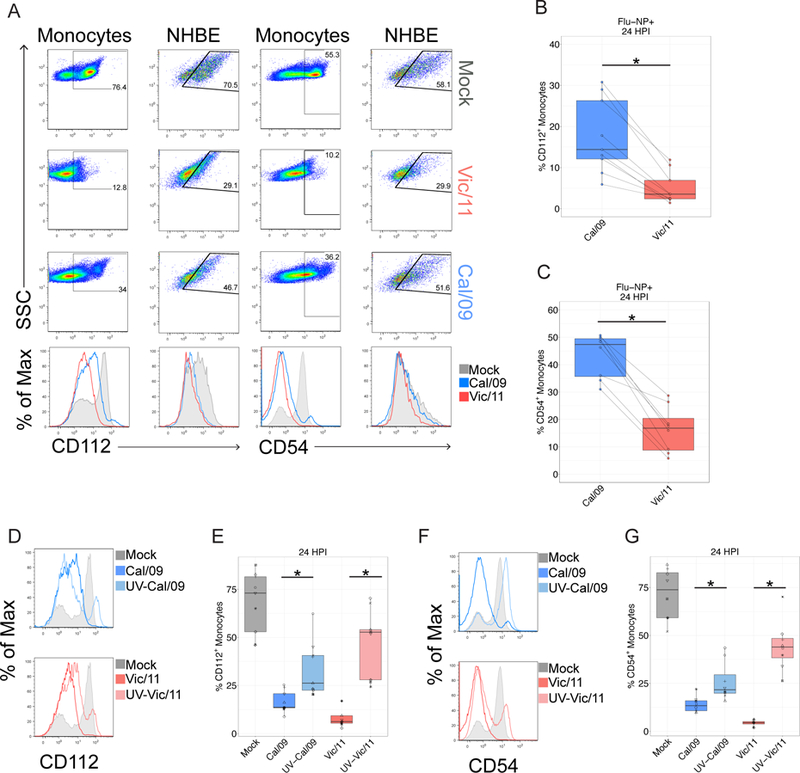
In human and murine studies, IFN-γ is a critical mediator immunity to influenza. IFN-γ production is critical for viral clearance and the development of adaptive immune responses, yet excessive production of IFN-γ and other cytokines as part of a cytokine storm is associated with poor outcomes of influenza infection in humans. As NK cells are the main population of lung innate immune cells capable of producing IFN-γ early in infection, we set out to identify the drivers of the human NK cell IFN-γ response to influenza A viruses. We found that influenza triggers NK cells to secrete IFN-γ in the absence of T cells and in a manner dependent upon signaling from both cytokines and receptor-ligand interactions. Further, we discovered that the pandemic A/California/07/2009 (H1N1) strain elicits a seven-fold greater IFN-γ response than other strains tested, including a seasonal A/Victoria/361/2011 (H3N2) strain. These differential responses were independent of memory NK cells. Instead, we discovered that the A/Victoria/361/2011 influenza strain suppresses the NK cell IFN-γ response by downregulating NK-activating ligands CD112 and CD54 and by repressing the type I IFN response in a viral replication-dependent manner. In contrast, the A/California/07/2009 strain fails to repress the type I IFN response or to downregulate CD54 and CD112 to the same extent, which leads to the enhanced NK cell IFN-γ response. Our results indicate that influenza implements a strain-specific mechanism governing NK cell production of IFN-γ and identifies a previously unrecognized influenza innate immune evasion strategy.
在人类和鼠类研究中,IFN-γ 是对流感产生免疫反应的关键介质。IFN-γ 的产生对于清除病毒和适应性免疫反应的发展至关重要,但作为细胞因子风暴的一部分,IFN-γ 和其他细胞因子的过度产生与流感感染在人类中的不良结局相关。由于 NK 细胞是肺部固有免疫细胞中主要的能够在感染早期产生 IFN-γ 的群体,我们着手确定人类 NK 细胞对甲型流感病毒产生 IFN-γ 反应的驱动因素。我们发现,流感在没有 T 细胞的情况下触发 NK 细胞分泌 IFN-γ,其方式依赖于细胞因子和受体-配体相互作用的信号。此外,我们发现,大流行的 A/California/07/2009(H1N1)株比其他测试株(包括季节性 A/Victoria/361/2011(H3N2)株)引发的 IFN-γ 反应高出七倍。这些差异反应与记忆性 NK 细胞无关。相反,我们发现,A/Victoria/361/2011 流感株通过下调 NK 激活配体 CD112 和 CD54 以及以依赖病毒复制的方式抑制 I 型 IFN 反应来抑制 NK 细胞 IFN-γ 反应。相比之下,A/California/07/2009 株不能抑制 I 型 IFN 反应或下调 CD54 和 CD112 至相同程度,这导致 NK 细胞 IFN-γ 反应增强。我们的研究结果表明,流感实施了一种菌株特异性机制来控制 NK 细胞产生 IFN-γ,并确定了一种以前未被识别的流感先天免疫逃避策略。