Forberg Hilde, Hauge Anna G, Valheim Mette, Garcon Fanny, Nunez Alejandro, Gerner Wilhelm, Mair Kerstin H, Graham Simon P, Brookes Sharon M, Storset Anne K
Department of Laboratory Services, Norwegian Veterinary Institute, Oslo, Norway.
Virology Department, Animal Health and Veterinary Laboratories Agency, Addlestone, United Kingdom.
PLoS One. 2014 Jun 23;9(6):e100619. doi: 10.1371/journal.pone.0100619. eCollection 2014.
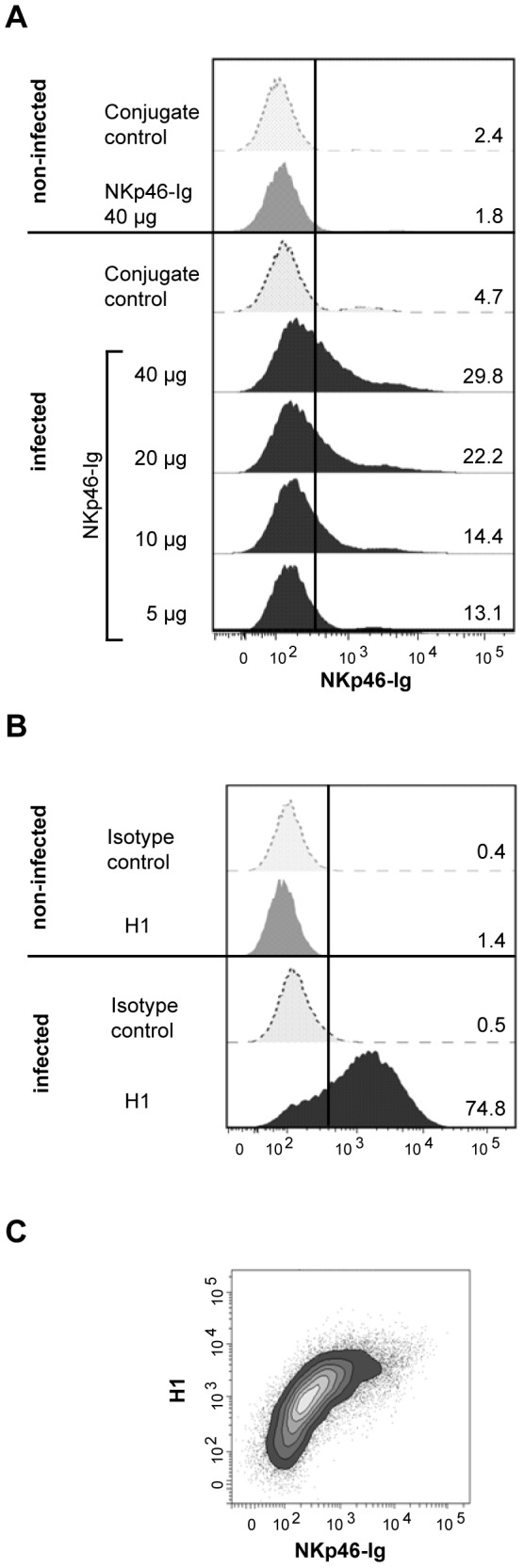
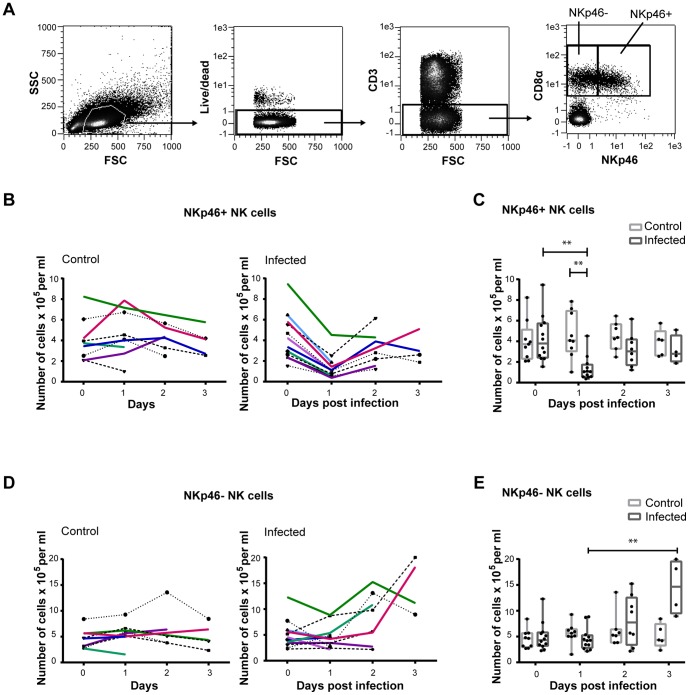
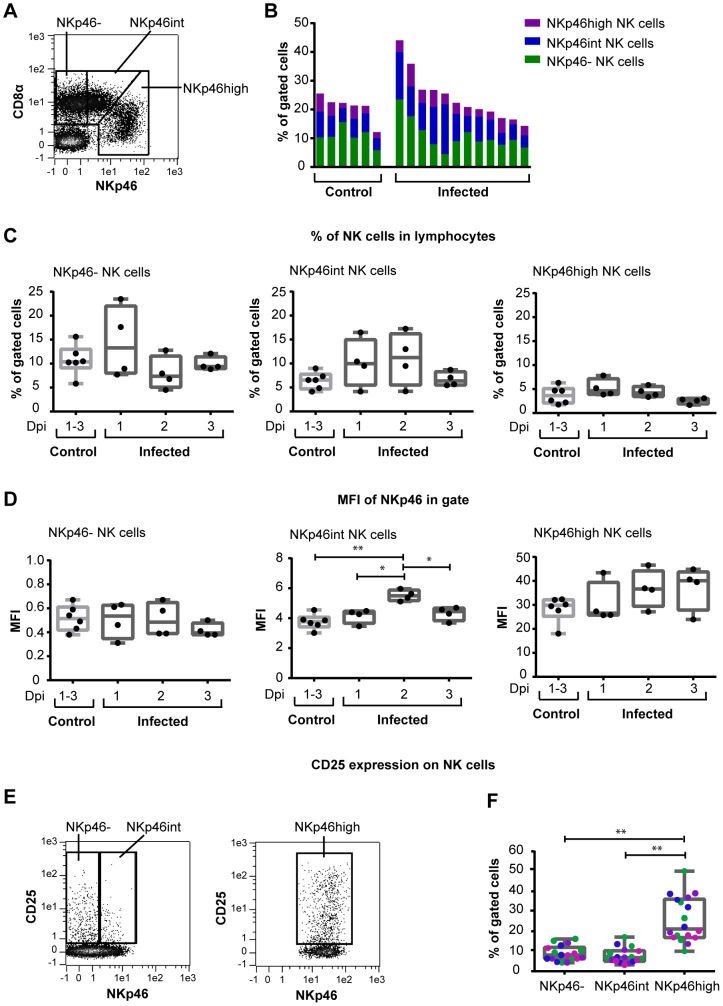
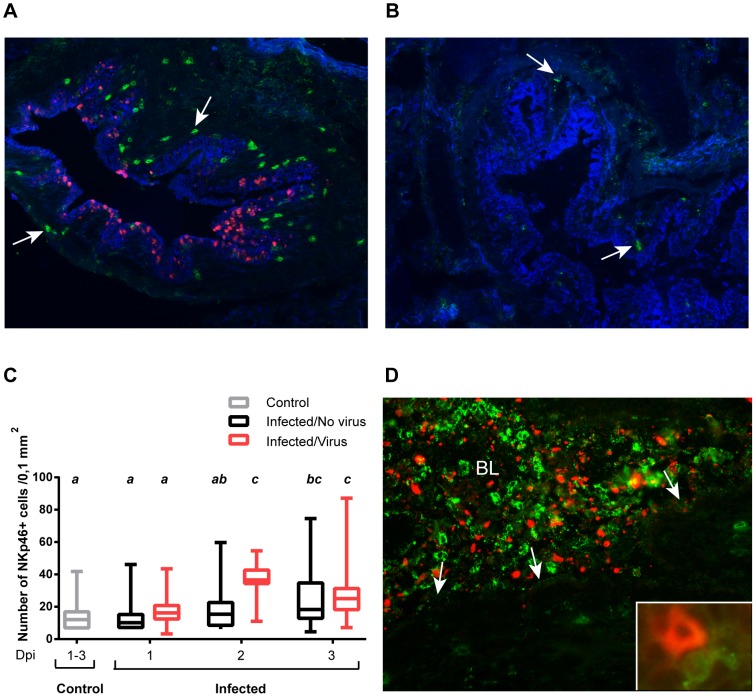
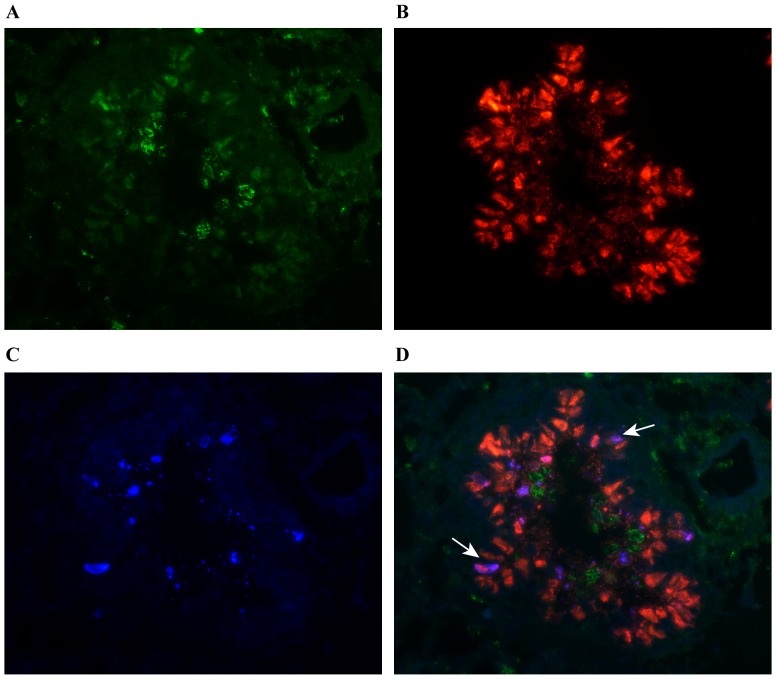
Natural killer (NK) cells are important players in the innate immune response against influenza A virus and the activating receptor NKp46, which binds hemagglutinin on the surface of infected cells, has been assigned a role in this context. As pigs are natural hosts for influenza A viruses and pigs possess both NKp46- and NKp46+ NK cells, they represent a good animal model for studying the role of the NKp46 receptor during influenza. We explored the role of NK cells in piglets experimentally infected with 2009 pandemic H1N1 influenza virus by flow cytometric analyses of cells isolated from blood and lung tissue and by immunostaining of lung tissue sections. The number of NKp46+ NK cells was reduced while NKp46- NK cells remained unaltered in the blood 1-3 days after infection. In the lungs, the intensity of NKp46 expression on NK cells was increased during the first 3 days, and areas where influenza virus nucleoprotein was detected were associated with increased numbers of NKp46+ NK cells when compared to uninfected areas. NKp46+ NK cells in the lung were neither found to be infected with influenza virus nor to be undergoing apoptosis. The binding of porcine NKp46 to influenza virus infected cells was verified in an in vitro assay. These data support the involvement of porcine NKp46+ NK cells in the local immune response against influenza virus.
自然杀伤(NK)细胞是甲型流感病毒天然免疫反应中的重要参与者,在这种情况下,与感染细胞表面血凝素结合的激活受体NKp46发挥了作用。由于猪是甲型流感病毒的天然宿主,且猪同时拥有NKp46 - 和NKp46 + NK细胞,它们是研究NKp46受体在流感期间作用的良好动物模型。我们通过对从血液和肺组织中分离的细胞进行流式细胞术分析以及对肺组织切片进行免疫染色,探讨了NK细胞在实验感染2009年大流行H1N1流感病毒的仔猪中的作用。感染后1 - 3天,血液中NKp46 + NK细胞数量减少,而NKp46 - NK细胞数量保持不变。在肺中,NK细胞上NKp46表达强度在最初3天增加,与未感染区域相比,检测到流感病毒核蛋白的区域NKp46 + NK细胞数量增加。肺中的NKp46 + NK细胞既未被发现感染流感病毒,也未发生凋亡。体外试验证实了猪NKp46与流感病毒感染细胞的结合。这些数据支持猪NKp46 + NK细胞参与针对流感病毒的局部免疫反应。