Cancer Center & Precision Medicine Institute, the First Affiliated Hospital of Sun Yat-Sen University, Guangzhou, 510080, China.
School of Materials Science and Engineering of Sun Yat-Sen University, Guangzhou, 510275, China.
Nat Commun. 2018 Aug 24;9(1):3430. doi: 10.1038/s41467-018-05764-7.
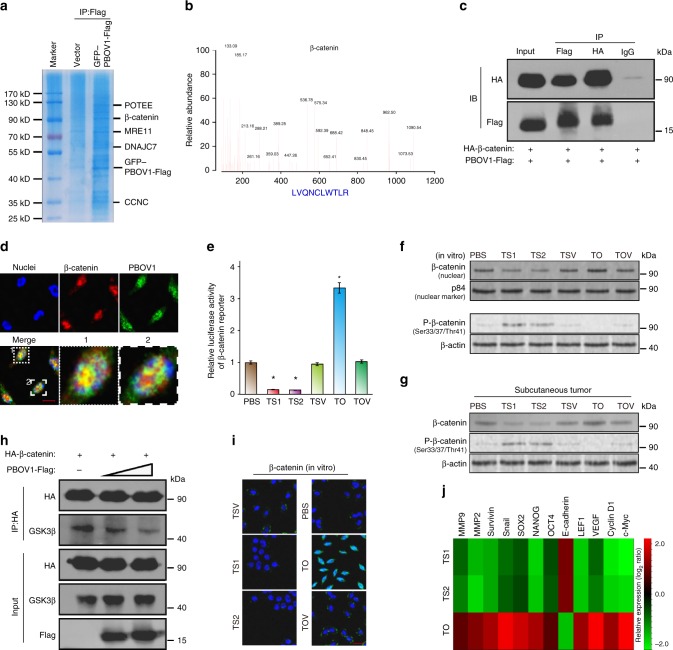
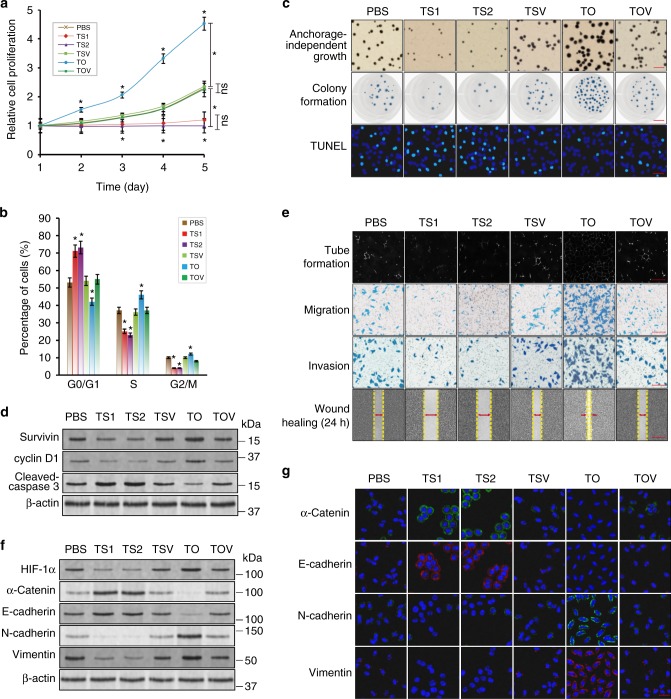
There exists an urgent medical demand at present to develop therapeutic strategies which can improve the treatment outcome of hepatocellular carcinoma (HCC). Here, we explore the biological functions and clinical significance of PBOV1 in HCC in order to push forward the diagnosis and treatment of HCC. Using theranostical nanomedicines, PBOV1 is verified to be a key oncogene which greatly promotes HCC proliferation, epithelial-to-mesenchymal transition, and stemness by activating the Wnt/β-catenin signaling pathway. Therefore, single-chain antibody for epidermal growth factor receptor (scAb-EGFR)-targeted nanomedicine effectively silencing the PBOV1 gene exhibits potent anticancer effects. In vivo HCC-targeting siRNA delivery mediated by the theranostical nanomedicine remarkably inhibits the tumor growth and metastasis. In addition, the superparamagnetic iron oxide nanocrystals (SPION)-encapsulated nanomedicines possess high MRI detection sensitivity, which endows them with the potential for MRI diagnosis of HCC. This study shows that PBOV1 represents a prognostic biomarker and therapeutic target for HCC.
目前,存在着迫切的医疗需求,需要开发能够改善肝细胞癌(HCC)治疗效果的治疗策略。在这里,我们探索了 PBOV1 在 HCC 中的生物学功能和临床意义,以期推动 HCC 的诊断和治疗。通过治疗性纳米医学,验证了 PBOV1 是一种关键的癌基因,通过激活 Wnt/β-catenin 信号通路,极大地促进了 HCC 的增殖、上皮-间充质转化和干性。因此,表皮生长因子受体单链抗体(scAb-EGFR)靶向纳米医学有效沉默 PBOV1 基因,表现出强大的抗癌作用。治疗性纳米医学介导的体内 HCC 靶向 siRNA 递释显著抑制肿瘤生长和转移。此外,超顺磁性氧化铁纳米晶(SPION)包封的纳米医学具有高 MRI 检测灵敏度,使它们具有 HCC 的 MRI 诊断潜力。这项研究表明,PBOV1 是 HCC 的预后标志物和治疗靶标。