Weinstein Y, Ihle J N, Lavu S, Reddy E P
Proc Natl Acad Sci U S A. 1986 Jul;83(14):5010-4. doi: 10.1073/pnas.83.14.5010.
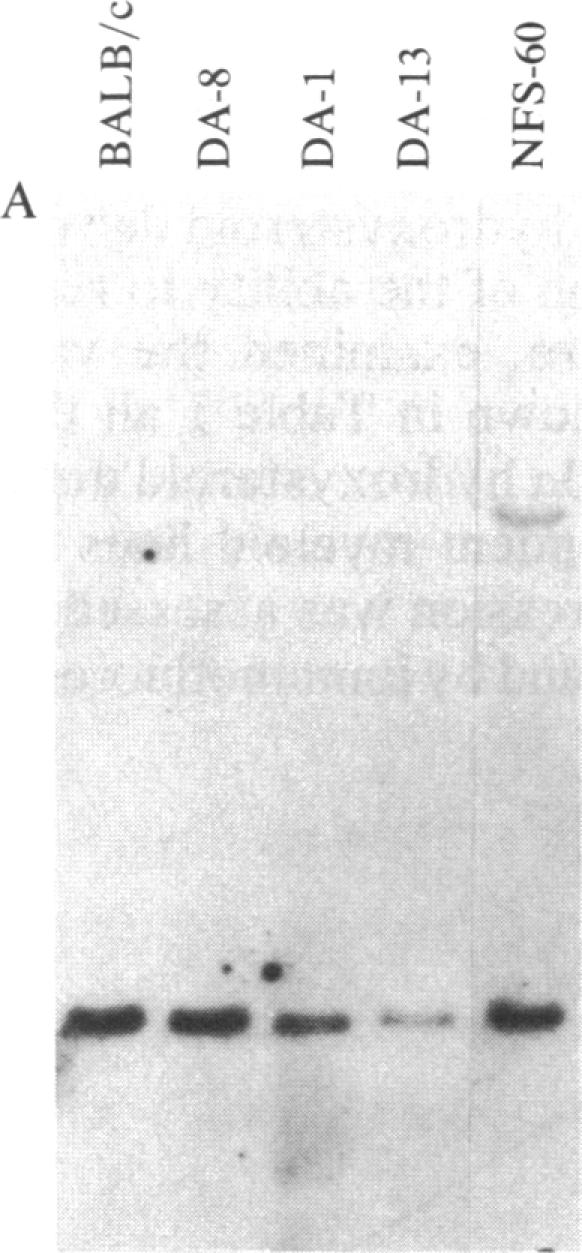
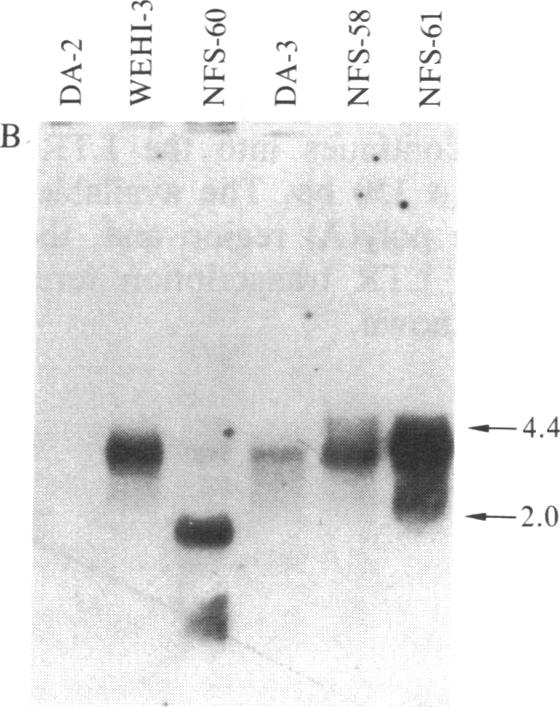
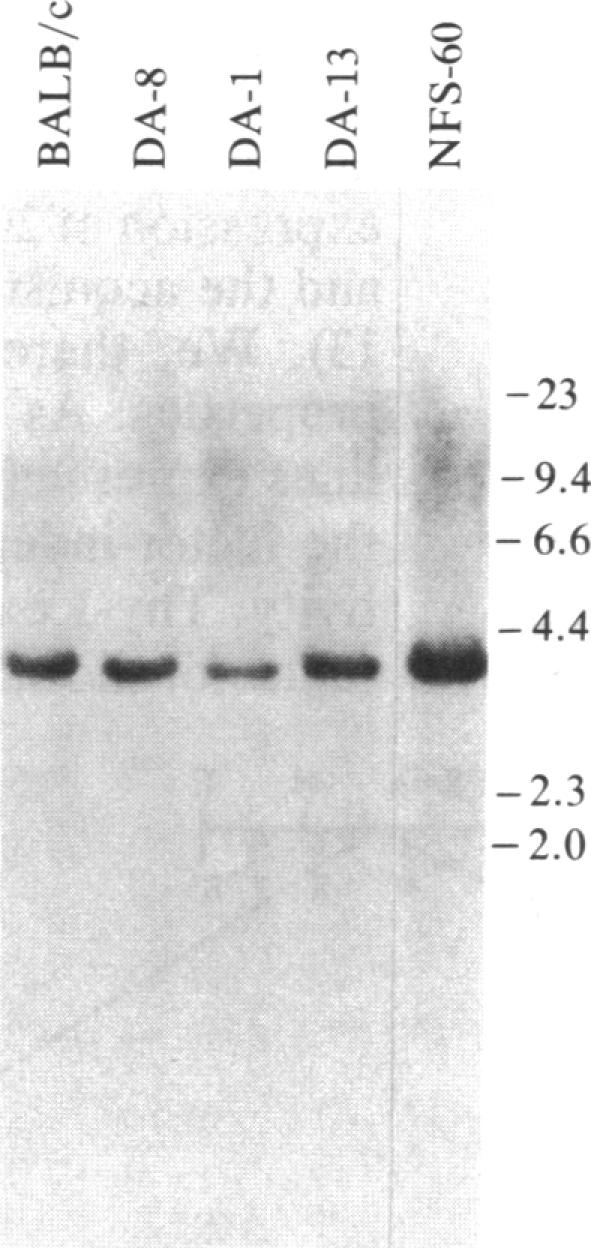
Among a series of myeloid leukemia cell lines, one (NFS-60) was found to have a rearrangement of the c-myb locus. The rearrangement involved the integration of a retrovirus into the region of the gene corresponding to the sixth exon of the avian c-myb locus. The insertion is associated with the production of a truncated RNA and the introduction of a terminator codon at the juncture of the long terminal repeat and the c-myb locus. The properties of the NSF-60 cells were compared with those of other myeloid cell lines, and the known sequence of differentiation induced by interleukin 3. Similar to other myeloid cell lines, the NFS-60 cells do not terminally differentiate in response to interleukin 3, granulocyte/macrophage, or granulocyte colony-stimulating factor suggesting that the cells are transformed with regard to their ability to differentiate. The NFS-60 cells are totally dependent on interleukin 3 for growth and maintenance of viability in vitro but also proliferate in response to granulocyte colony-stimulating factor. The properties of the cells support the concept that the c-myb protooncogene is involved in the control of normal differentiation of hematopoietic cells.
在一系列髓系白血病细胞系中,发现其中一个(NFS-60)存在c-myb基因座重排。这种重排涉及一种逆转录病毒整合到与禽c-myb基因座第六外显子相对应的基因区域。该插入与截短RNA的产生以及在长末端重复序列和c-myb基因座交界处引入终止密码子有关。将NFS-60细胞的特性与其他髓系细胞系以及白介素3诱导的已知分化序列进行了比较。与其他髓系细胞系类似,NFS-60细胞对白介素3、粒细胞/巨噬细胞或粒细胞集落刺激因子无终末分化反应,这表明这些细胞在分化能力方面发生了转化。NFS-60细胞在体外完全依赖白介素3进行生长和维持生存能力,但对粒细胞集落刺激因子也有增殖反应。这些细胞的特性支持了c-myb原癌基因参与造血细胞正常分化控制的概念。