National Creative Research Initiatives Center for Adipose Tissue Remodeling, Institute of Molecular Biology and Genetics, Department of Biological Sciences, Seoul National University, Seoul 08826, Korea.
Mol Cells. 2018 Oct 31;41(10):900-908. doi: 10.14348/molcells.2018.0294.
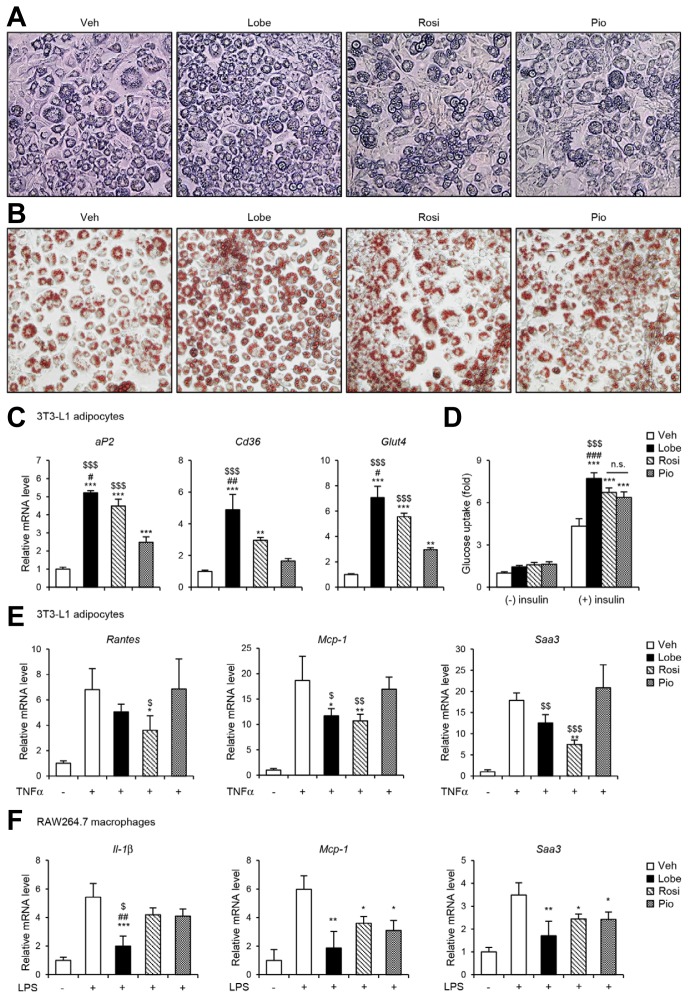
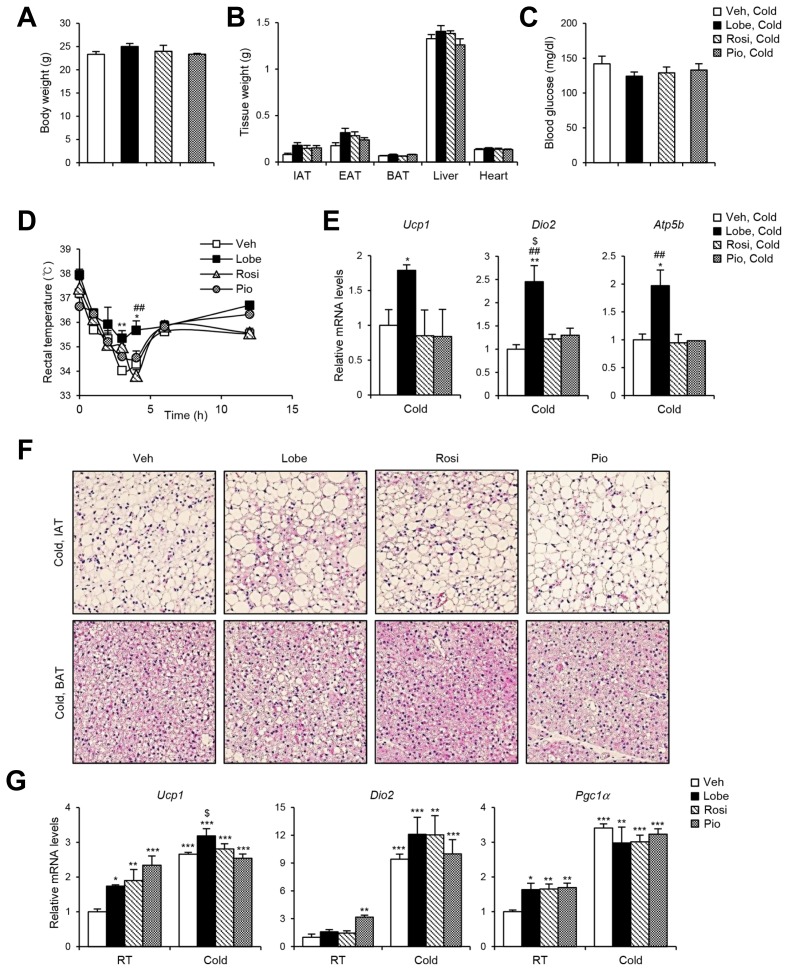
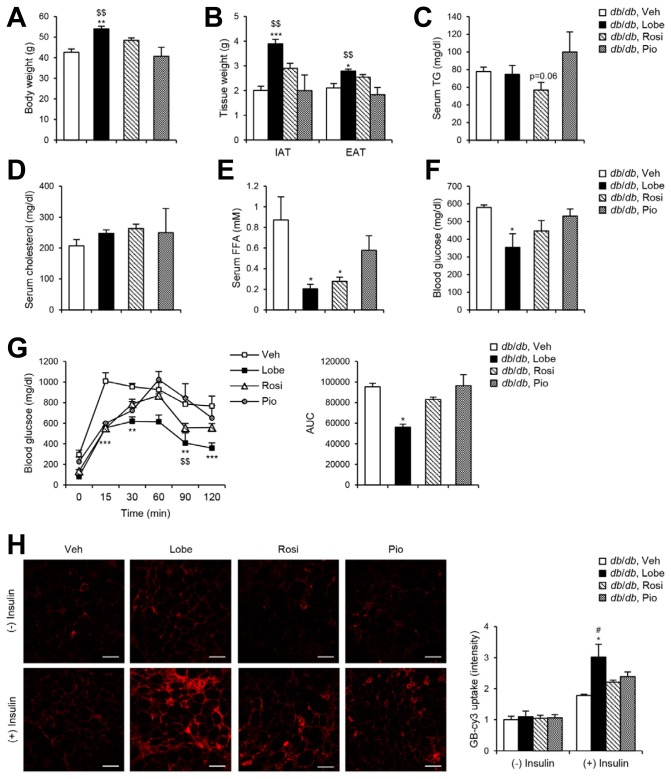
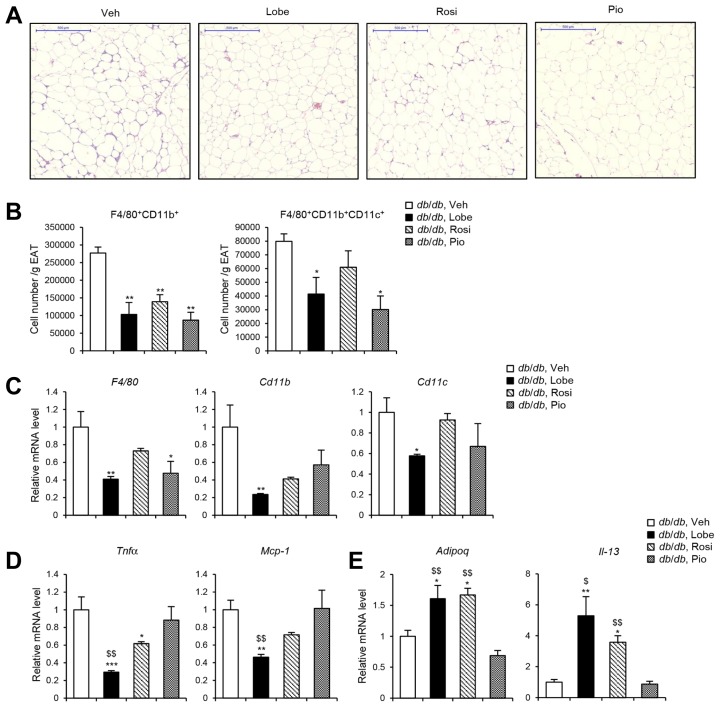
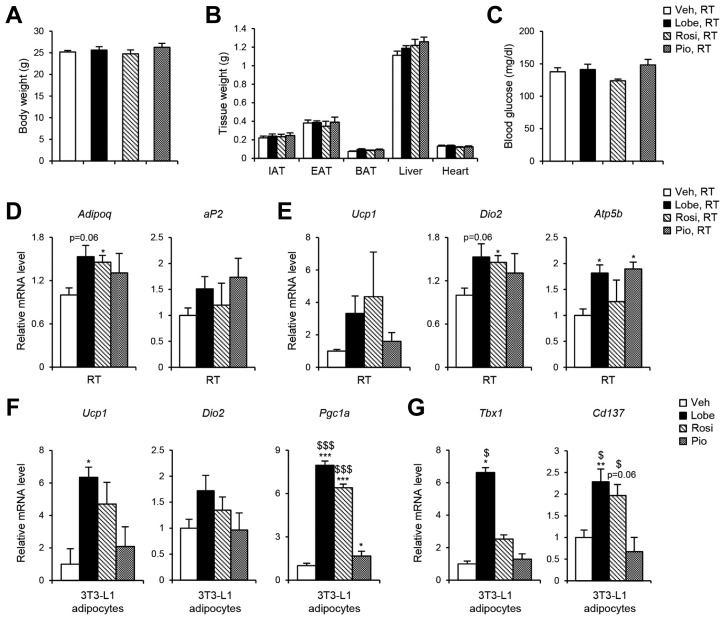
Insulin resistance is closely associated with metabolic diseases such as type 2 diabetes, dyslipidemia, hypertension and atherosclerosis. Thiazolidinediones (TZDs) have been developed to ameliorate insulin resistance by activation of peroxisome proliferator-activated receptor (PPAR) γ. Although TZDs are synthetic ligands for PPARγ, metabolic outcomes of each TZD are different. Moreover, there are lack of head-to-head comparative studies among TZDs in the aspect of metabolic outcomes. In this study, we analyzed the effects of three TZDs, including lobeglitazone (Lobe), rosiglitazone (Rosi), and pioglitazone (Pio) on metabolic and thermogenic regulation. In adipocytes, Lobe more potently stimulated adipogenesis and insulin-dependent glucose uptake than Rosi and Pio. In the presence of pro-inflammatory stimuli, Lobe efficiently suppressed expressions of pro-inflammatory genes in macrophages and adipocytes. In obese and diabetic mice, Lobe effectively promoted insulin-stimulated glucose uptake and suppressed pro-inflammatory responses in epididymal white adipose tissue (EAT), leading to improve glucose intolerance. Compared to other two TZDs, Lobe enhanced beige adipocyte formation and thermogenic gene expression in inguinal white adipose tissue (IAT) of lean mice, which would be attributable to cold-induced thermogenesis. Collectively, these comparison data suggest that Lobe could relieve insulin resistance and enhance thermogenesis at low-concentration conditions where Rosi and Pio are less effective.
胰岛素抵抗与代谢疾病密切相关,如 2 型糖尿病、血脂异常、高血压和动脉粥样硬化。噻唑烷二酮类药物(TZDs)通过激活过氧化物酶体增殖物激活受体(PPAR)γ 被开发出来以改善胰岛素抵抗。虽然 TZDs 是 PPARγ 的合成配体,但每种 TZD 的代谢结果都不同。此外,在代谢结果方面,TZDs 之间缺乏头对头的比较研究。在这项研究中,我们分析了三种 TZDs,包括罗格列酮(Lobe)、吡格列酮(Pio)和罗格列酮(Rosi)对代谢和产热调节的影响。在脂肪细胞中,Lobe 比 Rosi 和 Pio 更能强烈刺激脂肪生成和胰岛素依赖性葡萄糖摄取。在存在促炎刺激物的情况下,Lobe 有效地抑制了巨噬细胞和脂肪细胞中促炎基因的表达。在肥胖和糖尿病小鼠中,Lobe 有效地促进了胰岛素刺激的葡萄糖摄取,并抑制了附睾白色脂肪组织(EAT)中的促炎反应,从而改善了葡萄糖耐量。与其他两种 TZDs 相比,Lobe 增强了瘦鼠腹股沟白色脂肪组织(IAT)中米色脂肪细胞的形成和产热基因表达,这归因于冷诱导的产热。总的来说,这些比较数据表明,Lobe 可以在 Rosi 和 Pio 效果较低的低浓度条件下缓解胰岛素抵抗和增强产热。