Department of Internal Medicine, Cleveland Clinic, Cleveland, OH, USA.
Division of Gastroenterology and Hepatology, University of New Mexico, Albuquerque, NM, USA.
Biomed Res Int. 2018 Jul 26;2018:4721357. doi: 10.1155/2018/4721357. eCollection 2018.
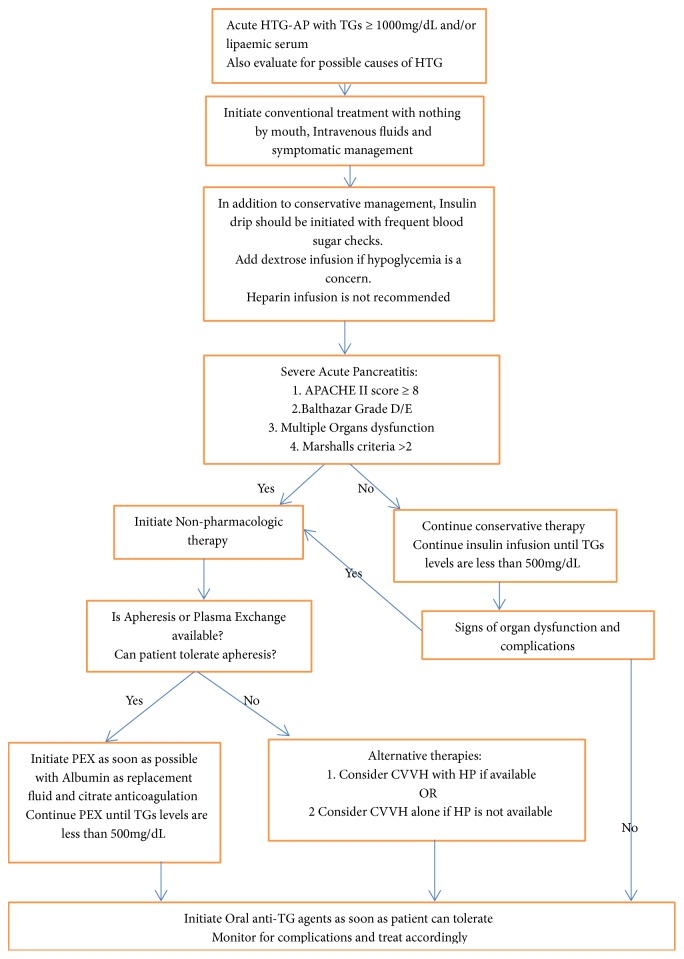
Hypertriglyceridemia is an uncommon but a well-established etiology of acute pancreatitis leading to significant morbidity and mortality. The risk and severity of acute pancreatitis increase with increasing levels of serum triglycerides. It is crucial to identify hypertriglyceridemia as the cause of pancreatitis and initiate appropriate treatment plan. Initial supportive treatment is similar to management of other causes of acute pancreatitis with additional specific therapies tailored to lower serum triglycerides levels. This includes plasmapheresis, insulin, heparin infusion, and hemofiltration. After the acute episode, diet and lifestyle modifications along with hypolipidemic drugs should be initiated to prevent further episodes. Currently, there is paucity of studies directly comparing different modalities. This article provides a comprehensive review of management of hypertriglyceridemia induced acute pancreatitis. We conclude by summarizing our treatment approach to manage hypertriglyceridemia induced acute pancreatitis.
高甘油三酯血症是急性胰腺炎一种不常见但已确立的病因,可导致较高的发病率和死亡率。血清甘油三酯水平越高,急性胰腺炎的风险和严重程度就越高。确定高甘油三酯血症是胰腺炎的病因并启动适当的治疗方案至关重要。初始支持性治疗与其他急性胰腺炎病因的治疗相似,此外还需要针对降低血清甘油三酯水平的特定治疗方法。这包括血浆置换、胰岛素、肝素输注和血液滤过。急性发作后,应开始饮食和生活方式的改变以及降脂药物治疗,以预防进一步发作。目前,直接比较不同方法的研究很少。本文对高甘油三酯血症引起的急性胰腺炎的治疗进行了全面综述。最后,我们总结了我们治疗高甘油三酯血症引起的急性胰腺炎的方法。