Institute of Medicine, Chung Shan Medical University, Taichung 40201, Taiwan.
Department of Psychiatry, Chung Shan Medical University Hospital, Taichung 40201, Taiwan.
Int J Mol Sci. 2018 Aug 24;19(9):2505. doi: 10.3390/ijms19092505.
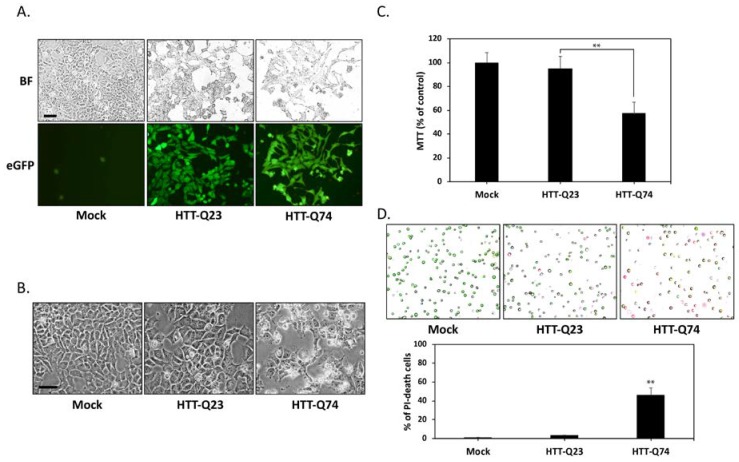
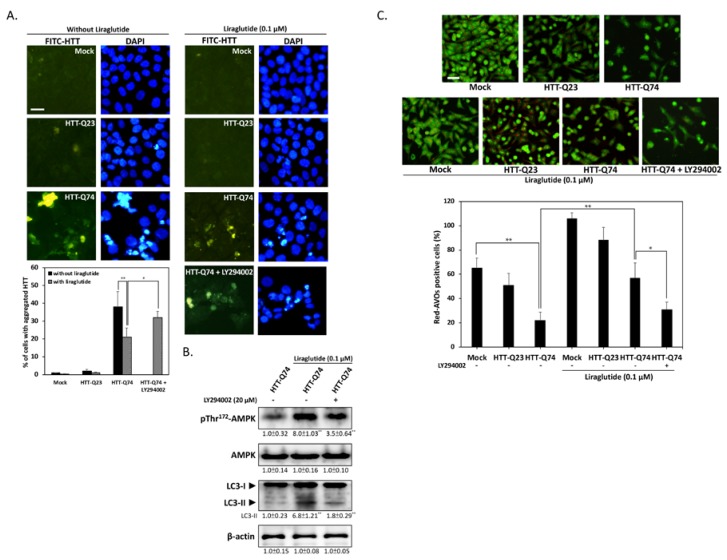
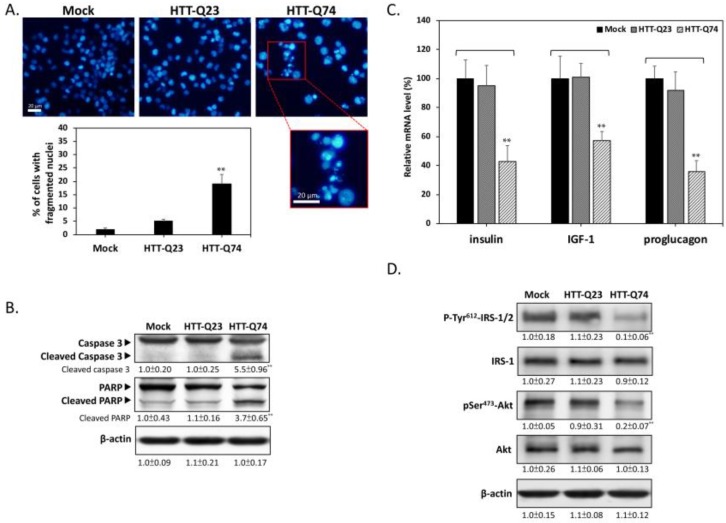
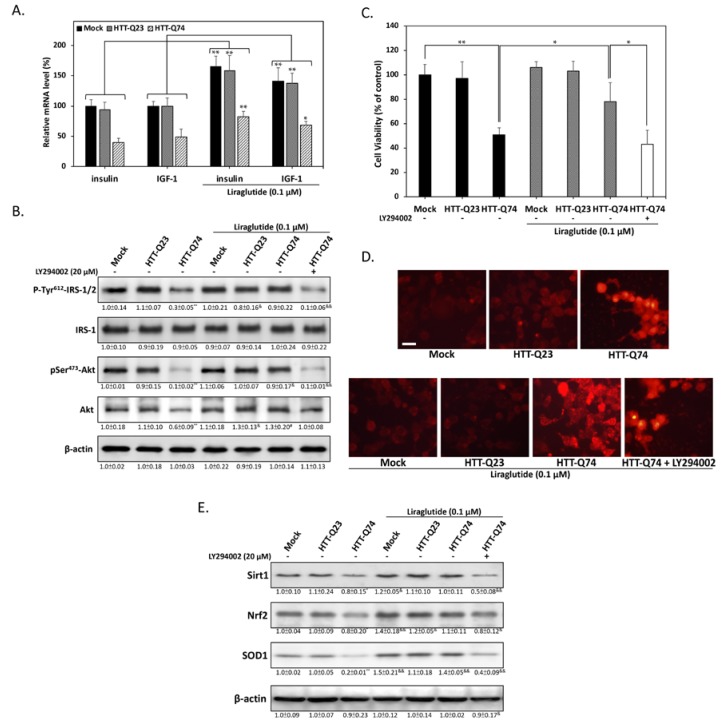
Huntington's disease (HD) is a progressive and fatal neurodegenerative disease caused by CAG repeat expansion in the coding region of huntingtin (HTT) protein. The accumulation of mutant HTT (mHTT) contributes to neurotoxicity by causing autophagy defects and oxidative stress that ultimately lead to neuronal death. Interestingly, epidemiologic studies have demonstrated that the prevalence of type-2 diabetes, a metabolic disease mainly caused by defective insulin signaling, is higher in patients with HD than in healthy controls. Although the precise mechanisms of mHTT-mediated toxicity remain unclear, the blockade of brain insulin signaling may initiate or exacerbate mHTT-induced neurodegeneration. In this study, we used an in vitro HD model to investigate whether neuronal insulin signaling is involved in mHTT-mediated neurotoxicity. Our results demonstrated that mHTT overexpression significantly impairs insulin signaling and causes apoptosis in neuronal cells. However, treatment with liraglutide, a GLP-1 analogue, markedly restores insulin sensitivity and enhances cell viability. This neuroprotective effect may be attributed to the contribution of the upregulated expression of genes associated with endogenous antioxidant pathways to oxidative stress reduction. In addition, liraglutide stimulates autophagy through AMPK activation, which attenuates the accumulation of HTT aggregates within neuronal cells. Our findings collectively suggest that liraglutide can rescue impaired insulin signaling caused by mHTT and that GLP-1 may potentially reduce mHTT-induced neurotoxicity in the pathogenesis of HD.
亨廷顿病 (HD) 是一种渐进性和致命性的神经退行性疾病,由亨廷顿蛋白 (HTT) 编码区的 CAG 重复扩展引起。突变 HTT (mHTT) 的积累通过引起自噬缺陷和氧化应激导致神经元死亡,从而导致神经毒性。有趣的是,流行病学研究表明,代谢疾病 2 型糖尿病(主要由胰岛素信号缺陷引起)在 HD 患者中的患病率高于健康对照组。尽管 mHTT 介导的毒性的确切机制尚不清楚,但阻断脑胰岛素信号可能会引发或加剧 mHTT 诱导的神经退行性变。在这项研究中,我们使用体外 HD 模型来研究神经元胰岛素信号是否参与 mHTT 介导的神经毒性。我们的结果表明,mHTT 过表达显着损害胰岛素信号并导致神经元细胞凋亡。然而,用利拉鲁肽(一种 GLP-1 类似物)治疗可显著恢复胰岛素敏感性并增强细胞活力。这种神经保护作用可能归因于与内源性抗氧化途径相关的基因表达上调对氧化应激减少的贡献。此外,利拉鲁肽通过激活 AMPK 刺激自噬,从而减轻神经元细胞内 HTT 聚集体的积累。我们的研究结果表明,利拉鲁肽可以挽救 mHTT 引起的胰岛素信号受损,GLP-1 可能在 HD 发病机制中降低 mHTT 诱导的神经毒性。