Department of Chemistry and Institute for Biophysical Dynamics, The University of Chicago, Chicago, IL, USA.
Howard Hughes Medical Institute, Chicago, IL, USA.
Nat Cell Biol. 2018 Sep;20(9):1074-1083. doi: 10.1038/s41556-018-0174-4. Epub 2018 Aug 27.
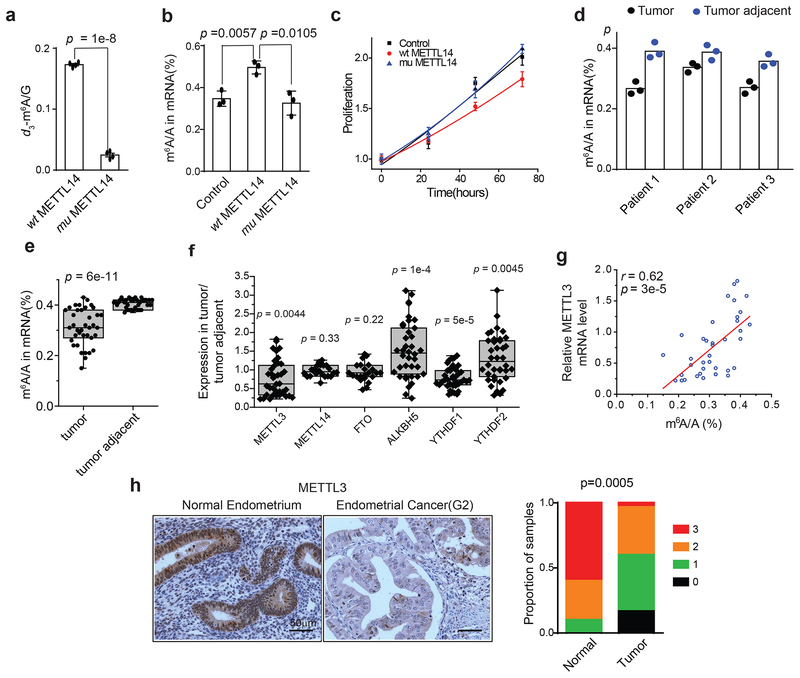
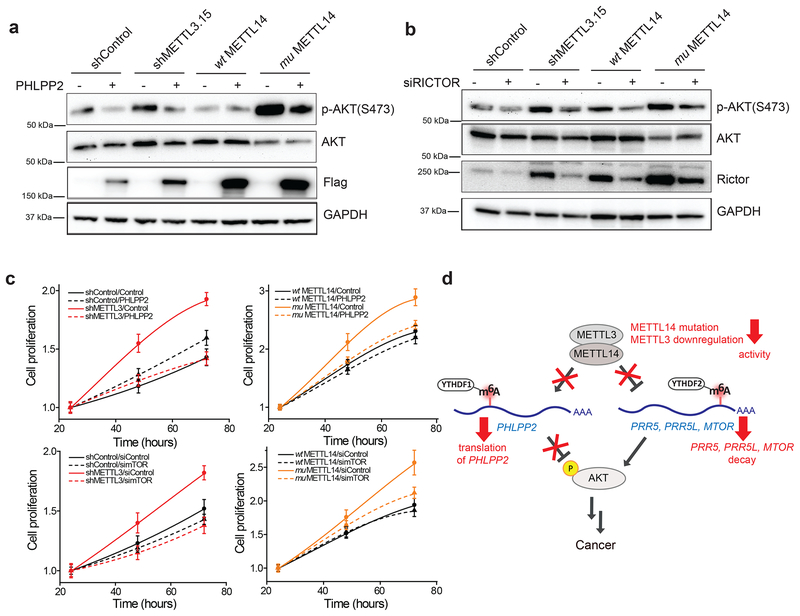
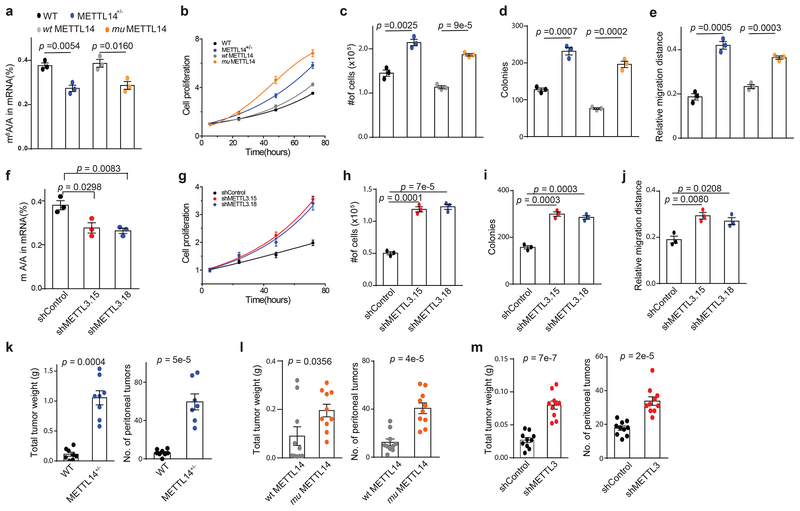
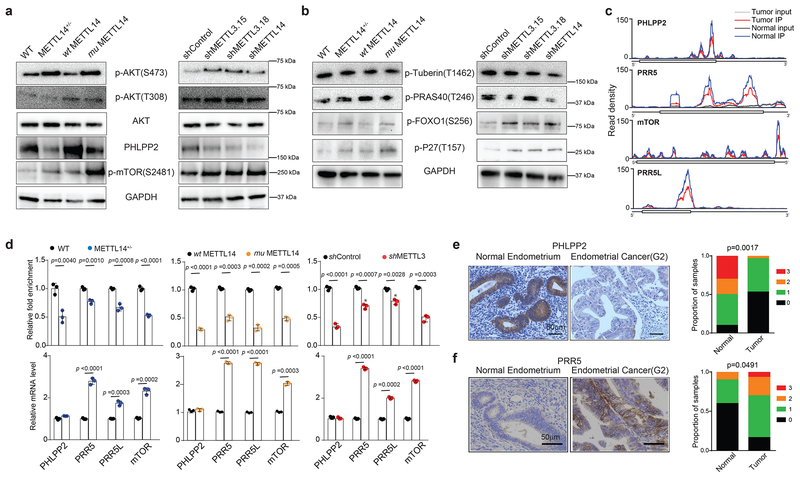
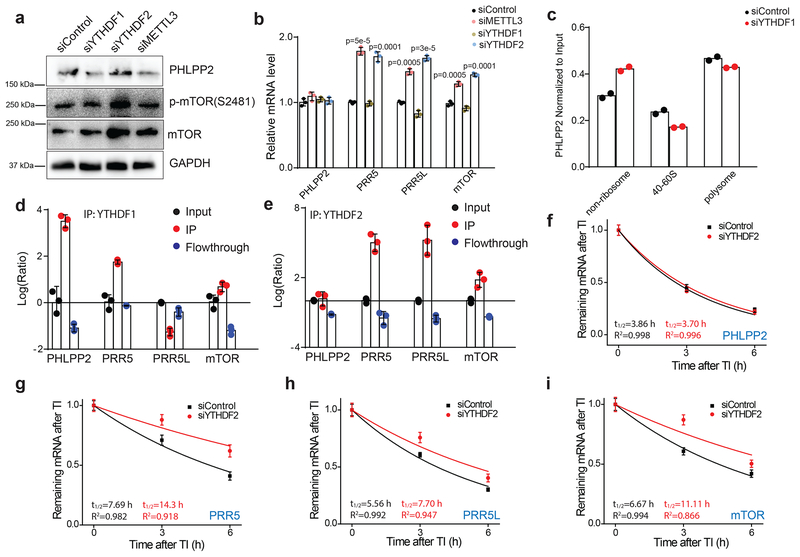
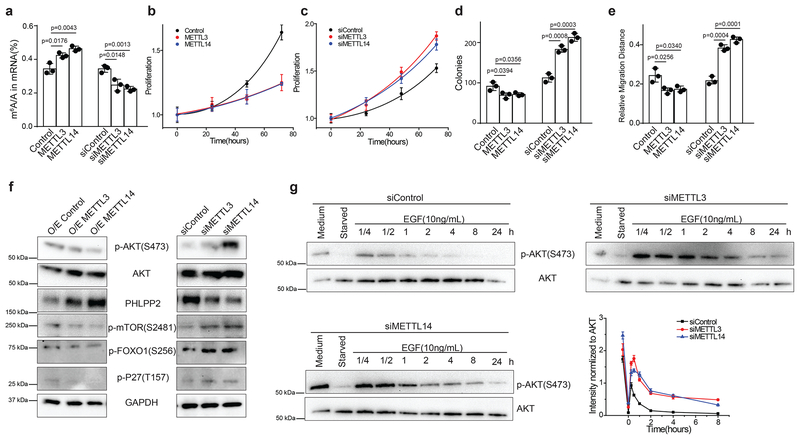
N-methyladenosine (mA) messenger RNA methylation is a gene regulatory mechanism affecting cell differentiation and proliferation in development and cancer. To study the roles of mA mRNA methylation in cell proliferation and tumorigenicity, we investigated human endometrial cancer in which a hotspot R298P mutation is present in a key component of the methyltransferase complex (METTL14). We found that about 70% of endometrial tumours exhibit reductions in mA methylation that are probably due to either this METTL14 mutation or reduced expression of METTL3, another component of the methyltransferase complex. These changes lead to increased proliferation and tumorigenicity of endometrial cancer cells, likely through activation of the AKT pathway. Reductions in mA methylation lead to decreased expression of the negative AKT regulator PHLPP2 and increased expression of the positive AKT regulator mTORC2. Together, these results reveal reduced mA mRNA methylation as an oncogenic mechanism in endometrial cancer and identify mA methylation as a regulator of AKT signalling.
N6-甲基腺苷(m6A)信使 RNA 甲基化是一种基因调控机制,影响发育和癌症中的细胞分化和增殖。为了研究 m6A mRNA 甲基化在细胞增殖和致瘤性中的作用,我们研究了人子宫内膜癌,其中甲基转移酶复合物(METTL14)的关键组成部分存在热点 R298P 突变。我们发现,大约 70%的子宫内膜肿瘤表现出 m6A 甲基化的减少,这可能是由于 METTL14 突变或另一个甲基转移酶复合物成分 METTL3 的表达减少所致。这些变化导致子宫内膜癌细胞增殖和致瘤性增加,可能通过 AKT 通路的激活。m6A 甲基化的减少导致 AKT 负调节因子 PHLPP2 的表达减少和 AKT 正调节因子 mTORC2 的表达增加。总之,这些结果揭示了减少的 m6A mRNA 甲基化作为子宫内膜癌的致癌机制,并确定了 m6A 甲基化作为 AKT 信号的调节剂。