Barry Allison M, Sondermann Julia R, Sondermann Jan-Hendrik, Gomez-Varela David, Schmidt Manuela
Max-Planck Institute of Experimental Medicine, Somatosensory Signaling and Systems Biology Group, Goettingen, Germany.
Front Mol Neurosci. 2018 Aug 14;11:259. doi: 10.3389/fnmol.2018.00259. eCollection 2018.
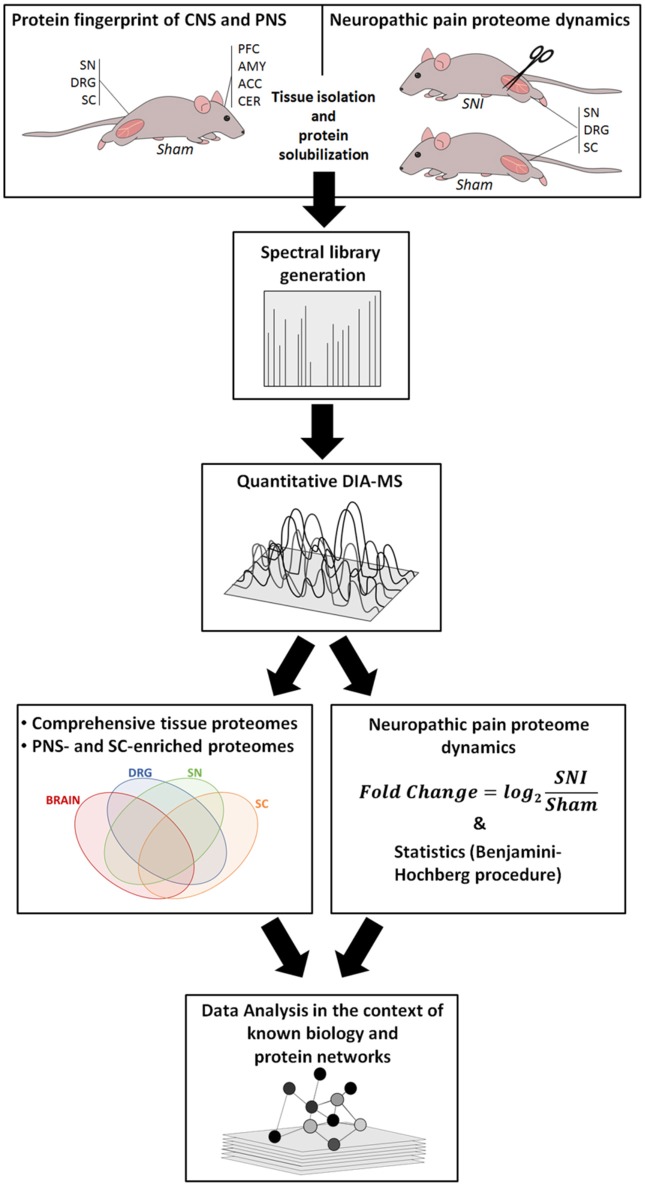
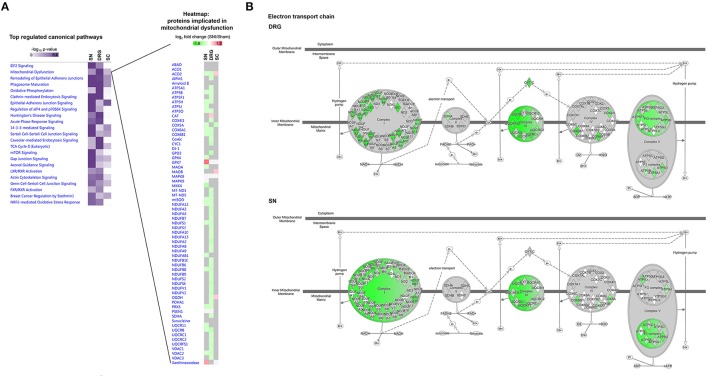
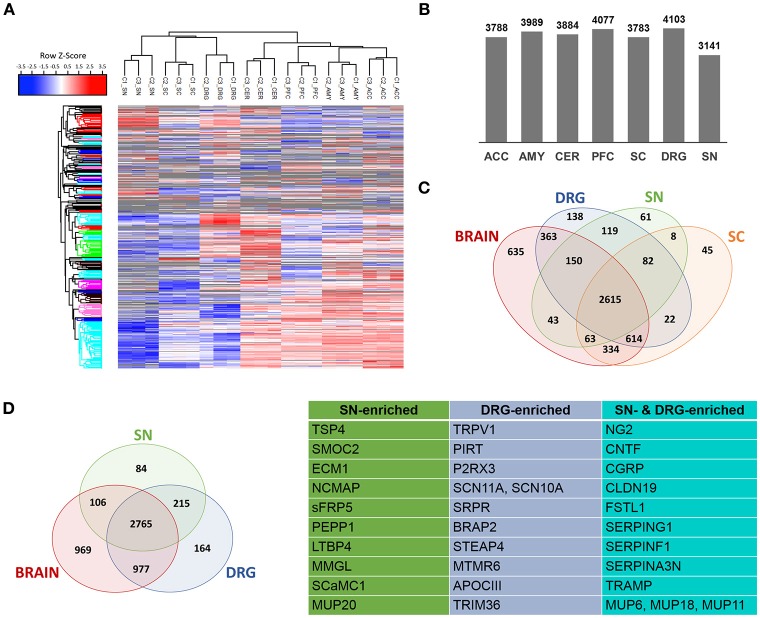
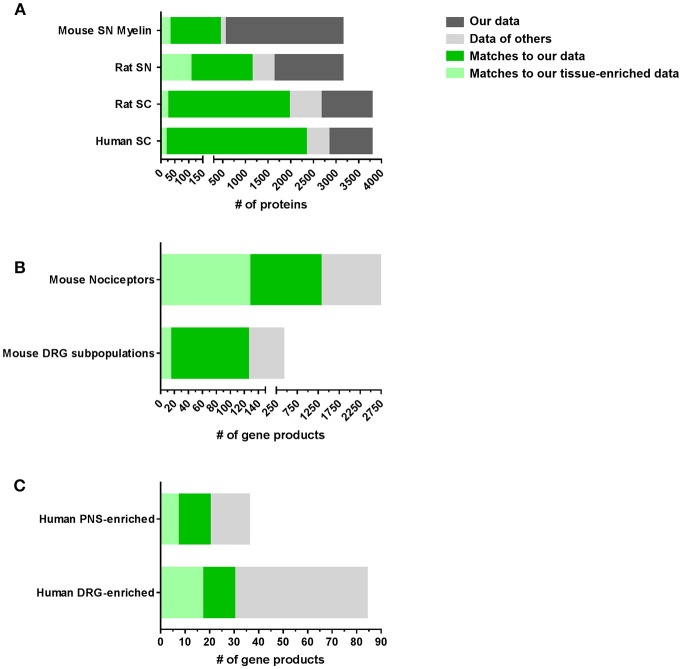
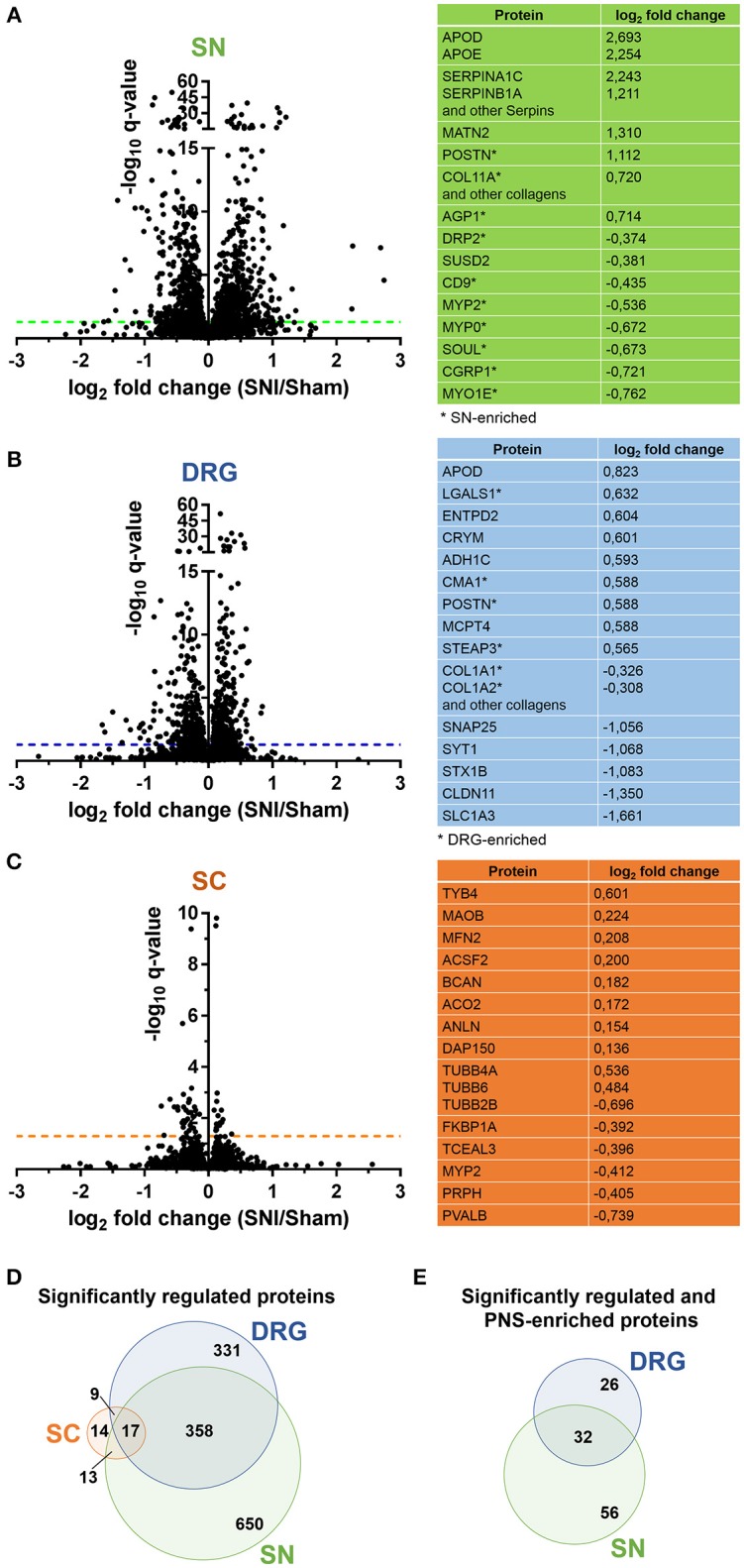
To obtain a thorough understanding of chronic pain, large-scale molecular mapping of the pain axis at the protein level is necessary, but has not yet been achieved. We applied quantitative proteome profiling to build a comprehensive protein compendium of three regions of the pain neuraxis in mice: the sciatic nerve (SN), the dorsal root ganglia (DRG), and the spinal cord (SC). Furthermore, extensive bioinformatics analysis enabled us to reveal unique protein subsets which are specifically enriched in the peripheral nervous system (PNS) and SC. The immense value of these datasets for the scientific community is highlighted by validation experiments, where we monitored protein network dynamics during neuropathic pain. Here, we resolved profound region-specific differences and distinct changes of PNS-enriched proteins under pathological conditions. Overall, we provide a unique and validated systems biology proteome resource (summarized in our online database painproteome.em.mpg.de), which facilitates mechanistic insights into somatosensory biology and chronic pain-a prerequisite for the identification of novel therapeutic targets.
为了全面了解慢性疼痛,有必要在蛋白质水平上对疼痛轴进行大规模分子图谱绘制,但目前尚未实现。我们应用定量蛋白质组分析来构建小鼠疼痛神经轴三个区域的综合蛋白质目录:坐骨神经(SN)、背根神经节(DRG)和脊髓(SC)。此外,广泛的生物信息学分析使我们能够揭示在外周神经系统(PNS)和脊髓中特异性富集的独特蛋白质亚群。验证实验突出了这些数据集对科学界的巨大价值,在实验中我们监测了神经性疼痛期间的蛋白质网络动态。在这里,我们解析了病理条件下深刻的区域特异性差异以及PNS富集蛋白的明显变化。总体而言,我们提供了一个独特且经过验证的系统生物学蛋白质组资源(总结在我们的在线数据库painproteome.em.mpg.de中),这有助于深入了解体感生物学和慢性疼痛——这是识别新型治疗靶点的先决条件。