Paul-Ehrlich-Institut, Langen, Germany.
Friedrich-Loeffler-Institut, Greifswald-Insel Riems, Germany.
Front Immunol. 2018 Aug 14;9:1902. doi: 10.3389/fimmu.2018.01902. eCollection 2018.
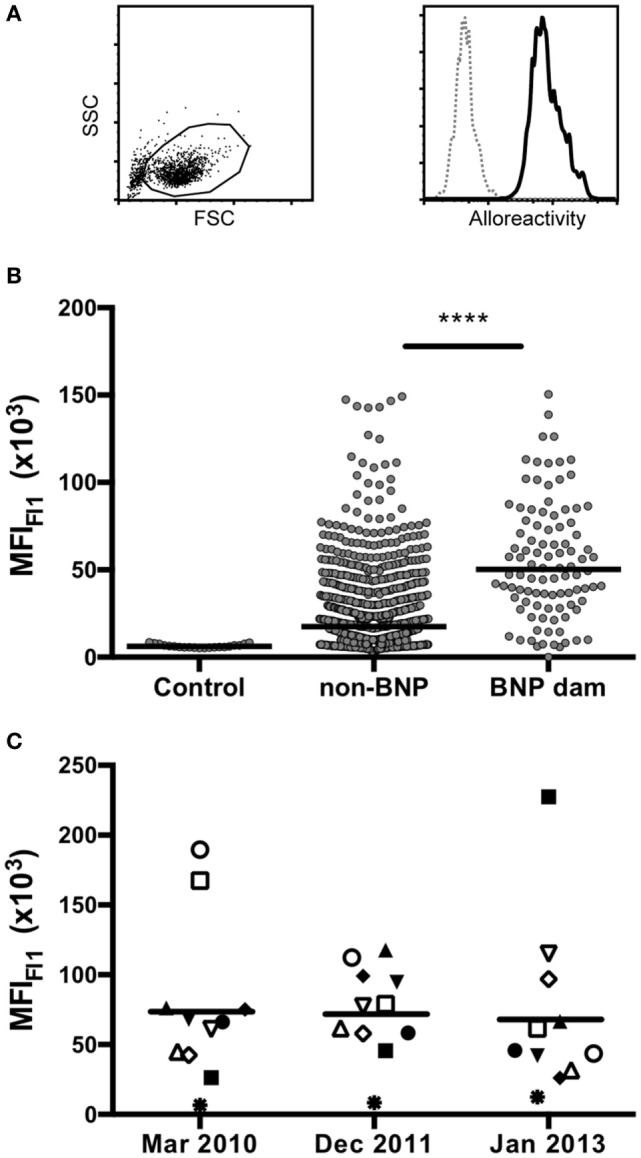
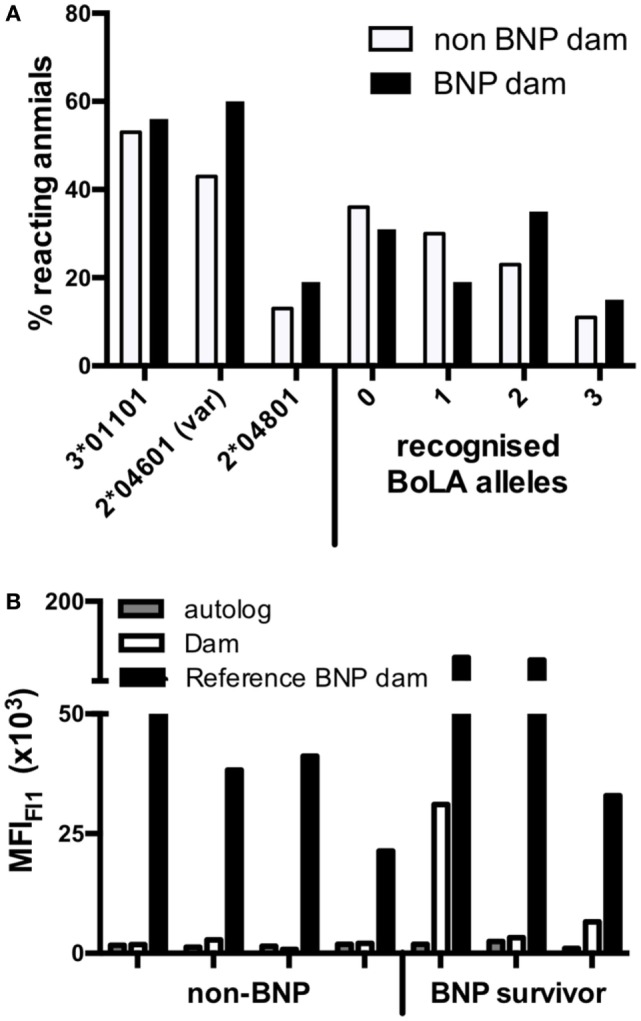
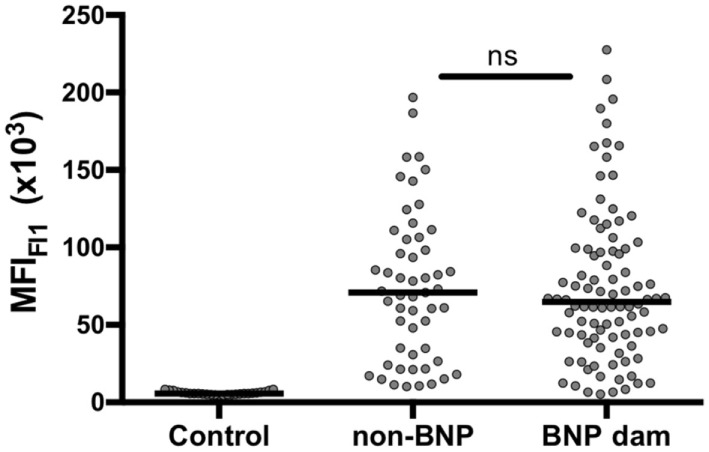
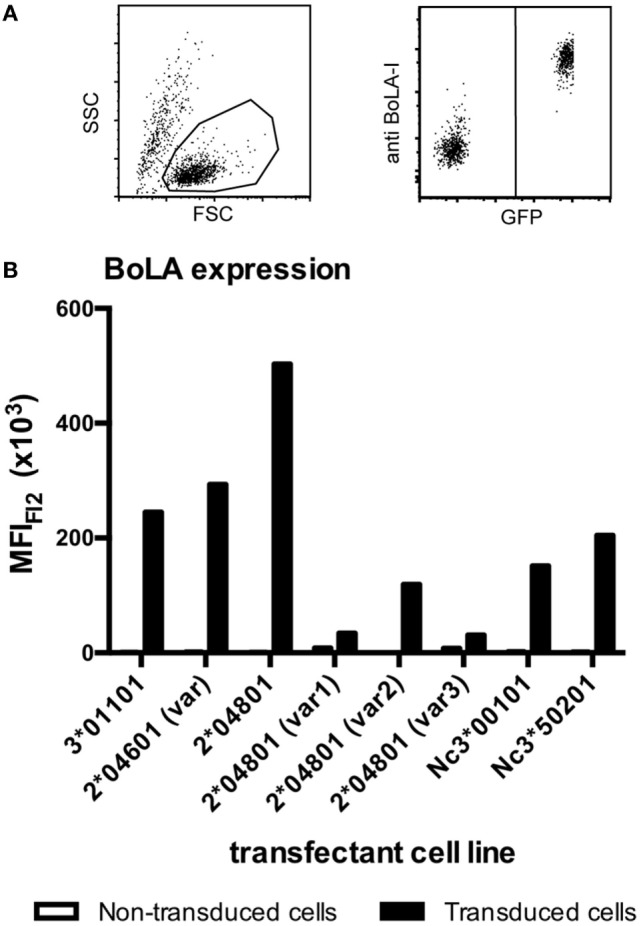
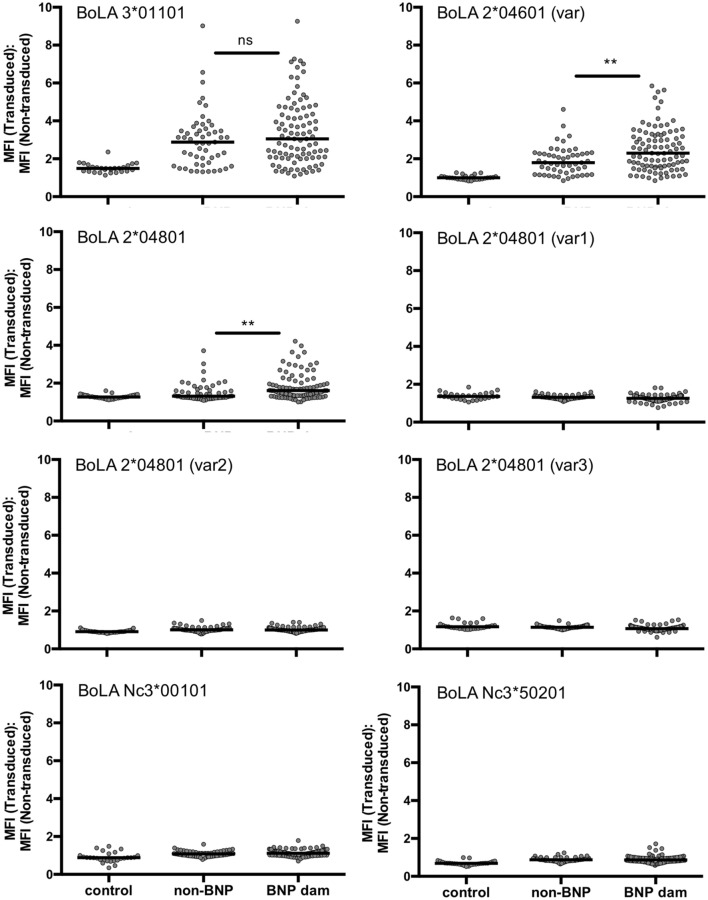
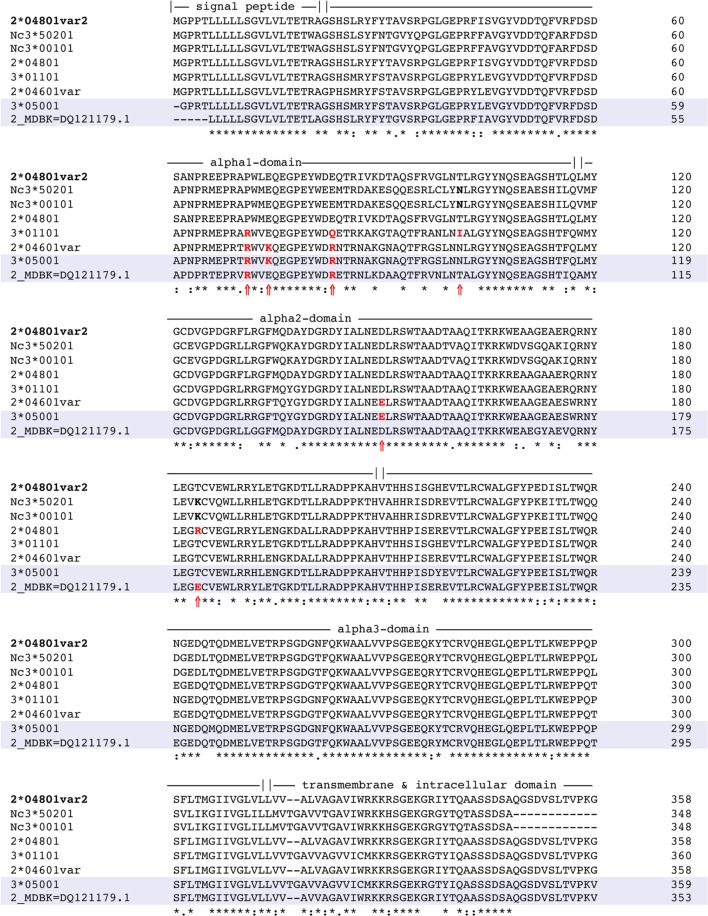
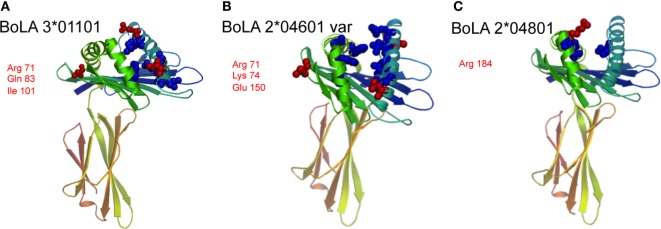
Bovine neonatal pancytopenia (BNP) was a vaccine-induced alloimmune disease observed in young calves and characterized by hemorrhages, pancytopenia, and severe destruction of the hematopoietic tissues. BNP was induced by alloreactive maternal antibodies present in the colostrum of certain cows vaccinated with a highly adjuvanted vaccine against bovine viral diarrhea. Bioprocess impurities, originating from the production cell line of the vaccine, are likely to have induced these alloreactive antibodies. One prominent alloantigen recognized by vaccine-induced alloantibodies is highly polymorphic bovine major histocompatibility complex class I antigen (bovine leukocyte antigen 1-BoLA I). Aim of this study was to define the fine specificity of BNP-associated anti-BoLA I alloantibodies. In total, eight different BoLA I alleles from the production cell line were identified. All genes were cloned and recombinantly expressed in murine cell lines. Using these cells in a flow cytometric assay, the presence of BoLA I specific alloantibodies in BNP dam sera was proven. Three BoLA I variants were identified that accounted for the majority of vaccine-induced BoLA I reactivity. By comparing the sequence of immunogenic to non-immunogenic BoLA I variants probable minimal epitopes on BoLA I were identified. In general, dams of BNP calves displayed high levels of BoLA I reactive alloantibodies, while vaccinated cows delivering healthy calves had significantly lower alloantibody titers. We identified a subgroup of vaccinated cows with healthy calves displaying very high alloantibody titers. Between these cows and BNP dams no principle difference in the BoLA I reactivity pattern was observed. However, with a limited set of dam-calf pairs it could be demonstrated that serum from these cows did not bind to BoLA I expressing leukocytes of their offspring. By contrast, when testing cells from surviving BNP calves with the corresponding dam's serum there was significant binding. We therefore conclude that predominantly highly alloreactive cows are at risk to induce BNP and it depends on the paternally inherited BoLA I whether or not the calf develops BNP.
牛新生粒细胞减少症(BNP)是一种在小牛中观察到的疫苗诱导的同种异体免疫疾病,其特征为出血、全血细胞减少症和造血组织的严重破坏。BNP 是由在接种高度佐剂的牛病毒性腹泻疫苗的某些奶牛的初乳中存在的同种反应性母抗体引起的。生物工艺杂质源自疫苗生产细胞系,可能诱导了这些同种反应性抗体。疫苗诱导的同种抗体识别的一种主要同种抗原是高度多态性的牛主要组织相容性复合体 I 类抗原(牛白细胞抗原 1-BoLA I)。本研究的目的是定义与 BNP 相关的抗-BoLA I 同种抗体的精细特异性。总共从生产细胞系中鉴定出 8 种不同的 BoLA I 等位基因。所有基因均被克隆并在鼠细胞系中重组表达。使用这些细胞在流式细胞测定中,证明了 BNP 母血清中存在 BoLA I 特异性同种抗体。鉴定出 3 种 BoLA I 变体,它们占疫苗诱导的 BoLA I 反应的大部分。通过比较免疫原性和非免疫原性 BoLA I 变体的序列,鉴定出 BoLA I 上可能的最小表位。一般来说,BNP 小牛的母畜显示高水平的 BoLA I 反应性同种抗体,而分娩健康小牛的接种奶牛的同种抗体滴度明显较低。我们鉴定出接种疫苗的奶牛中有一小部分具有非常高的同种抗体滴度的健康小牛。在这些奶牛和 BNP 母畜之间,BoLA I 反应模式没有明显差异。然而,通过对有限数量的母-仔对进行测试,可以证明来自这些奶牛的血清不与它们后代表达 BoLA I 的白细胞结合。相比之下,当用相应母畜的血清测试来自存活的 BNP 小牛的细胞时,存在明显的结合。因此,我们得出结论,主要是高度同种反应性的奶牛有诱发 BNP 的风险,并且取决于小牛从父系遗传的 BoLA I 是否会发展为 BNP。