Institute of Virology, Faculty of Veterinary Medicine, Justus-Liebig-University Giessen, Germany.
Vet Res. 2011 Aug 30;42(1):97. doi: 10.1186/1297-9716-42-97.
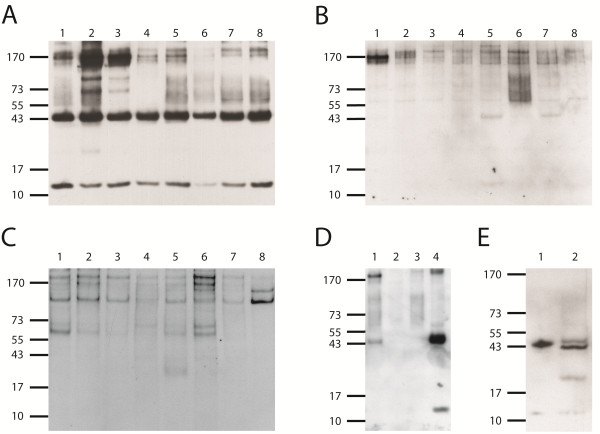
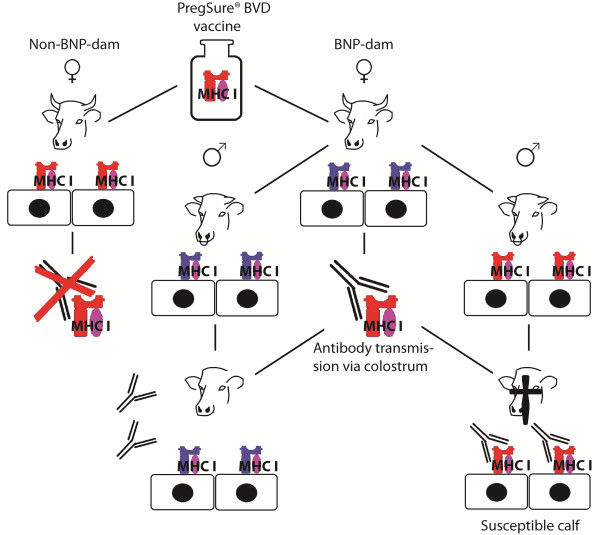
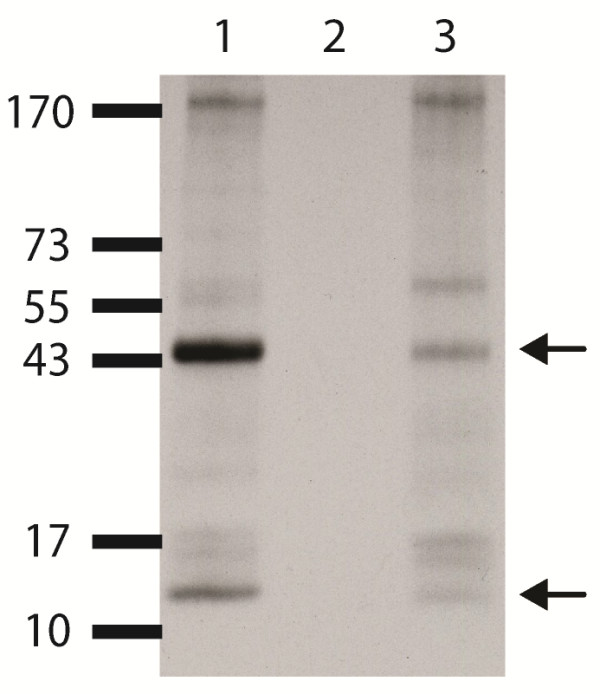
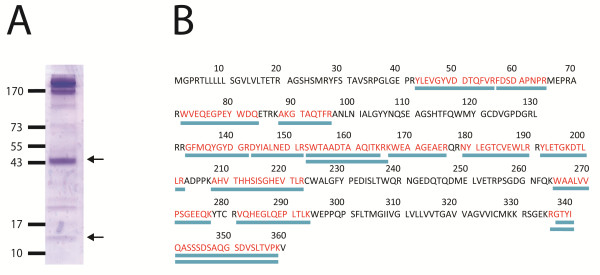
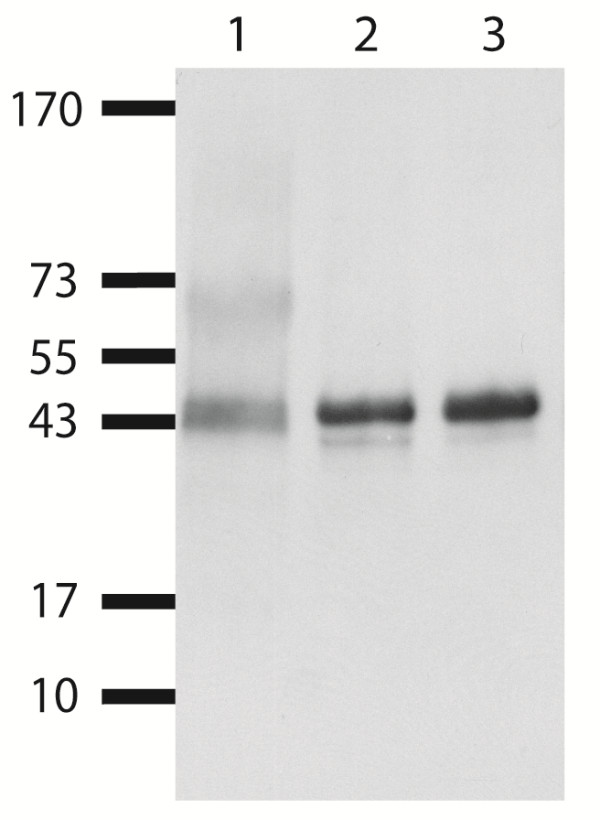
A mysterious disease affecting calves, named bovine neonatal pancytopenia (BNP), emerged in 2007 in several European countries. Epidemiological studies revealed a connection between BNP and vaccination with an inactivated vaccine against bovine virus diarrhea (BVD). Alloantibodies reacting with blood leukocytes of calves were detected in serum and colostrum of dams, which have given birth to calves affected by BNP. To understand the linkage between vaccination and the development of alloantibodies, we determined the antigens reacting with these alloantibodies. Immunoprecipitation of surface proteins from bovine leukocytes and kidney cells using sera from dams with a confirmed case of BNP in their gestation history reacted with two dominant protein species of 44 and 12 kDa. These proteins were not detected by sera from dams, free of BVDV and not vaccinated against BVD, and from sera of animals vaccinated with a different inactivated BVD vaccine. The 44 kDa protein was identified by mass spectrometry analysis as MHC I, the other as β-2-microglobulin. The presence of major histocompatibility complex class I (MHC I) in the vaccine was confirmed by Western blot using a MHC I specific monoclonal antibody. A model of BNP pathogenesis is proposed.
一种影响小牛的神秘疾病,命名为牛新生粒细胞减少症(BNP),于 2007 年在几个欧洲国家出现。流行病学研究表明,BNP 与接种牛病毒性腹泻(BVD)灭活疫苗之间存在关联。在患有 BNP 的小牛的母畜血清和初乳中检测到与小牛白细胞反应的同种抗体。为了了解疫苗接种与同种抗体产生之间的联系,我们确定了与这些同种抗体反应的抗原。使用来自患有 BNP 的妊娠史的母畜的血清对牛白细胞和肾细胞进行表面蛋白免疫沉淀,与 44 和 12 kDa 的两种主要蛋白物质反应。这些蛋白未被来自无 BVDV 且未接种 BVD 的母畜的血清以及来自接种不同的 BVD 灭活疫苗的动物的血清检测到。通过质谱分析鉴定出 44 kDa 蛋白为 MHC I,另一个为β-2-微球蛋白。使用 MHC I 特异性单克隆抗体通过 Western blot 确认疫苗中存在主要组织相容性复合体 I(MHC I)。提出了 BNP 发病机制的模型。