Peng Yanchun, Liu Hongbo, Chen Jie, Shi Taotao, Zhang Chi, Sun Dongfa, He Zhonghu, Hao Yuanfeng, Chen Wei
College of Plant Science and Technology, Huazhong Agricultural University, Wuhan, China.
National Key Laboratory of Crop Genetic Improvement, National Center of Plant Gene Research, Huazhong Agricultural University, Wuhan, China.
Front Plant Sci. 2018 Aug 14;9:1196. doi: 10.3389/fpls.2018.01196. eCollection 2018.
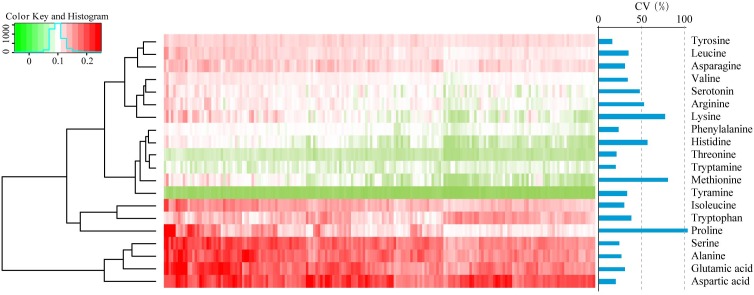
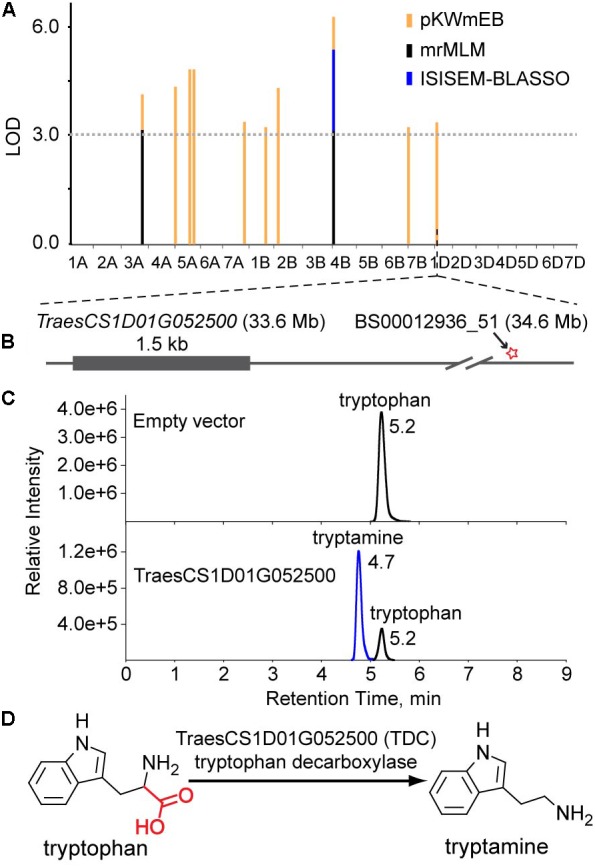
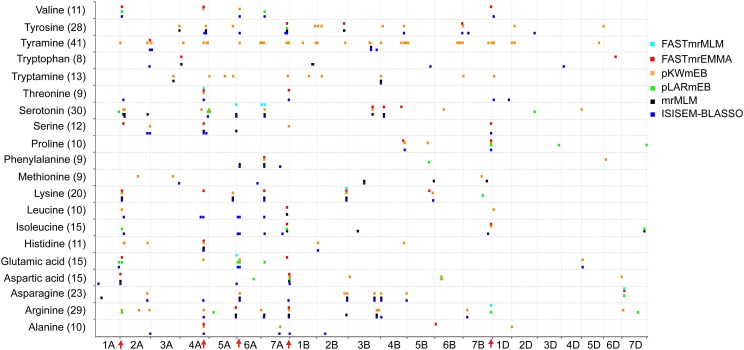
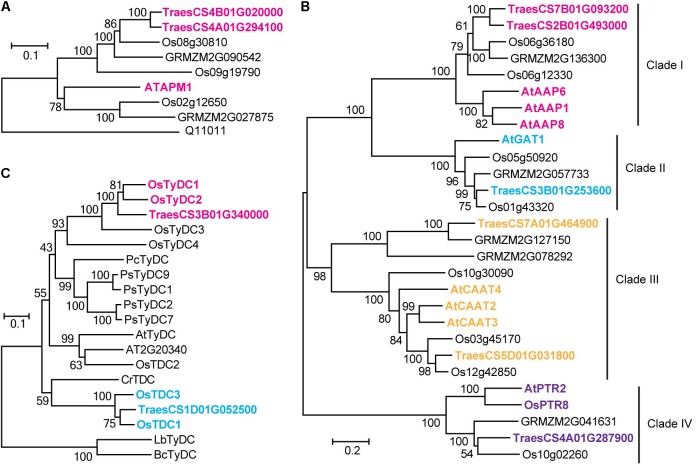
Genome-wide association studies (GWAS) have been widely used to dissect the complex biosynthetic processes of plant metabolome. Most studies have used single-locus GWAS approaches, such as mixed linear model (MLM), and little is known about more efficient algorithms to implement multi-locus GWAS. Here, we report a comprehensive GWAS of 20 free amino acid (FAA) levels in kernels of bread wheat ( L.) based on 14,646 SNPs by six multi-locus models (FASTmrEMMA, FASTmrMLM, ISISEM-BLASSO, mrMLM, pKWmEB, and pLARmEB). Our results showed that 328 significant quantitative trait nucleotides (QTNs) were identified in total (38, 8, 92, 45, 117, and 28, respectively, for the above six models). Among them, 66 were repeatedly detected by more than two models, and 155 QTNs appeared only in one model, indicating the reliability and complementarity of these models. We also found that the number of significant QTNs for different FAAs varied from 8 to 41, which revealed the complexity of the genetic regulation of metabolism, and further demonstrated the necessity of the multi-locus GWAS. Around these significant QTNs, 15 candidate genes were found to be involved in FAA biosynthesis, and one candidate gene (, annotated as tryptophan decarboxylase) was functionally identified to influence the content of tryptamine . Our study demonstrated the power and efficiency of multi-locus GWAS models in crop metabolome research and provided new insights into understanding FAA biosynthesis in wheat.
全基因组关联研究(GWAS)已被广泛用于剖析植物代谢组复杂的生物合成过程。大多数研究使用单基因座GWAS方法,如混合线性模型(MLM),而对于实施多基因座GWAS的更有效算法了解甚少。在此,我们基于14646个单核苷酸多态性(SNP),通过六种多基因座模型(FASTmrEMMA、FASTmrMLM、ISISEM - BLASSO、mrMLM、pKWmEB和pLARmEB),对面包小麦(Triticum aestivum L.)籽粒中的20种游离氨基酸(FAA)水平进行了全面的GWAS研究。我们的结果表明,总共鉴定出328个显著的数量性状核苷酸(QTN)(上述六种模型分别为38、8、92、45、117和28个)。其中,66个被两个以上模型重复检测到,155个QTN仅出现在一个模型中,表明这些模型的可靠性和互补性。我们还发现,不同FAA的显著QTN数量从8到41不等,这揭示了代谢遗传调控的复杂性,并进一步证明了多基因座GWAS的必要性。在这些显著的QTN周围,发现15个候选基因参与FAA生物合成,并且一个候选基因(TraesCS3B02G407700,注释为色氨酸脱羧酶)在功能上被鉴定为影响色胺的含量。我们的研究证明了多基因座GWAS模型在作物代谢组研究中的强大功能和效率,并为理解小麦中FAA生物合成提供了新的见解。