Punniyamoorthy Uma, Pushpam Indumathi
Department of Electronics, Madras Institute of Technology, Anna University Campus, Chennai, Tamilnadu 600044, India.
Healthc Technol Lett. 2018 May 11;5(4):118-123. doi: 10.1049/htl.2017.0026. eCollection 2018 Aug.
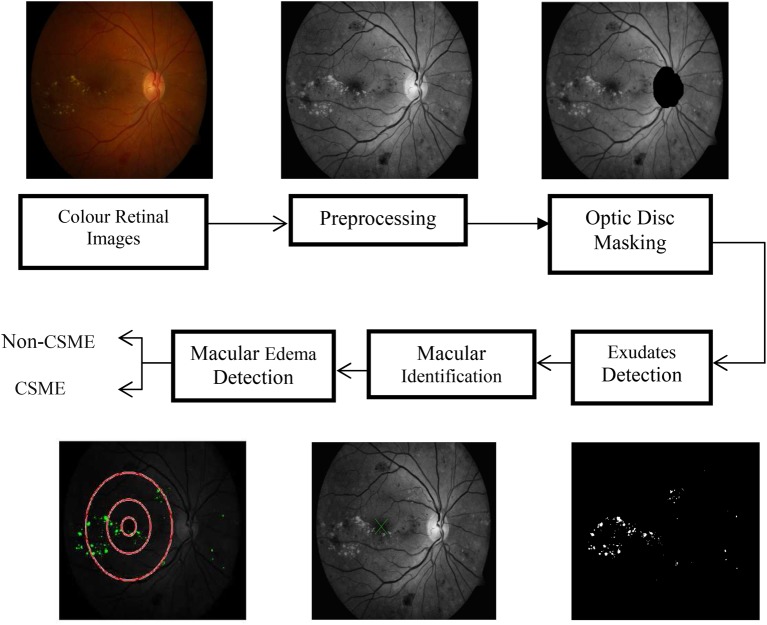
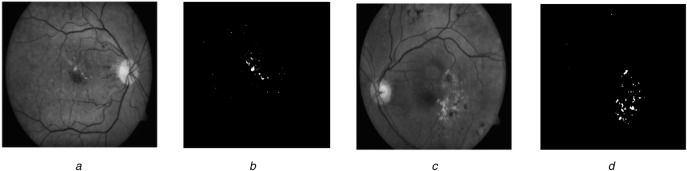
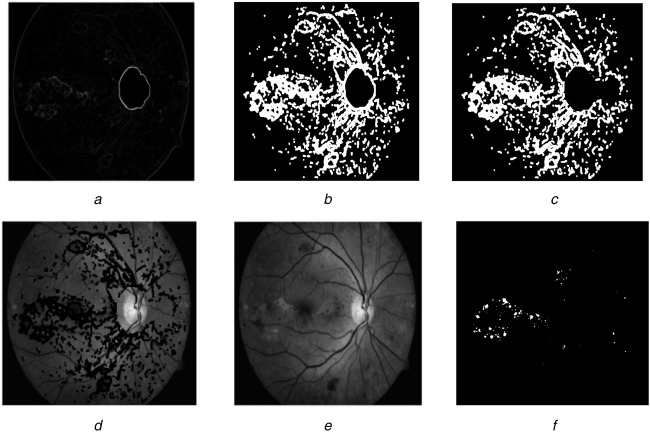
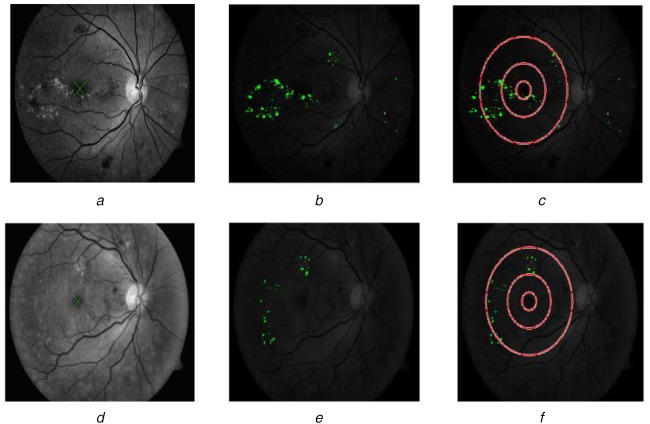
One of the major causes of eye blindness is identified to be as diabetic retinopathy, which if not detected in earlier stage would cause a serious issue. Long-term diabetes causes diabetic retinopathy. The significant key factor leading to diabetic retinopathy is exudates which affect the retina part and causes eye defects. Thus the first and foremost task in the automated detection of macular oedema is to detect the presence of these exudates. The authors use image processing techniques to detect the optic disc, exudates and the presence of macular oedema. Their method has the sensitivity 96.07%, selectivity 97.36%, and accuracy 96.62% for the exudates detection and in the case of macular oedema detection the sensitivity 97.75%, selectivity 100%, and accuracy 98.86% is achieved. The performance comparison with other methods reveals that their method can be used as a screening process for diabetic retinopathy. In addition to that, the algorithm can help to detect macular oedema.
糖尿病视网膜病变被确定为导致失明的主要原因之一,如果在早期未被发现,将会引发严重问题。长期糖尿病会导致糖尿病视网膜病变。导致糖尿病视网膜病变的一个重要关键因素是渗出物,它会影响视网膜部分并导致眼部缺陷。因此,自动检测黄斑水肿的首要任务是检测这些渗出物的存在。作者使用图像处理技术来检测视盘、渗出物以及黄斑水肿的存在。他们的方法在渗出物检测方面的灵敏度为96.07%,选择性为97.36%,准确率为96.62%;在黄斑水肿检测方面,灵敏度为97.75%,选择性为100%,准确率为98.86%。与其他方法的性能比较表明,他们的方法可作为糖尿病视网膜病变的筛查过程。除此之外,该算法有助于检测黄斑水肿。