• 文献检索
  • 文档翻译
  • 深度研究
  • 学术资讯
  • Suppr Zotero 插件Zotero 插件
  • 邀请有礼
  • 套餐&价格
  • 历史记录
应用&插件
Suppr Zotero 插件Zotero 插件浏览器插件Mac 客户端Windows 客户端微信小程序
定价
高级版会员购买积分包购买API积分包
服务
文献检索文档翻译深度研究API 文档MCP 服务
关于我们
关于 Suppr公司介绍联系我们用户协议隐私条款
关注我们

Suppr 超能文献

核心技术专利:CN118964589B侵权必究
粤ICP备2023148730 号-1Suppr @ 2026

文献检索

告别复杂PubMed语法,用中文像聊天一样搜索,搜遍4000万医学文献。AI智能推荐,让科研检索更轻松。

立即免费搜索

文件翻译

保留排版,准确专业,支持PDF/Word/PPT等文件格式,支持 12+语言互译。

免费翻译文档

深度研究

AI帮你快速写综述,25分钟生成高质量综述,智能提取关键信息,辅助科研写作。

立即免费体验

纤维蛋白原用于治疗严重产科出血。

Fibrinogen for the management of critical obstetric hemorrhage.

作者信息

Matsunaga Shigetaka, Takai Yasushi, Seki Hiroyuki

机构信息

Center for Maternal, Fetal and Neonatal Medicine, Saitama Medical Center, Saitama Medical University, Kawagoe, Japan.

出版信息

J Obstet Gynaecol Res. 2019 Jan;45(1):13-21. doi: 10.1111/jog.13788. Epub 2018 Aug 28.

DOI:10.1111/jog.13788
PMID:30155944
原文链接:https://pmc.ncbi.nlm.nih.gov/articles/PMC6585962/
Abstract

AIM

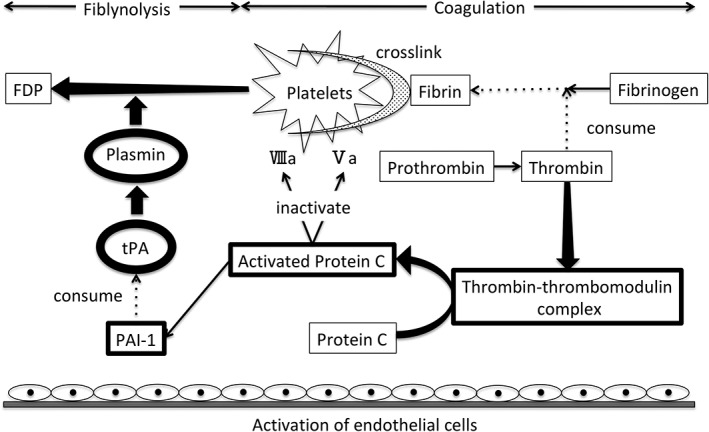
In cases of critical obstetric hemorrhage leading to extreme hypofibrinogenemia, fibrinogen is the marker that indicates the critical severity, and early fibrinogen supplementation centering on hemostatic resuscitation is a vital treatment to stabilize a catastrophic condition. In this review, we investigated the effect of fibrinogen level on hemostasis and what we can do to treat hypofibrinogenemia efficiently and improve patients' outcome.

METHODS

We reviewed numerous articles related to hypofibrinogenemia in critical obstetric hemorrhage. Especially, we performed a systematic review on target value of fibrinogen for hemostasis and effectiveness of fibrinogen concentrate. We also reviewed the articles about the methods for early normalization of fibrinogen level such as tranexamic acid, massive transfusion protocol, and point-of-care testing.

RESULTS

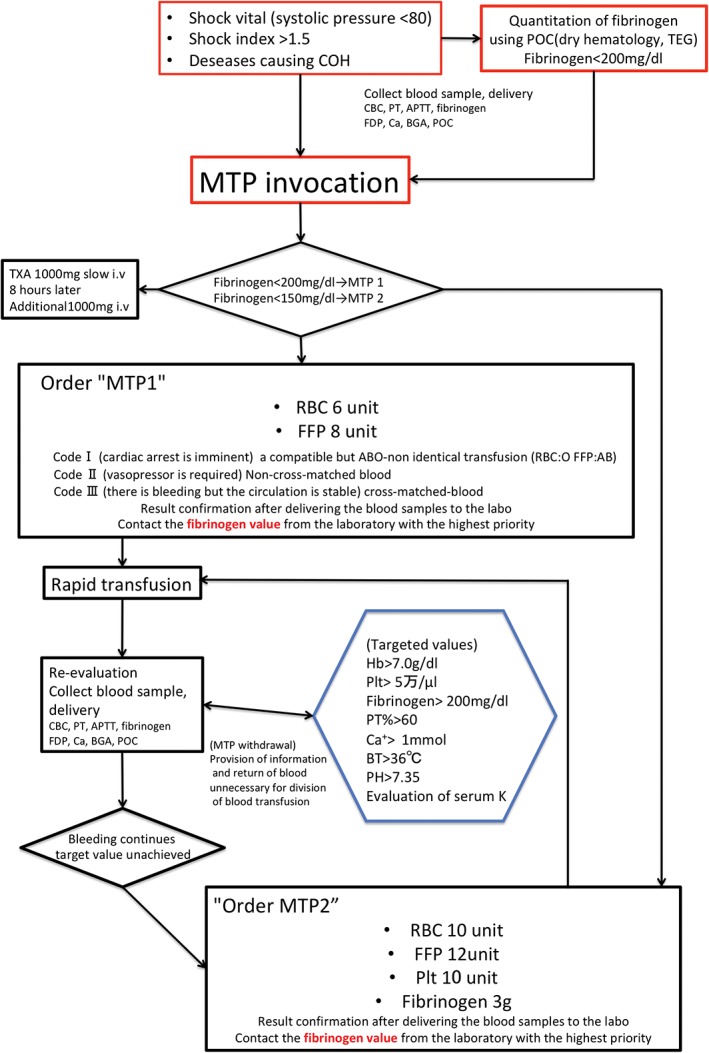
The target value of fibrinogen calculated by needs for massive transfusion was 200 mg/dL or 10 mm of A5 . Although fibrinogen concentrate worked poorly on fibrinogen levels within the normal range, it improved the blood fibrinogen levels rapidly when it was administered to critical obstetric hemorrhage patients with serious hypofibrinogenemia. Hence, the volume of FFP transfused could be reduced along with a reduction in the frequency of pulmonary edema due to volume overload.

CONCLUSION

The patient group for which fibrinogen concentrate works most effectively is cases with severe hypofibrinogenemia. Further research is required in the light of evidence. The essence of the transfusion algorithm in critical obstetric hemorrhage is to approach the target value for obtaining hemostasis, ensure an accurate and prompt grasp of the severity using point-of-care testing, introduce a massive transfusion protocol and use tranexamic acid.

摘要

目的

在导致极度低纤维蛋白原血症的严重产科出血病例中,纤维蛋白原是指示危急严重程度的标志物,以止血复苏为中心的早期纤维蛋白原补充是稳定灾难性状况的关键治疗方法。在本综述中,我们研究了纤维蛋白原水平对止血的影响以及我们可以采取哪些措施来有效治疗低纤维蛋白原血症并改善患者预后。

方法

我们回顾了大量与严重产科出血中低纤维蛋白原血症相关的文章。特别是,我们对纤维蛋白原止血的目标值和纤维蛋白原浓缩物的有效性进行了系统综述。我们还回顾了关于纤维蛋白原水平早期正常化方法的文章,如氨甲环酸、大量输血方案和即时检验。

结果

根据大量输血需求计算出的纤维蛋白原目标值为200mg/dL或A5为10mm。尽管纤维蛋白原浓缩物对正常范围内的纤维蛋白原水平作用不佳,但当给予严重低纤维蛋白原血症的严重产科出血患者时,它能迅速提高血液纤维蛋白原水平。因此,可以减少新鲜冰冻血浆的输注量,并减少因容量超负荷导致的肺水肿发生率。

结论

纤维蛋白原浓缩物最有效的患者群体是严重低纤维蛋白原血症患者。需要根据证据进行进一步研究。严重产科出血输血算法的核心是接近止血的目标值,通过即时检验确保准确及时地掌握严重程度,引入大量输血方案并使用氨甲环酸。
https://cdn.ncbi.nlm.nih.gov/pmc/blobs/c2da/6585962/5a1067a0afc7/JOG-45-13-g002.jpg
https://cdn.ncbi.nlm.nih.gov/pmc/blobs/c2da/6585962/da043b7d12ae/JOG-45-13-g001.jpg
https://cdn.ncbi.nlm.nih.gov/pmc/blobs/c2da/6585962/5a1067a0afc7/JOG-45-13-g002.jpg
https://cdn.ncbi.nlm.nih.gov/pmc/blobs/c2da/6585962/da043b7d12ae/JOG-45-13-g001.jpg
https://cdn.ncbi.nlm.nih.gov/pmc/blobs/c2da/6585962/5a1067a0afc7/JOG-45-13-g002.jpg

相似文献

1
Fibrinogen for the management of critical obstetric hemorrhage.纤维蛋白原用于治疗严重产科出血。
J Obstet Gynaecol Res. 2019 Jan;45(1):13-21. doi: 10.1111/jog.13788. Epub 2018 Aug 28.
2
Massive obstetric hemorrhage: Current approach to management.严重产科出血:当前的管理方法
Med Intensiva. 2016 Jun-Jul;40(5):298-310. doi: 10.1016/j.medin.2016.02.010. Epub 2016 May 13.
3
Fibrinogen concentrate substitution therapy for obstetric hemorrhage complicated by coagulopathy.纤维蛋白原浓缩物替代疗法用于治疗合并凝血功能障碍的产科出血。
J Obstet Gynaecol Res. 2013 Apr;39(4):770-6. doi: 10.1111/j.1447-0756.2012.02058.x. Epub 2012 Dec 21.
4
[Required laboratory examination and blood transfusion therapy in massive hemorrhage during surgery].[手术中大量出血时的必要实验室检查及输血治疗]
Rinsho Byori. 2011 Jul;59(7):678-83.
5
Fibrinogen concentrate administration attributes to significant reductions of blood loss and transfusion requirements in thoracic aneurysm repair.在胸主动脉瘤修复术中,输注纤维蛋白原浓缩物可显著减少失血量和输血量需求。
J Cardiothorac Surg. 2014 May 19;9:90. doi: 10.1186/1749-8090-9-90.
6
[Patient blood management and transfusion therapy for hemostasis].[患者血液管理与用于止血的输血治疗]
Rinsho Ketsueki. 2017;58(10):2141-2149. doi: 10.11406/rinketsu.58.2141.
7
An algorithm for the management of coagulopathy from postpartum hemorrhage, using fibrinogen concentrate as first-line therapy.一种以纤维蛋白原浓缩物作为一线治疗手段的产后出血凝血病管理算法。
Int J Obstet Anesth. 2017 Nov;32:11-16. doi: 10.1016/j.ijoa.2017.03.005. Epub 2017 Apr 1.
8
The Clinical Efficacy of Fibrinogen Concentrate in Massive Obstetric Haemorrhage with Hypofibrinogenaemia.纤维蛋白原浓缩物治疗低纤维蛋白原血症所致大出血的临床疗效。
Sci Rep. 2017 Apr 24;7:46749. doi: 10.1038/srep46749.
9
Fibrinogen concentrate versus placebo for treatment of postpartum haemorrhage: study protocol for a randomised controlled trial.纤维蛋白原浓缩物与安慰剂治疗产后出血的随机对照试验研究方案
Trials. 2015 Apr 17;16:169. doi: 10.1186/s13063-015-0670-9.
10
Usefulness of shock indicators for determining the need for blood transfusion after massive obstetric hemorrhage.休克指标在判定产科大出血后输血需求方面的实用性。
J Obstet Gynaecol Res. 2015 Jan;41(1):39-43. doi: 10.1111/jog.12480. Epub 2014 Aug 28.

引用本文的文献

1
"No End Point Detected": A Unique Coagulation Profile Unmasking Dysfibrinogenemia.“未检测到终点”:揭示异常纤维蛋白原血症的独特凝血特征
Case Rep Hematol. 2025 Jul 25;2025:8186265. doi: 10.1155/crh/8186265. eCollection 2025.
2
Changes in use and outcomes after fibrinogen concentrate insurance coverage for critical obstetrical hemorrhage: a nationwide questionnaire survey in Japan.纤维蛋白原浓缩物在产科大出血保险覆盖后的使用和结局变化:日本全国问卷调查。
Sci Rep. 2024 Mar 20;14(1):6711. doi: 10.1038/s41598-024-57244-2.
3
Blood component therapy in patients having massive obstetric hemorrhage in a tertiary care center in Puducherry.

本文引用的文献

1
Effect of treatment delay on the effectiveness and safety of antifibrinolytics in acute severe haemorrhage: a meta-analysis of individual patient-level data from 40 138 bleeding patients.治疗延迟对急性严重出血中抗纤溶药物有效性和安全性的影响:对40138例出血患者个体水平数据的荟萃分析
Lancet. 2018 Jan 13;391(10116):125-132. doi: 10.1016/S0140-6736(17)32455-8. Epub 2017 Nov 7.
2
Viscoelastometric-guided early fibrinogen concentrate replacement during postpartum haemorrhage: OBS2, a double-blind randomized controlled trial.弹性黏弹学指导下产后出血早期纤维蛋白原浓缩物替代治疗:OBS2,一项双盲随机对照试验。
Br J Anaesth. 2017 Sep 1;119(3):411-421. doi: 10.1093/bja/aex181.
3
在本地治里一家三级医疗中心对发生大量产科出血的患者进行血液成分治疗。
Asian J Transfus Sci. 2023 Jul-Dec;17(2):210-216. doi: 10.4103/ajts.ajts_101_22. Epub 2022 Dec 12.
4
Effectiveness of call system implementation for postpartum hemorrhage in a tertiary emergency medical center: a retrospective cohort study.呼叫系统实施对三级急救医疗中心产后出血效果的回顾性队列研究。
BMC Pregnancy Childbirth. 2023 Nov 11;23(1):787. doi: 10.1186/s12884-023-06095-2.
5
Delivery decision in pregnant women rescued by ECMO for severe ARDS: a retrospective multicenter cohort study.体外膜肺氧合救治重症急性呼吸窘迫综合征孕妇分娩决策:一项回顾性多中心队列研究。
Crit Care. 2022 Oct 17;26(1):312. doi: 10.1186/s13054-022-04189-5.
6
Fibrinogen for the prediction of severe maternal complications in placental abruption with fetal death after 24 weeks of gestation.纤维蛋白原预测 24 周后胎死宫内的胎盘早剥严重产妇并发症
Int J Gynaecol Obstet. 2023 Mar;160(3):900-905. doi: 10.1002/ijgo.14417. Epub 2022 Sep 3.
7
Diagnostic and Therapeutic Potential for HNP-1, HBD-1 and HBD-4 in Pregnant Women with COVID-19.新冠病毒感染孕妇中 HNP-1、HBD-1 和 HBD-4 的诊断和治疗潜力。
Int J Mol Sci. 2022 Mar 22;23(7):3450. doi: 10.3390/ijms23073450.
8
Effect of hypofibrinogenemia on obstetrical disseminated intravascular coagulation in Japan in 2018: a multicenter retrospective cohort study.2018 年日本低纤维蛋白原血症对产科弥漫性血管内凝血的影响:一项多中心回顾性队列研究。
Int J Hematol. 2021 Jul;114(1):18-34. doi: 10.1007/s12185-021-03119-5. Epub 2021 Mar 12.
Japanese Clinical Practice Guide for Critical Obstetrical Hemorrhage (2017 revision).
日本产科严重出血临床实践指南(2017年修订版)
J Obstet Gynaecol Res. 2017 Oct;43(10):1517-1521. doi: 10.1111/jog.13417. Epub 2017 Jul 24.
4
Management of severe perioperative bleeding: guidelines from the European Society of Anaesthesiology: First update 2016.严重围手术期出血的管理:欧洲麻醉学会指南:2016年首次更新
Eur J Anaesthesiol. 2017 Jun;34(6):332-395. doi: 10.1097/EJA.0000000000000630.
5
Effect of early tranexamic acid administration on mortality, hysterectomy, and other morbidities in women with post-partum haemorrhage (WOMAN): an international, randomised, double-blind, placebo-controlled trial.氨甲环酸早期给药对产后出血妇女死亡率、子宫切除术和其他并发症的影响(WOMAN):一项国际、随机、双盲、安慰剂对照试验。
Lancet. 2017 May 27;389(10084):2105-2116. doi: 10.1016/S0140-6736(17)30638-4. Epub 2017 Apr 26.
6
The Clinical Efficacy of Fibrinogen Concentrate in Massive Obstetric Haemorrhage with Hypofibrinogenaemia.纤维蛋白原浓缩物治疗低纤维蛋白原血症所致大出血的临床疗效。
Sci Rep. 2017 Apr 24;7:46749. doi: 10.1038/srep46749.
7
First report of the point-of-care TEG: A technical validation study of the TEG-6S system.即时检验血栓弹力图的首次报告:TEG-6S系统的技术验证研究
Platelets. 2016 Nov;27(7):642-649. doi: 10.3109/09537104.2016.1153617. Epub 2016 Apr 11.
8
Efficacy of transfusion with fresh-frozen plasma:red blood cell concentrate ratio of 1 or more for amniotic fluid embolism with coagulopathy: a case-control study.新鲜冰冻血浆与红细胞浓缩液输注比例为1或更高对伴有凝血病的羊水栓塞的疗效:一项病例对照研究
Transfusion. 2016 Dec;56(12):3042-3046. doi: 10.1111/trf.13856. Epub 2016 Nov 2.
9
Pre-delivery fibrinogen predicts adverse maternal or neonatal outcomes in patients with placental abruption.产前纤维蛋白原可预测胎盘早剥患者的不良母体或新生儿结局。
J Obstet Gynaecol Res. 2016 Jul;42(7):796-802. doi: 10.1111/jog.12988. Epub 2016 Apr 14.
10
The haematological features and transfusion management of women who required massive transfusion for major obstetric haemorrhage in the UK: a population based study.英国因产科大出血需要大量输血的女性的血液学特征和输血管理:一项基于人群的研究。
Br J Haematol. 2016 Feb;172(4):616-24. doi: 10.1111/bjh.13864. Epub 2015 Dec 18.