Institute for Immunology, Department of Basic Medical Sciences, School of Medicine, Tsinghua-Peking Joint Center for Life Sciences, Tsinghua University, Beijing 100084, China.
Department of Physiology and Pharmacology, Cumming School of Medicine and Alberta Children's Hospital Research Institute, University of Calgary, Calgary, AB T2N 4N1, Canada.
Cell Rep. 2018 Aug 28;24(9):2356-2369.e5. doi: 10.1016/j.celrep.2018.07.098.
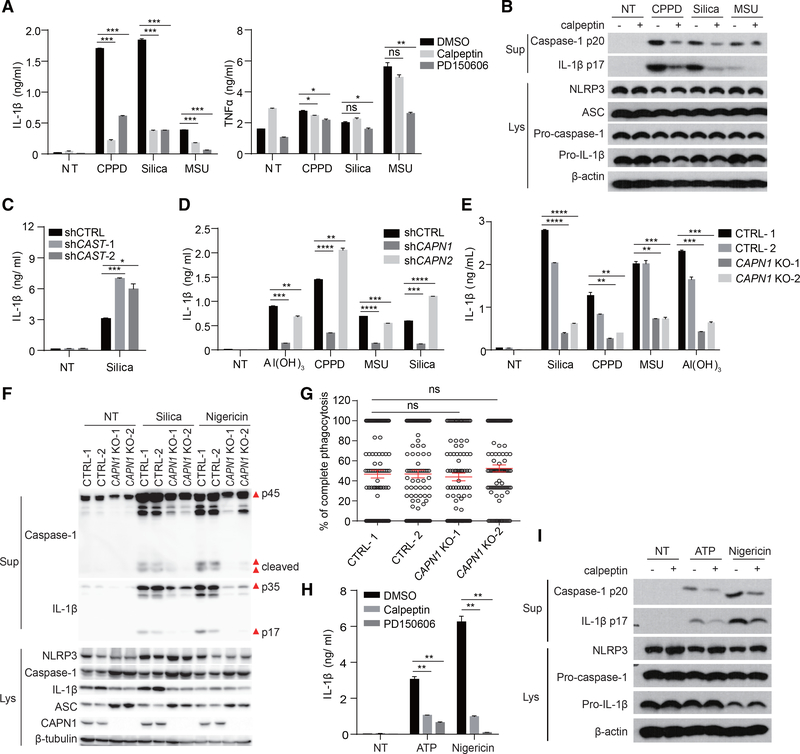
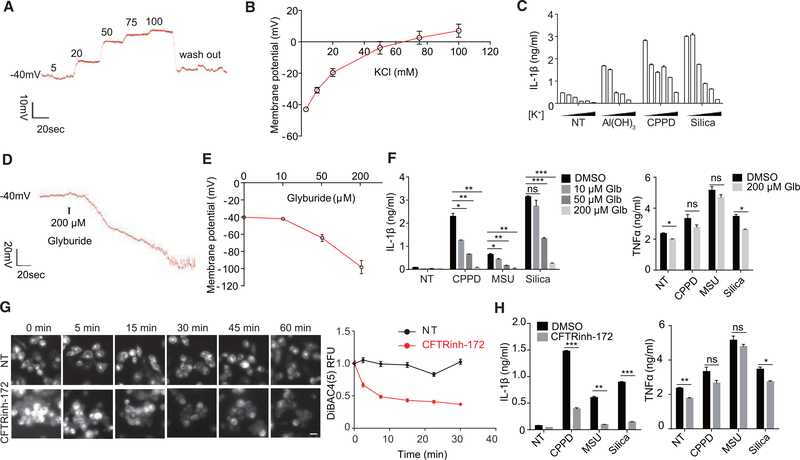
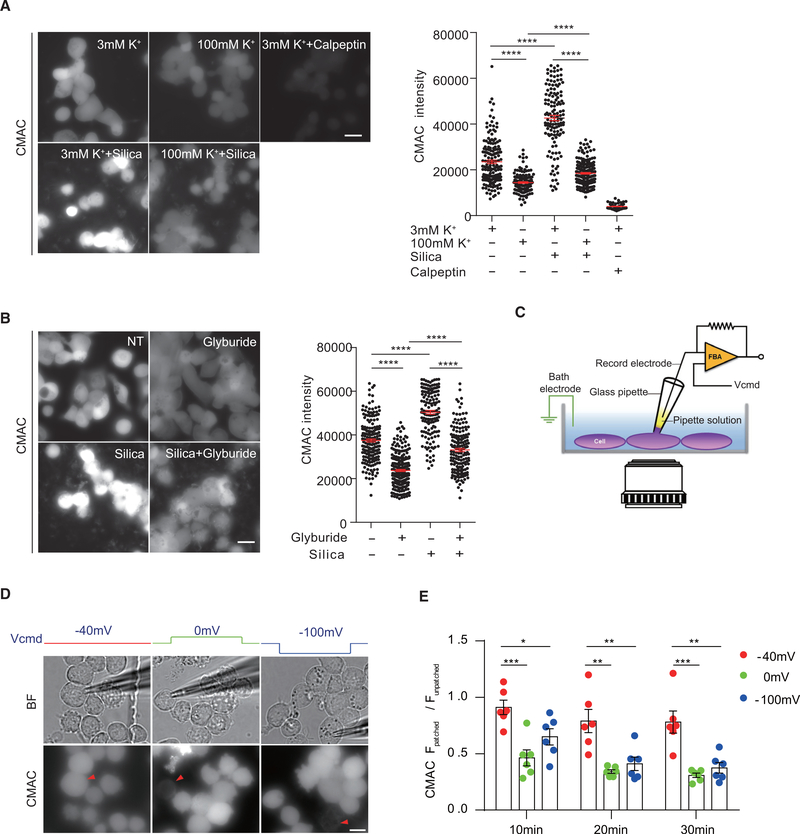
The NLRP3 inflammasome senses a range of cellular disturbances, although no consensus exists regarding a common mechanism. Canonical NLRP3 activation is blocked by high extracellular K, regardless of the activating signal. We report here that canonical NLRP3 activation leads to Ca flux and increased calpain activity. Activated calpain releases a pool of Caspase-1 sequestered by the cytoskeleton to regulate NLRP3 activation. Using electrophysiological recording, we found that resting-state eukaryotic membrane potential (MP) is required for this calpain activity, and depolarization by high extracellular K or artificial hyperpolarization results in the inhibition of calpain. Therefore, the MP/Ca/calpain/Caspase-1 axis acts as an independent regulatory mechanism for NLRP3 activity. This finding provides mechanistic insight into high K-mediated inhibition of NLRP3 activation, and it offers an alternative model of NLRP3 inflammasome activation that does not involve K efflux.
NLRP3 炎性体感知多种细胞紊乱,但对于共同机制尚无共识。尽管激活信号不同,但细胞外高钾可阻断经典的 NLRP3 激活。我们在此报告,经典的 NLRP3 激活导致钙流和钙蛋白酶活性增加。激活的钙蛋白酶释放出被细胞骨架隔离的 Caspase-1 池,以调节 NLRP3 的激活。通过电生理记录,我们发现静息状态真核细胞膜电位(MP)是这种钙蛋白酶活性所必需的,并且细胞外高钾或人工超极化引起的去极化导致钙蛋白酶的抑制。因此,MP/Ca/钙蛋白酶/Caspase-1 轴作为 NLRP3 活性的独立调节机制。这一发现为高钾介导的 NLRP3 激活抑制提供了机制上的见解,并提供了一种不涉及钾外流的 NLRP3 炎性体激活的替代模型。