Department of Industrial and Systems Engineering, The Hong Kong Polytechnic University, Hung Hom, Kowloon, Hong Kong, China.
Department of Mechanical and Materials Engineering, University of Nebraska-Lincoln, Lincoln, NE, 68588-0656, USA.
Sci Rep. 2018 Aug 29;8(1):13002. doi: 10.1038/s41598-018-31070-9.
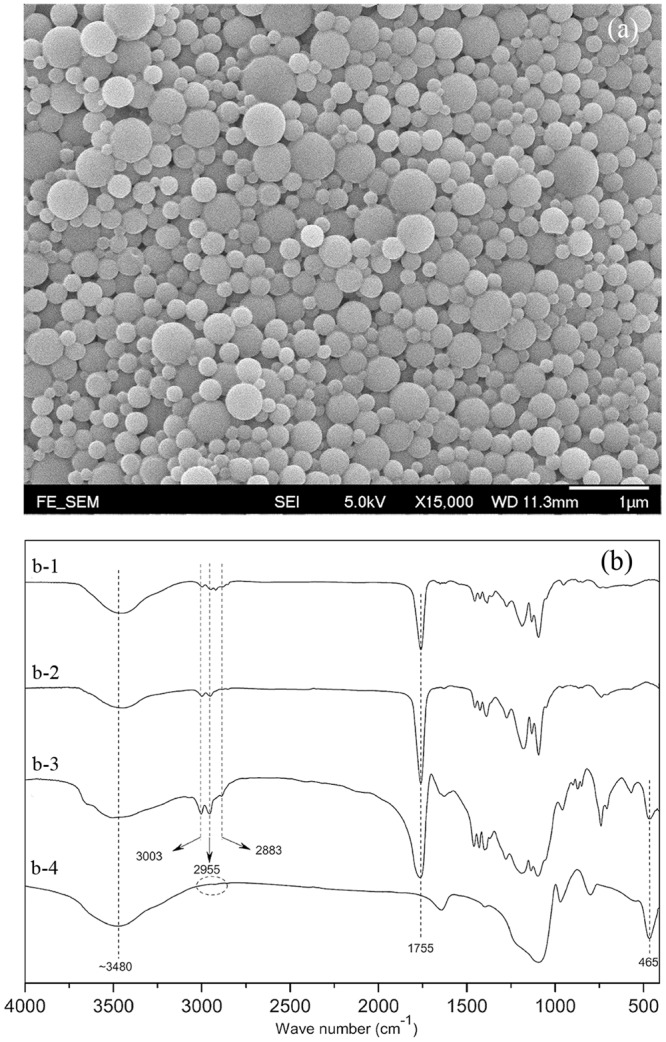
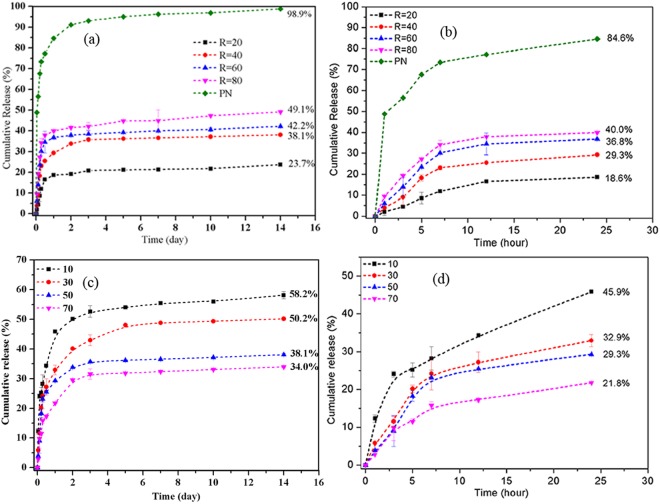
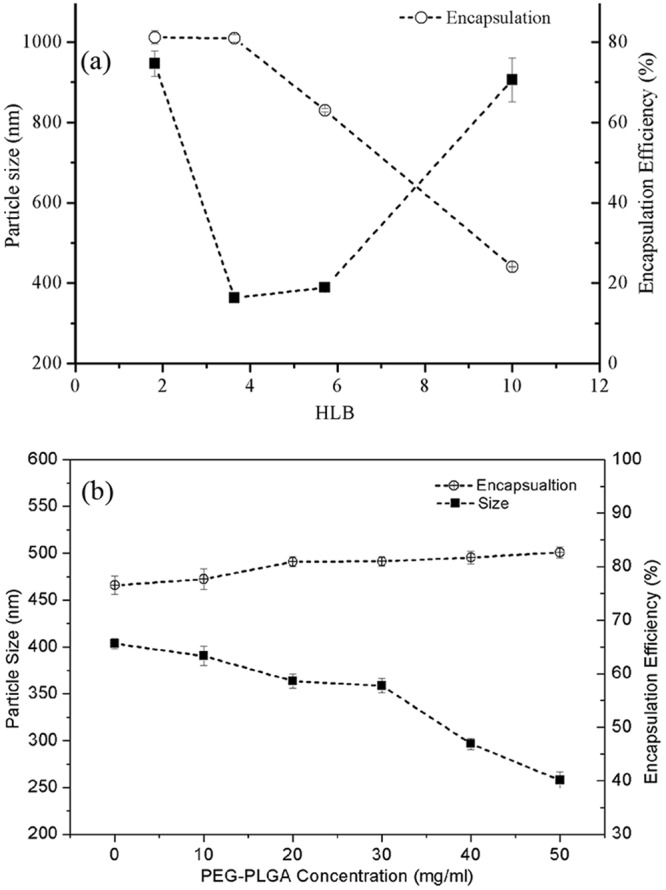
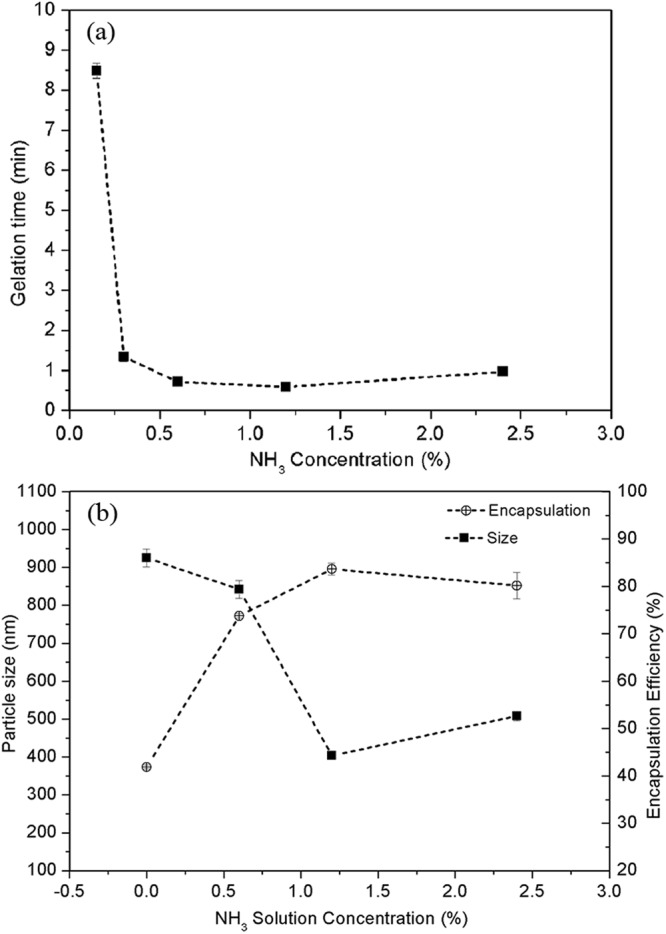
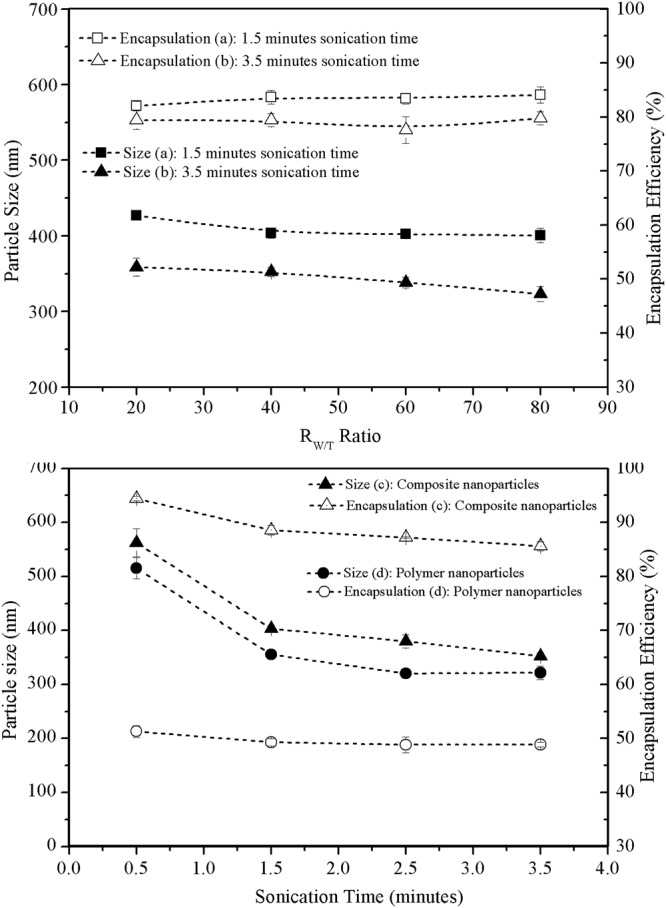
Conventional core-shell polymer nanoparticles usually exhibit a rapid release rate with their release kinetics mainly adjusted through changing composition of the polymer shells, limiting their applications for prolonged drug delivery. As a solution to these problems, silica xerogel/polymer core-shell-structured composite nanoparticles have been proposed. Different with our previous work centring on studying process variables, we here focused on investigating the effects of key compositional variables on essential properties of the composite nanoparticles. The drug release profiles (in vitro) were well interpreted by the Baker and Lonsdale model on a predicted two-stage basis. The first stage (<1 day) was well controlled from 18.6% to 45.9%; the second stage (1-14 days) was tailored in a range from 28.7 to 58.2% by changing the composition of the silica xerogel cores and polymeric shells. A substantial achievement was reducing the release rate by more than 40 times compared with that of conventional polymer nanoparticles by virtue of the silica xerogel cores. A semi-empirical model was also established in the first attempt to describe the effects of polymer concentration and drug loading capacity on the size of the composite nanoparticles. All these results indicated that the composite nanoparticles are promising candidates for prolonged drug delivery applications.
传统的核壳聚合物纳米粒子通常表现出快速的释放速率,其释放动力学主要通过改变聚合物壳的组成来调节,这限制了它们在延长药物输送方面的应用。作为解决这些问题的一种方法,已经提出了二氧化硅气凝胶/聚合物核壳结构复合纳米粒子。与我们之前专注于研究工艺变量的工作不同,我们在这里重点研究了关键组成变量对复合纳米粒子基本性质的影响。药物释放曲线(体外)很好地通过贝克和朗斯代尔模型在预测的两阶段基础上进行了解释。第一阶段(<1 天)的控制范围为 18.6%至 45.9%;第二阶段(1-14 天)通过改变二氧化硅气凝胶核和聚合物壳的组成,在 28.7%至 58.2%的范围内进行了调整。通过利用二氧化硅气凝胶核,与传统聚合物纳米粒子相比,释放速率降低了 40 多倍,这是一个实质性的成就。还首次建立了一个半经验模型来描述聚合物浓度和药物载量对复合纳米粒子尺寸的影响。所有这些结果表明,复合纳米粒子是延长药物输送应用的有前途的候选物。