Shen Linyuan, Gan Mailin, Zhang Shunhua, Ma Jideng, Tang Guoqing, Jiang Yanzhi, Li Mingzhou, Wang Jinyong, Li Xuewei, Che Lianqiang, Zhu Li
College of Animal Science and Technology, Sichuan Agricultural University, Chengdu, China.
Department of Cell and Developmental Biology, University of Illinois at Urbana-Champaign, Champaign, IL, United States.
Front Genet. 2018 Aug 15;9:291. doi: 10.3389/fgene.2018.00291. eCollection 2018.
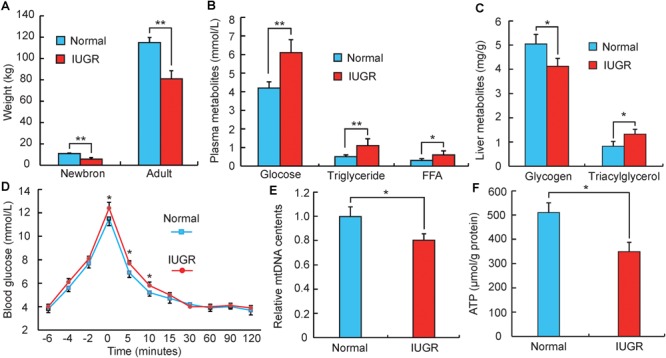
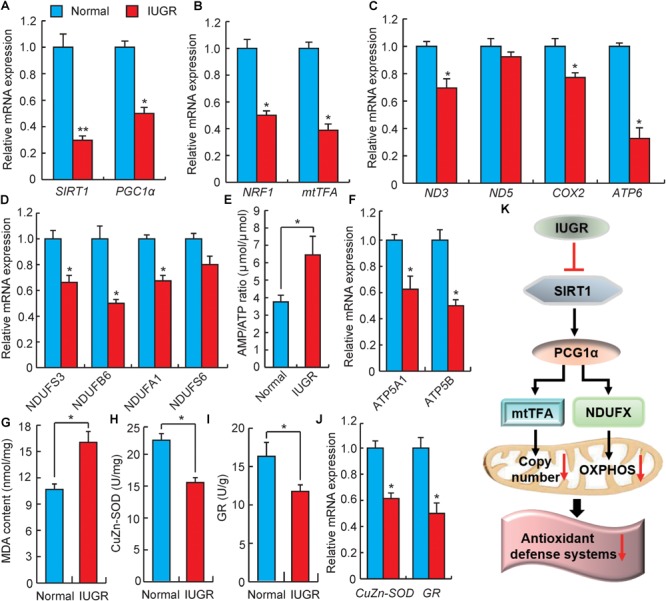
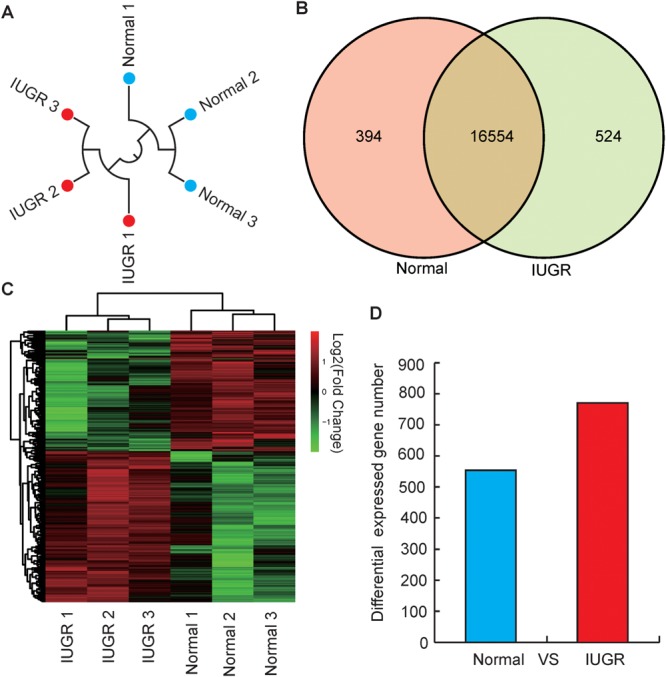
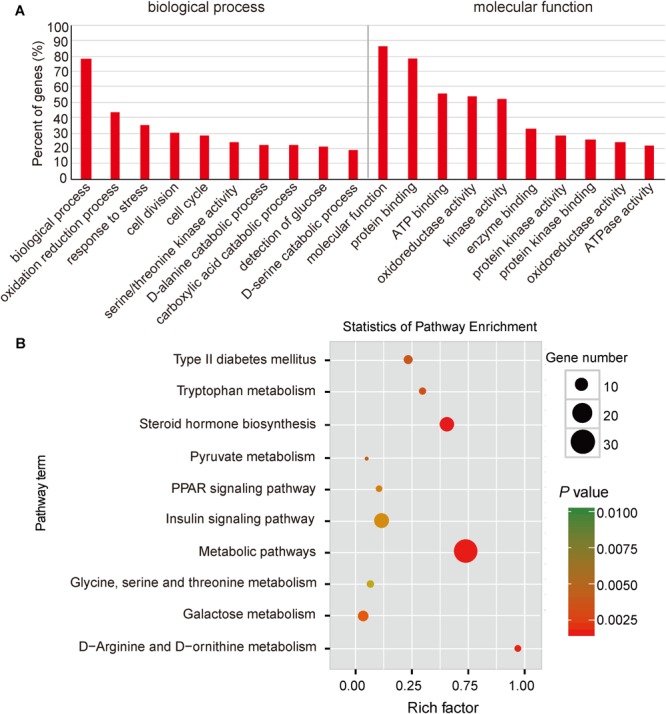
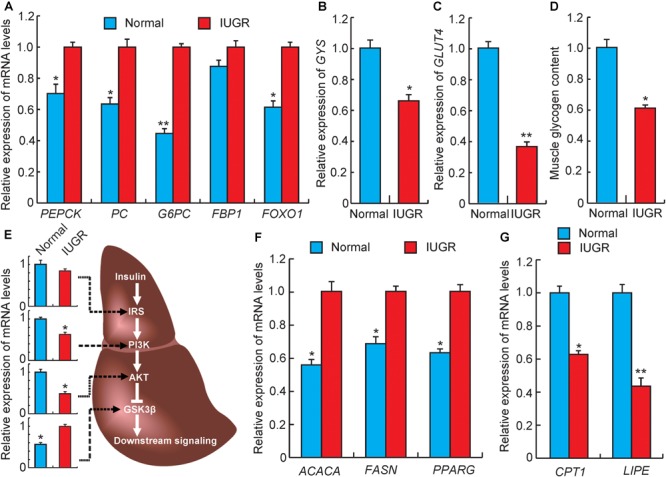
Epidemiological data have indicated that intrauterine growth retardation (IUGR) is a risk factor for the adult metabolic syndrome in pigs. However, the causative genetic mechanism leading to the phenotype in adulthood has not been well characterized. In the present study, both normal and IUGR adult pigs were used as models to survey the differences in global gene expression in livers through transcriptome sequencing. The transcriptome libraries generated 104.54 gb of data. In normal and IUGR pigs, 16,948 and 17,078 genes were expressed, respectively. A total of 1,322 differentially expressed genes (DEGs) were identified. Enrichment analysis of the DEGs revealed that the top overrepresented gene ontology (GO) terms and pathways were related to oxidoreductase activity, ATPase activity, amino catabolic process, glucose metabolism, and insulin signaling pathway. The increased gluconeogenesis (GNG) and decreased glycogen synthesis in the liver contributed to the glucose intolerance observed in IUGR. The reduced expression of insulin signaling genes (such as and ) indicated an elevated risk of diabetes in adulthood. Together, these findings provide a comprehensive understanding of the molecular mechanisms of adult IUGR pigs and valuable information for future studies of therapeutic intervention in IUGR metabolic syndrome.
流行病学数据表明,宫内生长迟缓(IUGR)是猪成年后发生代谢综合征的一个风险因素。然而,导致成年期这种表型的致病遗传机制尚未得到充分表征。在本研究中,正常成年猪和IUGR成年猪均被用作模型,通过转录组测序来研究肝脏中全局基因表达的差异。转录组文库产生了104.54 gb的数据。在正常猪和IUGR猪中,分别有16,948个和17,078个基因表达。总共鉴定出1322个差异表达基因(DEG)。对这些DEG的富集分析表明,最显著富集的基因本体(GO)术语和通路与氧化还原酶活性、ATP酶活性、氨基酸分解代谢过程、葡萄糖代谢以及胰岛素信号通路有关。肝脏中糖异生(GNG)增加和糖原合成减少导致了IUGR中观察到的葡萄糖不耐受。胰岛素信号基因(如 和 )表达降低表明成年后患糖尿病的风险增加。总之,这些发现为全面了解成年IUGR猪的分子机制提供了依据,并为未来IUGR代谢综合征治疗干预研究提供了有价值的信息。