Department of Chemical Engineering, Texas Tech University, Lubbock, TX 79409, USA.
Nanoscale. 2018 Sep 13;10(35):16795-16804. doi: 10.1039/c8nr04434a.
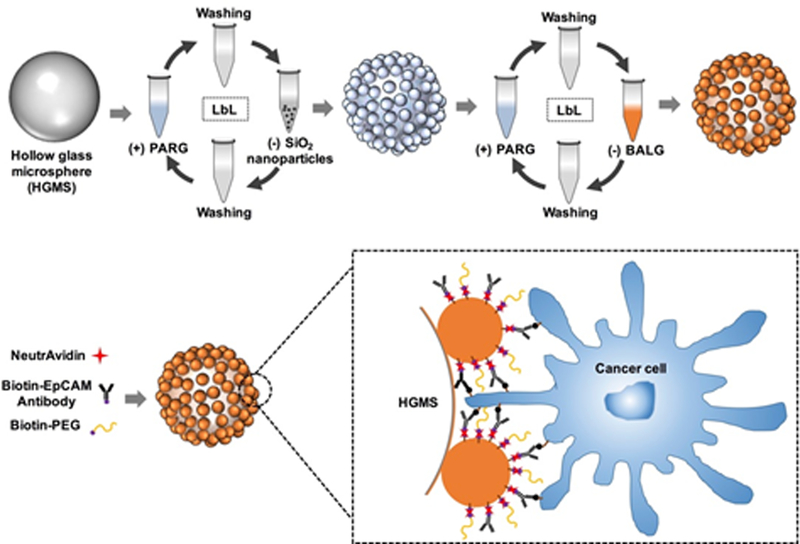
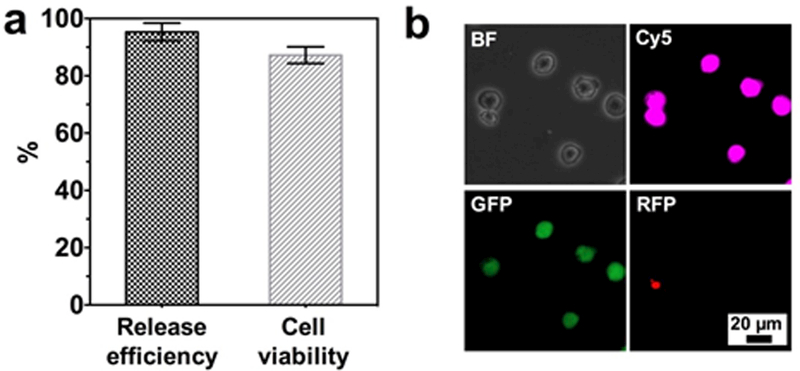
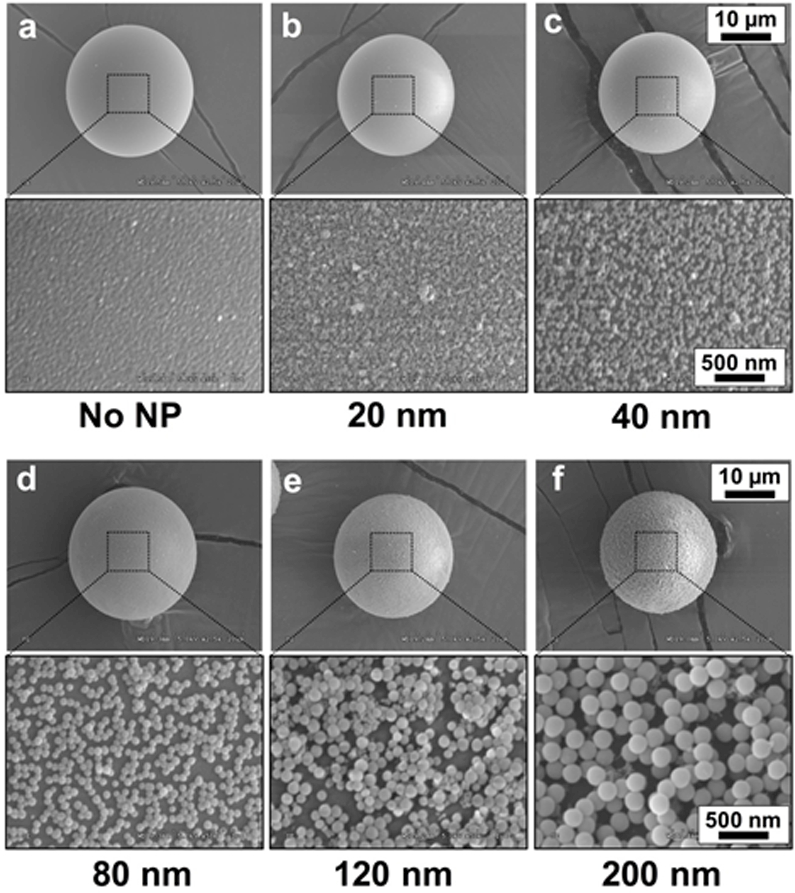
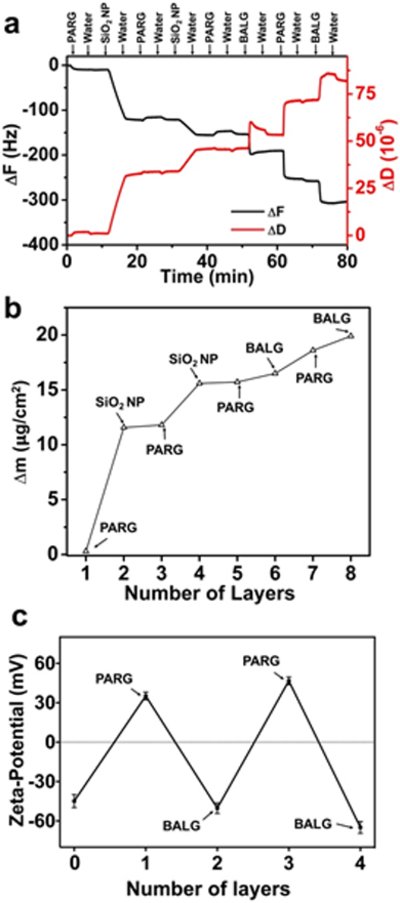
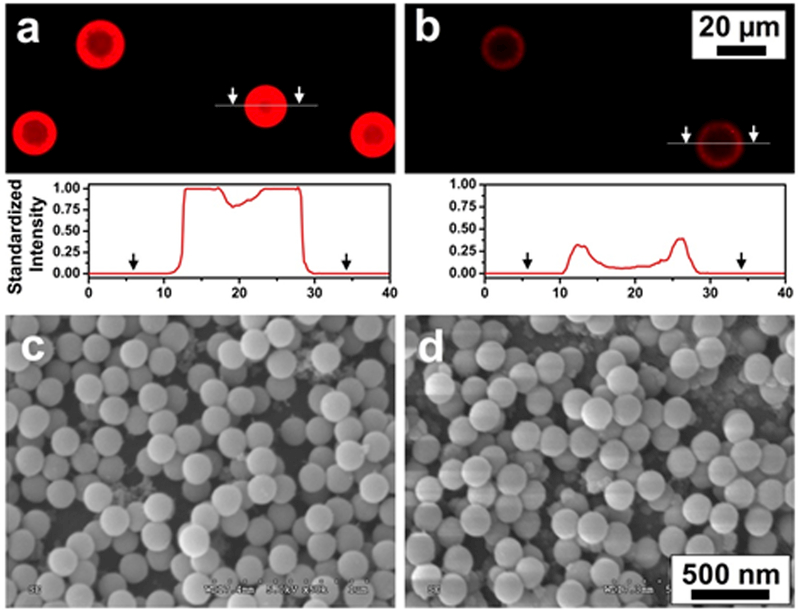
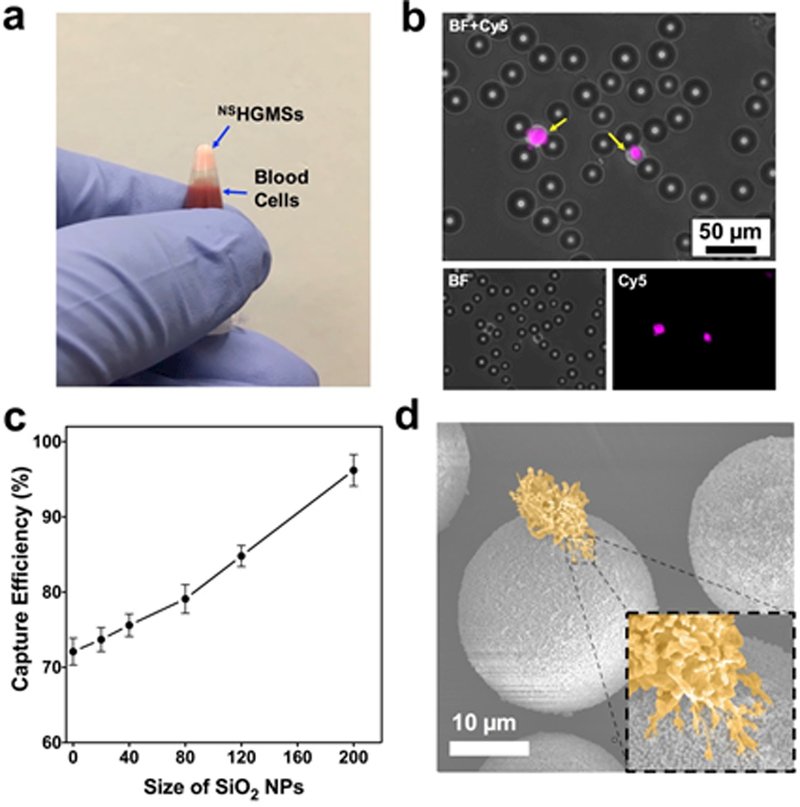
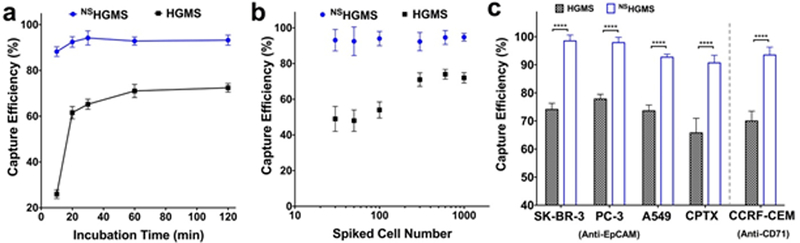
Self-floating hollow glass microspheres (HGMS) modified with tumor-specific antibodies have been developed for the capture of circulating tumor cells (CTCs), and have demonstrated effective cell isolation and good viability of isolated cancer cells. However, the capture efficiency decreases dramatically if the spiked cell concentration is low, possibly due to insufficient interactions between cancer cells and the HGMS surface. In order to apply HGMS-based CTC isolation to clinically relevant samples, it is desirable to create nanostructures on the surface of HGMS to enhance cell-surface interactions. Nevertheless, current microfabrication methods cannot generate nanostructured-surfaces on microspheres. The authors have developed a new HGMS with a controlled nanotopographical surface structure (NSHGMS), and demonstrated isolation and recovery of rare cancer cells. NSHGMS are achieved by applying layer-by-layer (LbL) assembly of negatively charged SiO2 nanoparticles and positively charged poly-l-arginine molecules, then sheathing the surface with an enzymatically degradable LbL film made from biotinylated alginate and poly-l-arginine, and capping with anti-EpCAM antibodies and anti-fouling PEG molecules. Compared to smooth-surfaced HGMS, NSHGMS showed shorter isolation time (20 min), enhanced capture efficiency (93.6 ± 4.9%) and lower detection limit (30 cells per mL) for commonly used cancer cell lines (MCF7, SK-BR-3, PC-3, A549 and CCRF-CEM). This NSHGMS-based CTC isolation method does not require specialized lab equipment or an external power source, and thus, can be used for the separation of targeted cells from blood or other body fluids in a resource-limited environment.
自浮式空心玻璃微球 (HGMS) 经肿瘤特异性抗体修饰后,可用于捕获循环肿瘤细胞 (CTC),已证实其能有效分离细胞且分离的癌细胞活力良好。然而,如果掺入的细胞浓度较低,捕获效率会显著下降,这可能是由于癌细胞与 HGMS 表面之间的相互作用不足。为了将基于 HGMS 的 CTC 分离应用于临床相关样本,希望在 HGMS 表面上构建纳米结构以增强细胞表面相互作用。然而,目前的微纳加工方法无法在微球上生成纳米结构表面。作者开发了一种具有受控纳米形貌表面结构 (NSHGMS) 的新型 HGMS,并证实了稀有癌细胞的分离和回收。NSHGMS 通过层层 (LbL) 组装带负电荷的 SiO2 纳米颗粒和带正电荷的聚精氨酸分子来实现,然后用由生物素化藻酸盐和聚精氨酸组成的可酶降解 LbL 膜对其进行包覆,最后用抗 EpCAM 抗体和抗污聚乙二醇分子进行封端。与光滑表面的 HGMS 相比,NSHGMS 表现出更短的分离时间 (20 分钟)、更高的捕获效率 (93.6±4.9%) 和更低的检测限 (30 个细胞/毫升),对常用的癌细胞系 (MCF7、SK-BR-3、PC-3、A549 和 CCRF-CEM) 也是如此。这种基于 NSHGMS 的 CTC 分离方法不需要专门的实验室设备或外部电源,因此可以用于在资源有限的环境中从血液或其他体液中分离靶向细胞。