EaStCHEM School of Chemistry, University of Edinburgh, The King's Buildings, Edinburgh EH9 3FJ, UK.
New England Biolabs, 240 County Road, Ipswich, MA 01938-2723, USA.
Nucleic Acids Res. 2018 Sep 28;46(17):9067-9080. doi: 10.1093/nar/gky760.
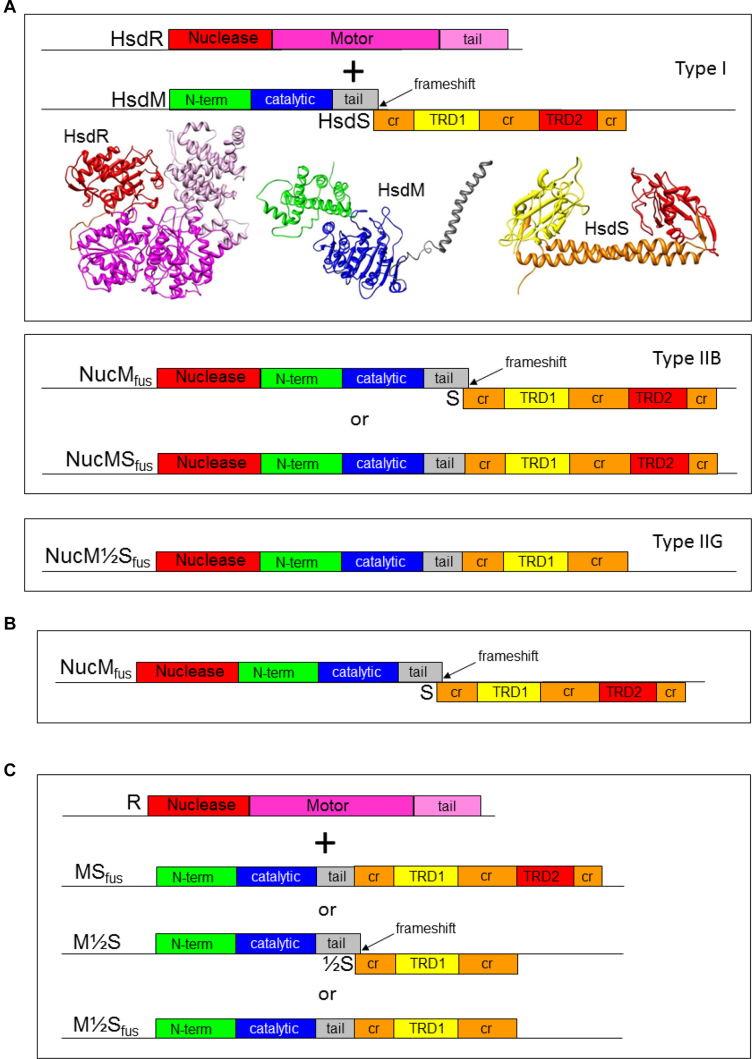
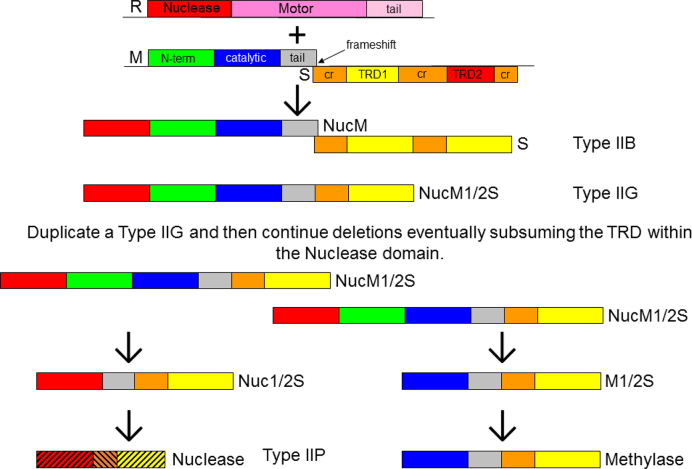
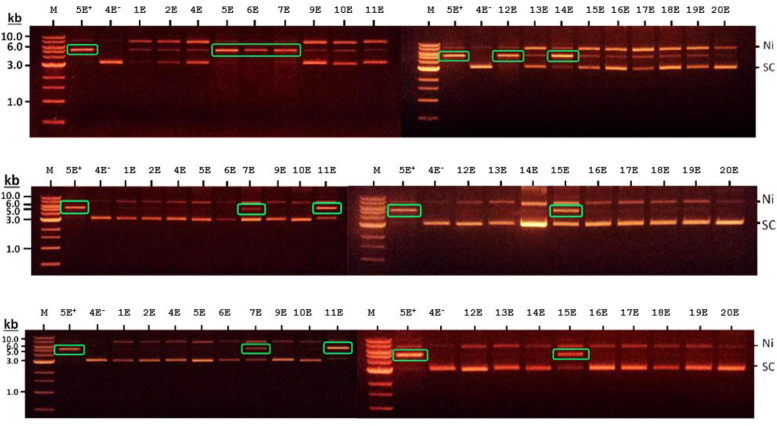
Restriction Modification (RM) systems prevent the invasion of foreign genetic material into bacterial cells by restriction and protect the host's genetic material by methylation. They are therefore important in maintaining the integrity of the host genome. RM systems are currently classified into four types (I to IV) on the basis of differences in composition, target recognition, cofactors and the manner in which they cleave DNA. Comparing the structures of the different types, similarities can be observed suggesting an evolutionary link between these different types. This work describes the 'deconstruction' of a large Type I RM enzyme into forms structurally similar to smaller Type II RM enzymes in an effort to elucidate the pathway taken by Nature to form these different RM enzymes. Based upon the ability to engineer new enzymes from the Type I 'scaffold', an evolutionary pathway and the evolutionary pressures required to move along the pathway from Type I RM systems to Type II RM systems are proposed. Experiments to test the evolutionary model are discussed.
限制修饰(RM)系统通过限制来防止外来遗传物质进入细菌细胞,并通过甲基化来保护宿主的遗传物质。因此,它们在维持宿主基因组的完整性方面非常重要。RM 系统目前根据组成、靶标识别、辅助因子以及切割 DNA 的方式的差异,分为四类(I 到 IV)。比较不同类型的结构,可以观察到相似之处,这表明这些不同类型之间存在进化联系。这项工作描述了将大型 I 型 RM 酶“解构”成结构上类似于较小的 II 型 RM 酶的形式,以阐明自然界形成这些不同 RM 酶的途径。基于从 I 型“支架”工程新酶的能力,提出了从 I 型 RM 系统向 II 型 RM 系统进化的途径和所需的进化压力。讨论了测试进化模型的实验。