Mimetas BV, J.H. Oortweg 19, 2333 CH, Leiden, The Netherlands.
Department of Cell and Chemical Biology, Leiden University Medical Centre, Einthovenweg 20, 2333 ZC, Leiden, The Netherlands.
Fluids Barriers CNS. 2018 Aug 31;15(1):23. doi: 10.1186/s12987-018-0108-3.
Receptor-mediated transcytosis is one of the major routes for drug delivery of large molecules into the brain. The aim of this study was to develop a novel model of the human blood-brain barrier (BBB) in a high-throughput microfluidic device. This model can be used to assess passage of large biopharmaceuticals, such as therapeutic antibodies, across the BBB.
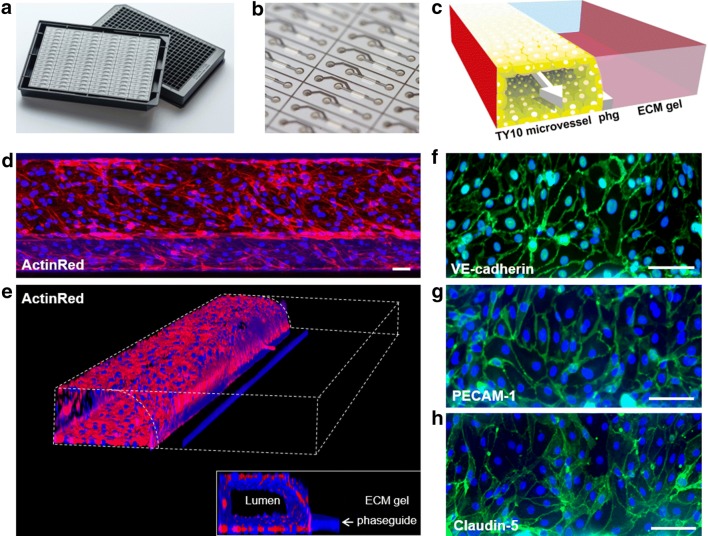
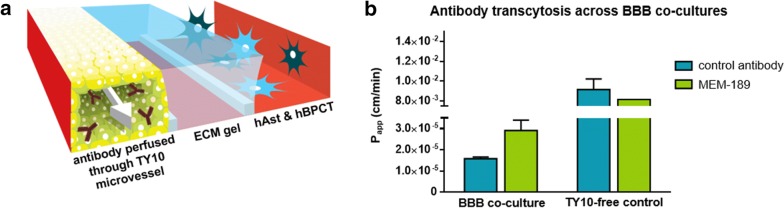
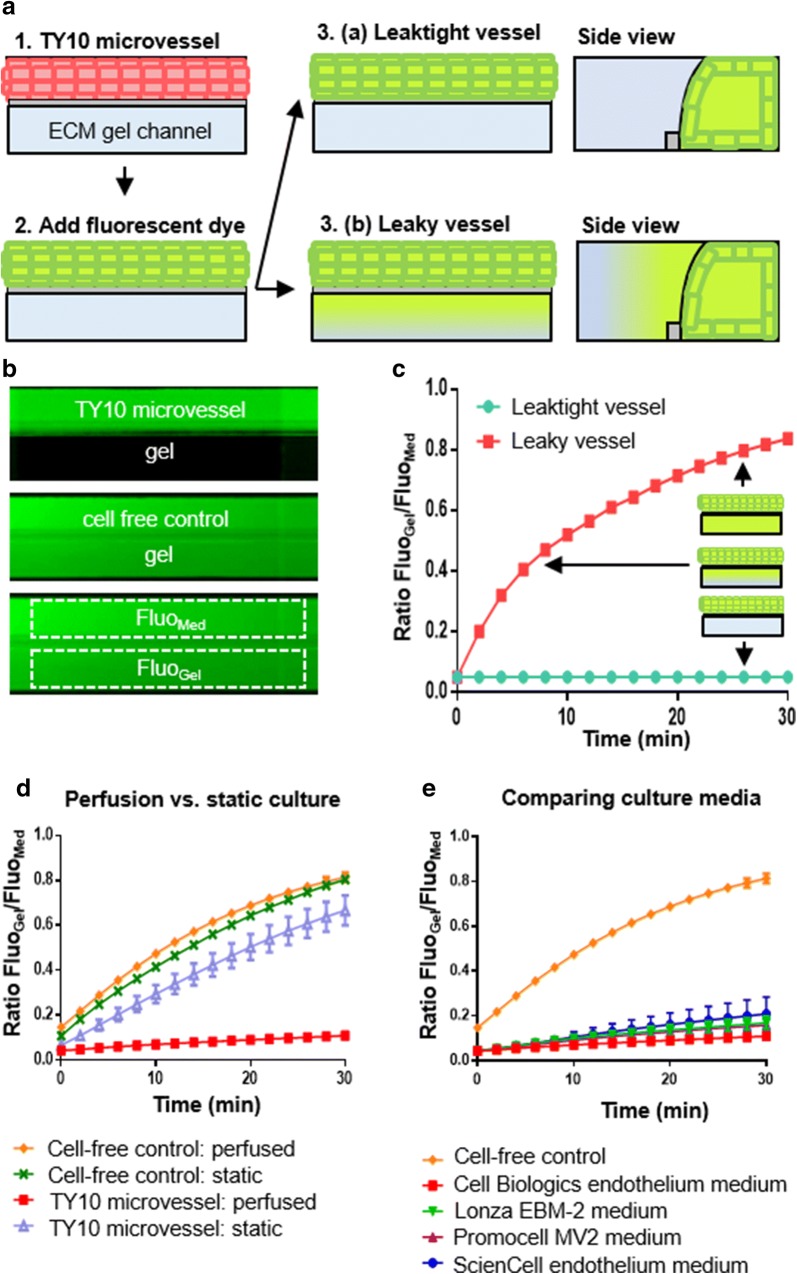
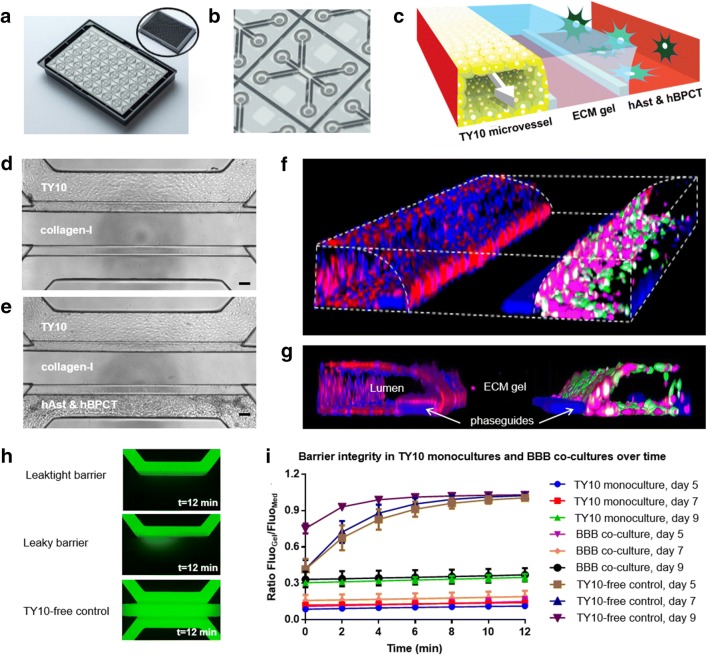
The model comprises human cell lines of brain endothelial cells, astrocytes, and pericytes in a two-lane or three-lane microfluidic platform that harbors 96 or 40 chips, respectively, in a 384-well plate format. In each chip, a perfused vessel of brain endothelial cells was grown against an extracellular matrix gel, which was patterned by means of surface tension techniques. Astrocytes and pericytes were added on the other side of the gel to complete the BBB on-a-chip model. Barrier function of the model was studied using fluorescent barrier integrity assays. To test antibody transcytosis, the lumen of the model's endothelial vessel was perfused with an anti-transferrin receptor antibody or with a control antibody. The levels of antibody that penetrated to the basal compartment were quantified using a mesoscale discovery assay.
The perfused BBB on-a-chip model shows presence of adherens and tight junctions and severely limits the passage of a 20 kDa FITC-dextran dye. Penetration of the antibody targeting the human transferrin receptor (MEM-189) was markedly higher than penetration of the control antibody (apparent permeability of 2.9 × 10 versus 1.6 × 10 cm/min, respectively).
We demonstrate successful integration of a human BBB microfluidic model in a high-throughput plate-based format that can be used for drug screening purposes. This in vitro model shows sufficient barrier function to study the passage of large molecules and is sensitive to differences in antibody penetration, which could support discovery and engineering of BBB-shuttle technologies.
受体介导的转胞吞作用是将大分子药物递送到大脑的主要途径之一。本研究的目的是开发一种新型高通量微流控装置中的人血脑屏障(BBB)模型。该模型可用于评估大生物制药(如治疗性抗体)穿过 BBB 的情况。
该模型由脑内皮细胞、星形胶质细胞和周细胞的人细胞系组成,分别在双通道或三通道微流控平台中,以 384 孔板格式在 96 或 40 个芯片中进行培养。在每个芯片中,在脑内皮细胞的灌注血管中生长,对抗由表面张力技术图案化的细胞外基质凝胶。在凝胶的另一侧添加星形胶质细胞和周细胞,以完成芯片上的 BBB 模型。使用荧光屏障完整性测定法研究模型的屏障功能。为了测试抗体转胞作用,将模型内皮血管的内腔用抗转铁蛋白受体抗体或对照抗体灌注。使用 Mesoscale Discovery 测定法定量穿透到基底隔室的抗体水平。
灌注的 BBB 芯片模型显示存在黏附连接和紧密连接,并严重限制了 20 kDa FITC-葡聚糖染料的通过。靶向人转铁蛋白受体的抗体(MEM-189)的穿透率明显高于对照抗体(表观渗透系数分别为 2.9×10⁻³ 和 1.6×10⁻³ cm/min)。
我们成功地将人 BBB 微流控模型集成到高通量基于平板的格式中,可用于药物筛选目的。该体外模型显示出足够的屏障功能,可用于研究大分子的通过情况,并且对抗体穿透的差异敏感,这可以支持 BBB 穿梭技术的发现和工程化。