Graduate School of Pharmaceutical Sciences, The University of Tokyo, 7-3-1 Hongo, Bunkyo-ku, Tokyo, 113-0033, Japan.
Collaborative Research Institute for Innovative Microbiology, The University of Tokyo, Yayoi 1-1-1, Bunkyo-ku, Tokyo, 113-8657, Japan.
Nat Commun. 2018 Aug 30;9(1):3534. doi: 10.1038/s41467-018-05877-z.
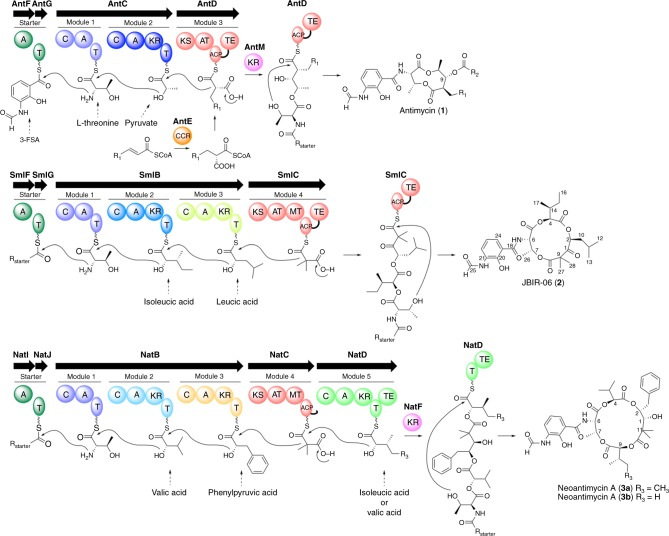
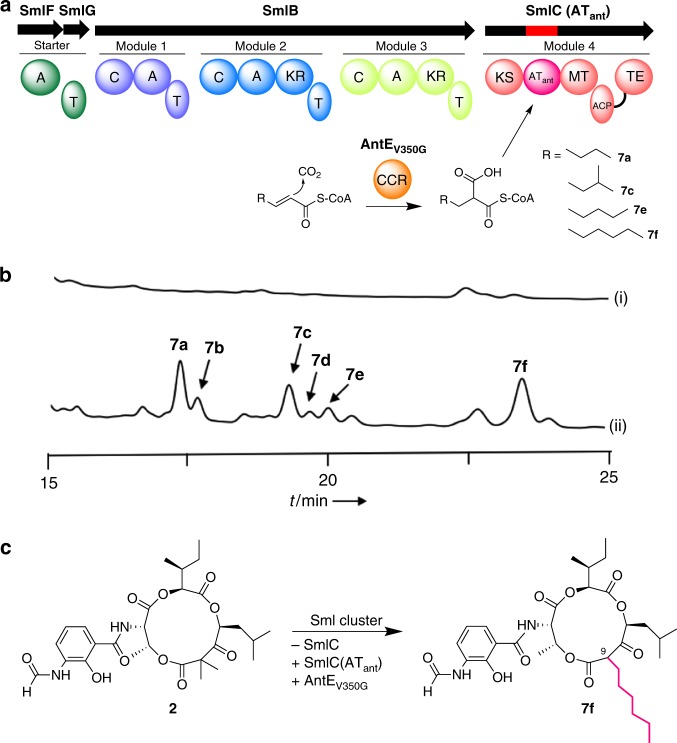
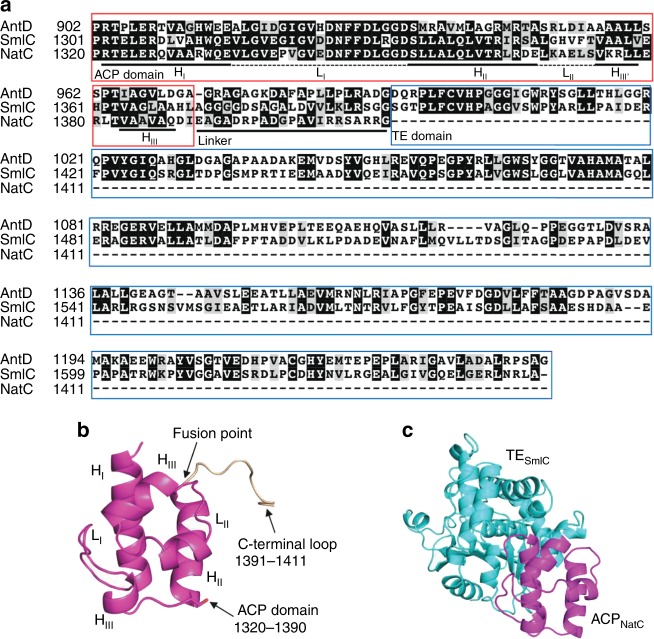
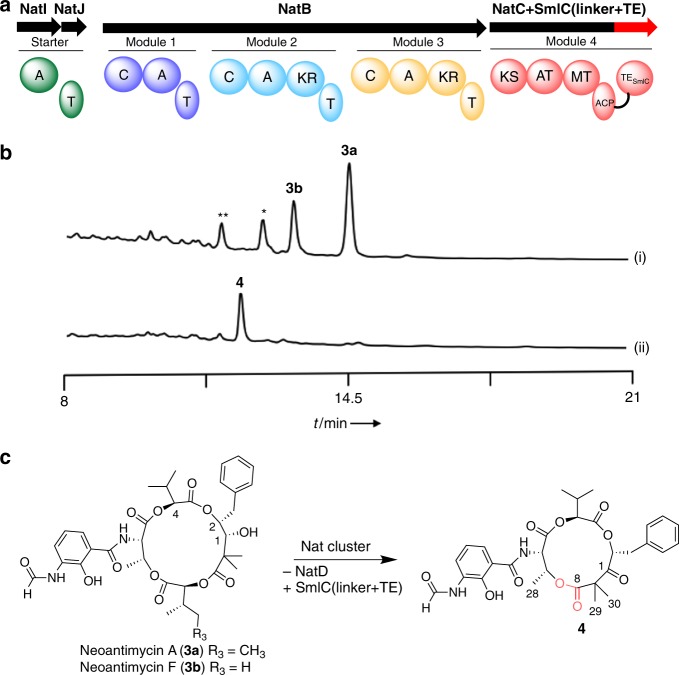
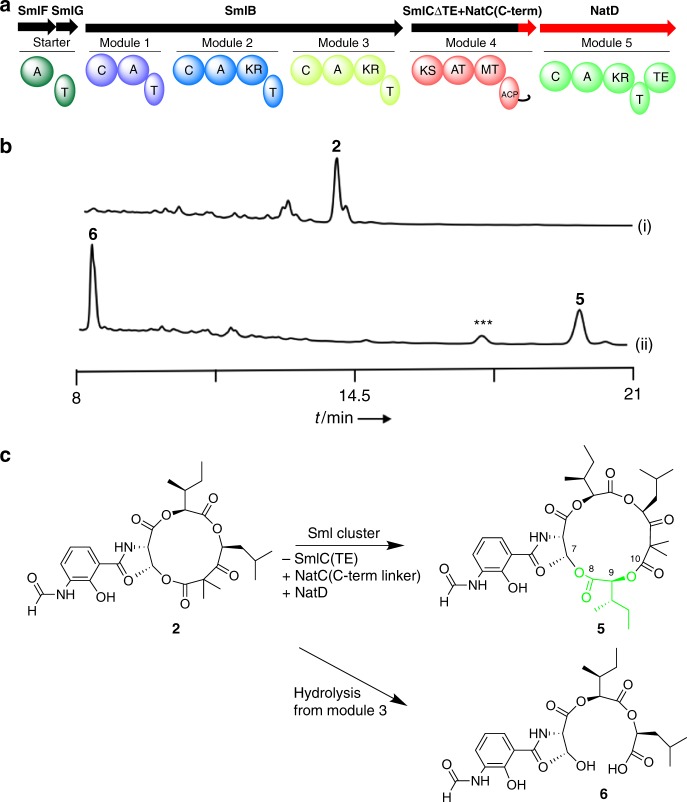
Reprogramming of the NRPS/PKS assembly line is an attractive method for the production of new bioactive molecules. However, it is usually hampered by the loss of intimate domain/module interactions required for the precise control of chain transfer and elongation reactions. In this study, we first establish heterologous expression systems of the unique antimycin-type cyclic depsipeptides: JBIR-06 (tri-lactone) and neoantimycin (tetra-lactone), and engineer their biosyntheses by taking advantage of bioinformatic analyses and evolutionary insights. As a result, we successfully accomplish three manipulations: (i) ring contraction of neoantimycin (from tetra-lactone to tri-lactone), (ii) ring expansion of JBIR-06 (from tri-lactone to tetra-lactone), and (iii) alkyl chain diversification of JBIR-06 by the incorporation of various alkylmalonyl-CoA extender units, to generate a set of unnatural derivatives in practical yields. This study presents a useful strategy for engineering NRPS-PKS module enzymes, based on nature's diversification of the domain and module organizations.
重新编程 NRPS/PKS 装配线是生产新的生物活性分子的一种有吸引力的方法。然而,它通常受到需要精确控制链转移和延伸反应的亲密结构域/模块相互作用的丧失的阻碍。在这项研究中,我们首先建立了独特的安密霉素型环缩肽:JBIR-06(三内酯)和 neoantimycin(四内酯)的异源表达系统,并利用生物信息学分析和进化见解来设计它们的生物合成。结果,我们成功完成了三个操作:(i)neoantimycin 的环收缩(从四内酯到三内酯),(ii)JBIR-06 的环扩展(从三内酯到四内酯),以及(iii)通过掺入各种烷基丙二酰辅酶 A 延伸单元对 JBIR-06 的烷基链多样化,以实际产量生成一组非天然衍生物。这项研究提出了一种基于结构域和模块组织的自然多样化来工程化 NRPS-PKS 模块酶的有用策略。