Li Di, Han Dong, Qu Song-Nan, Liu Lei, Jing Peng-Tao, Zhou Ding, Ji Wen-Yu, Wang Xiao-Yun, Zhang Tong-Fei, Shen De-Zhen
State Key Laboratory of Luminescence and Applications, Changchun Institute of Optics, Fine Mechanics and Physics, Chinese Academy of Sciences, Changchun 130033, China.
School of Stomatology, Jilin University, Changchun 130012, China.
Light Sci Appl. 2016 Jul 1;5(7):e16120. doi: 10.1038/lsa.2016.120. eCollection 2016 Jul.
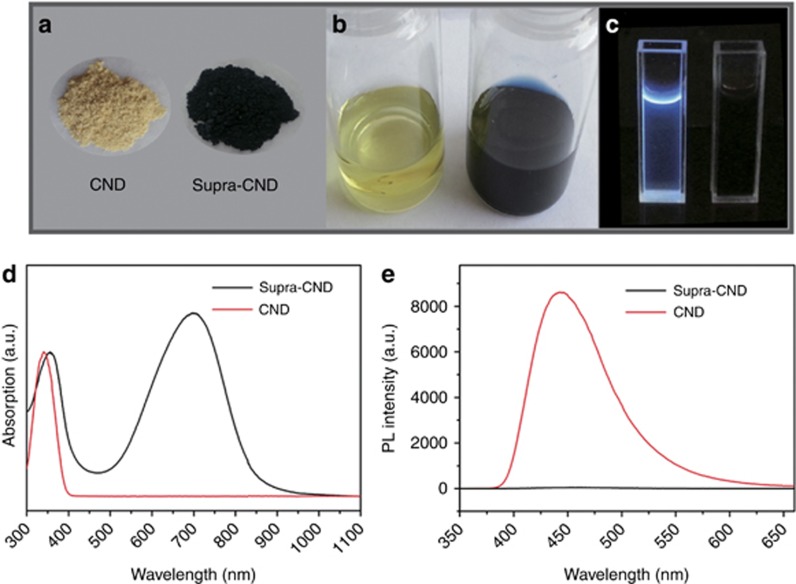
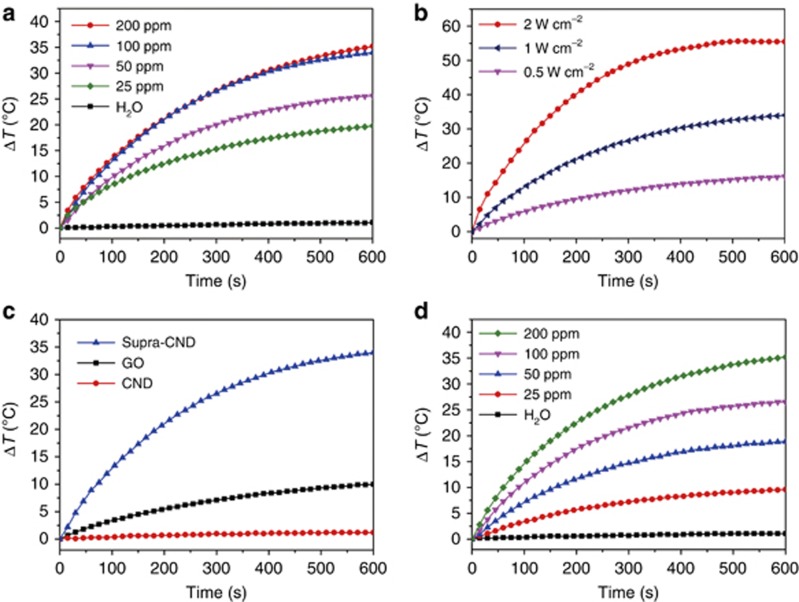
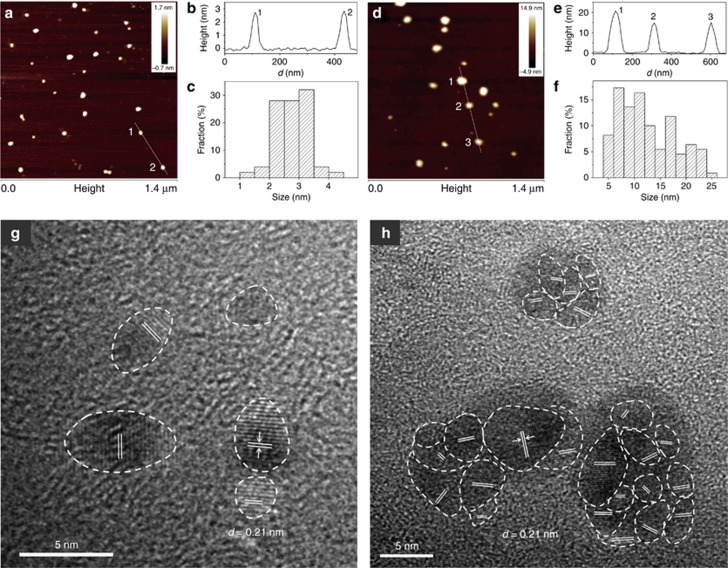
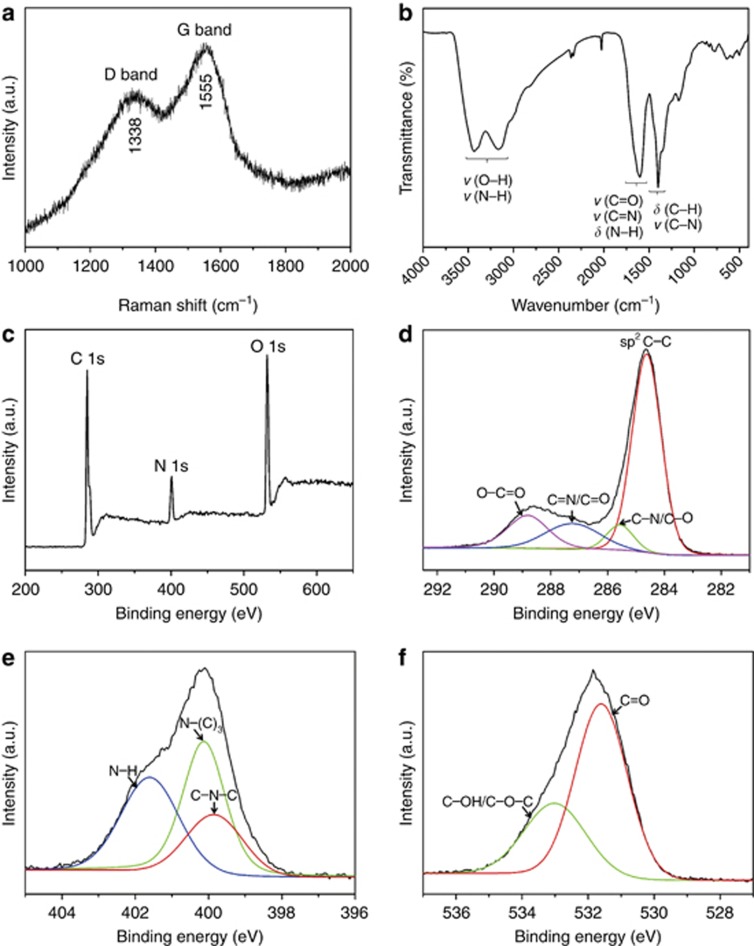
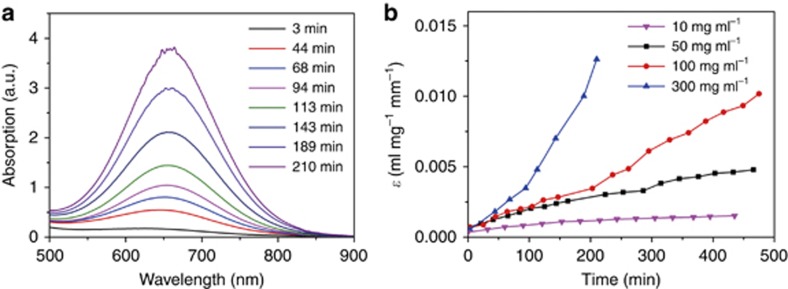
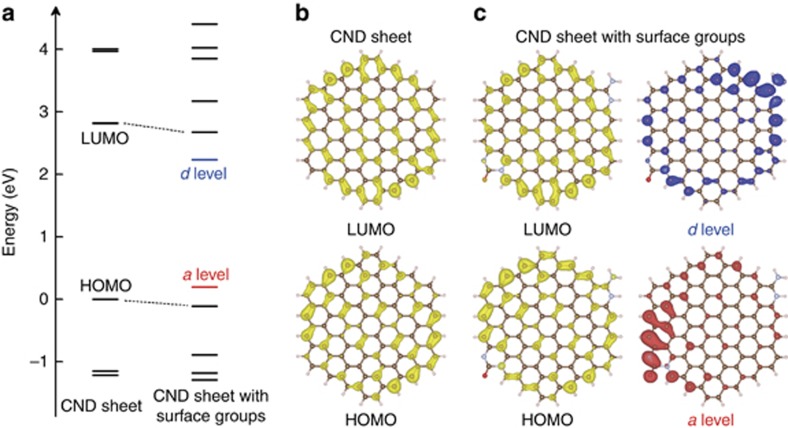
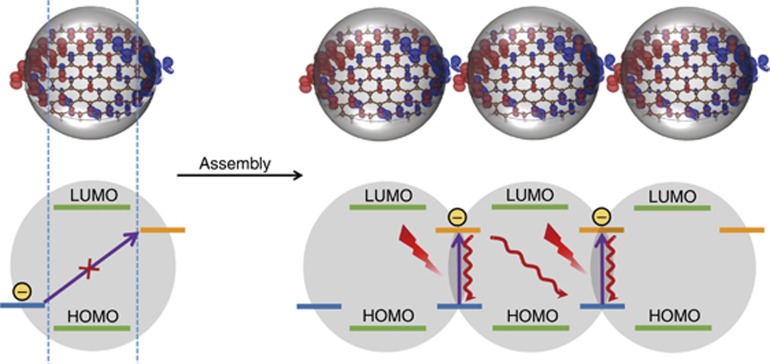
A novel concept and approach to engineering carbon nanodots (CNDs) were explored to overcome the limited light absorption of CNDs in low-energy spectral regions. In this work, we constructed a novel type of supra-CND by the assembly of surface charge-confined CNDs through possible electrostatic interactions and hydrogen bonding. The resulting supra-CNDs are the first to feature a strong, well-defined absorption band in the visible to near-infrared (NIR) range and to exhibit effective NIR photothermal conversion performance with high photothermal conversion efficiency in excess of 50%.
为了克服碳纳米点(CNDs)在低能光谱区域光吸收有限的问题,人们探索了一种全新的工程化碳纳米点的概念和方法。在这项工作中,我们通过表面电荷受限的碳纳米点可能的静电相互作用和氢键组装构建了一种新型的超碳纳米点。所得的超碳纳米点首次在可见光到近红外(NIR)范围内具有强且明确的吸收带,并展现出有效的近红外光热转换性能,光热转换效率超过50%。