
雄性B6C3 F1小鼠化学诱导肝癌中c-Ha-ras原癌基因的激活突变
Activating mutations of the c-Ha-ras protooncogene in chemically induced hepatomas of the male B6C3 F1 mouse.
作者信息
Wiseman R W, Stowers S J, Miller E C, Anderson M W, Miller J A
出版信息
Proc Natl Acad Sci U S A. 1986 Aug;83(16):5825-9. doi: 10.1073/pnas.83.16.5825.
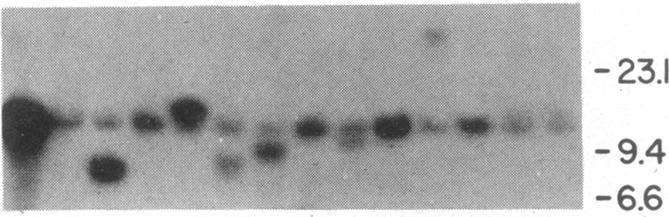
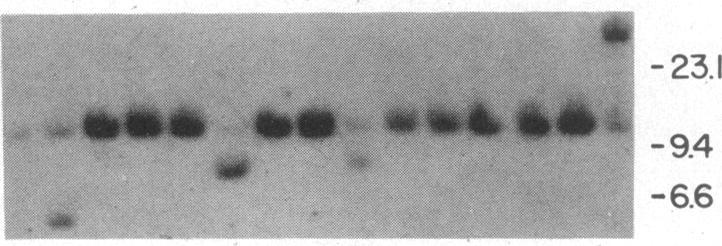
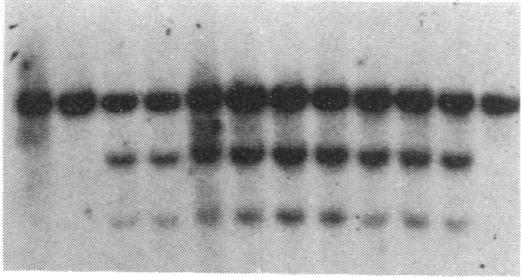
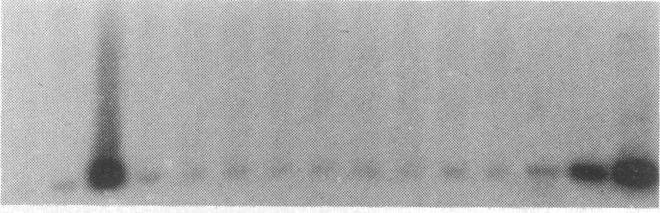
Activated c-Ha-ras protooncogenes have recently been identified in the DNA of some spontaneous hepatic tumors found in 2-year-old B6C3 F1 mice. Activation of c-Ha-ras has now been demonstrated in DNA from well-differentiated hepatomas initiated by a single dose of carcinogen given to male B6C3 F1 mice at 12 days of age. DNA from each of 25 hepatomas, induced by N-hydroxy-2-acetylaminofluorene, vinyl carbamate, or 1'-hydroxy-2',3'-dehydroestragole, containing transforming activity in the NIH 3T3 transfection assay. Southern analysis of NIH 3T3 cells transformed by DNA from 24 of these hepatomas revealed amplified and/or rear-ranged restriction fragments homologous to a Ha-ras probe. The other tumor contained an activated Ki-ras gene. Immunoprecipitation and NaDodSO4/PAGE analysis of p21 ras proteins in NIH 3T3 transformants derived from a majority of the hepatomas suggested that the activating mutations were localized in the 61st codon of the c-Ha-ras gene. Creation of a new Xba I restriction site by an AT----TA transversion at the second position of codon 61 was detected in DNA from primary tumors and NIH 3T3 cells transformed by DNA from 6 of 7 vinyl carbamate- and 5 of 10 1'-hydroxy-2',3'-dehydroestragole-induced hepatomas. Selective oligonucleotide hybridization demonstrated a CG----AT transversion at the first position of the 61st codon in NIH 3T3 transformants derived from 7 of 7 N-hydroxy-2-acetylaminofluorene-induced hepatomas. By the same criterion, an AT----GC transition at the second position of codon 61 was the activating mutation in 1 of 7 vinyl carbamate- and 5 of 10 1'-hydroxy-2',3'-dehydroestragole-induced tumors. Thus, c-Ha-ras activation is apparently an early event in B6C3 F1 mouse hepatocarcinogenesis that results directly from reaction of ultimate chemical carcinogens with this gene in vivo.
最近在2岁B6C3 F1小鼠的一些自发肝肿瘤的DNA中发现了激活的c-Ha-ras原癌基因。现已证明,在12日龄雄性B6C3 F1小鼠单次给予致癌物引发的高分化肝癌的DNA中,c-Ha-ras被激活。由N-羟基-2-乙酰氨基芴、氨基甲酸乙烯酯或1'-羟基-2',3'-脱氢欧芹酚甲醚诱导产生的25个肝癌的DNA,在NIH 3T3转染试验中均具有转化活性。对其中24个肝癌的DNA转化的NIH 3T3细胞进行Southern分析,发现与Ha-ras探针同源的限制性片段出现扩增和/或重排。另一个肿瘤含有激活的Ki-ras基因。对大多数肝癌来源的NIH 3T3转化体中的p21 ras蛋白进行免疫沉淀和NaDodSO4/PAGE分析,结果表明激活突变位于c-Ha-ras基因的第61密码子处。在7个氨基甲酸乙烯酯诱导的肝癌中的6个以及10个1'-羟基-2',3'-脱氢欧芹酚甲醚诱导的肝癌中的5个的原发性肿瘤DNA和由其DNA转化的NIH 3T3细胞的DNA中,检测到第61密码子第二位由AT突变为TA,从而产生了一个新的Xba I限制性酶切位点。选择性寡核苷酸杂交显示,在7个N-羟基-2-乙酰氨基芴诱导的肝癌来源的NIH 3T3转化体中,第61密码子第一位发生了CG到AT的颠换。按照相同标准,在7个氨基甲酸乙烯酯诱导的肿瘤中的1个以及10个1'-羟基-2',3'-脱氢欧芹酚甲醚诱导的肿瘤中的5个中,第61密码子第二位的AT到GC的转换是激活突变。因此,c-Ha-ras激活显然是B6C3 F1小鼠肝癌发生过程中的一个早期事件,它是由最终化学致癌物在体内与该基因反应直接导致的。


 Zotero 插件