Whitney Laboratory for Marine Bioscience, University of Florida, St. Augustine, FL.
Monterey Bay Aquarium Research Institute (MBARI), Moss Landing, CA.
Mol Biol Evol. 2018 Dec 1;35(12):2940-2956. doi: 10.1093/molbev/msy171.
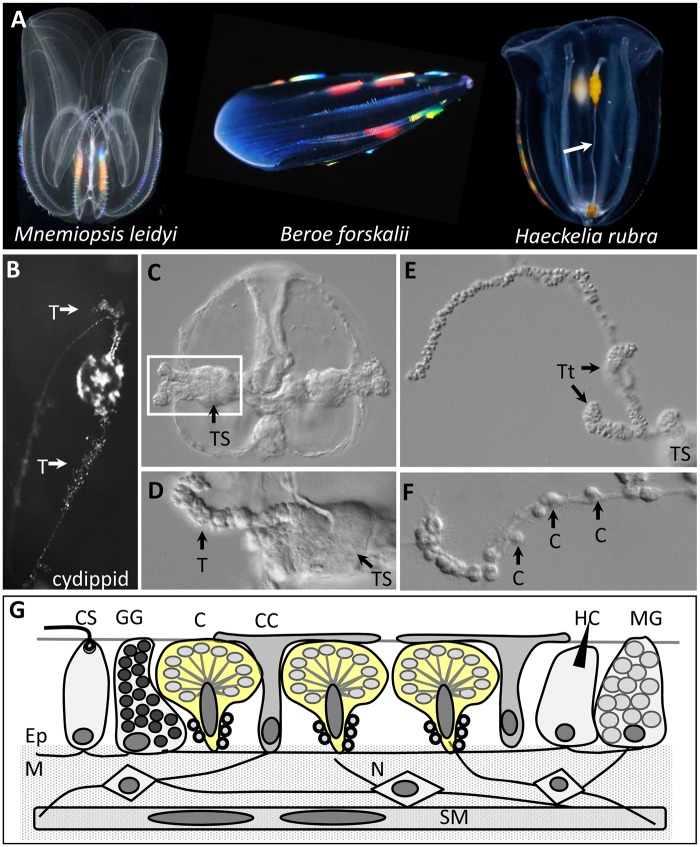
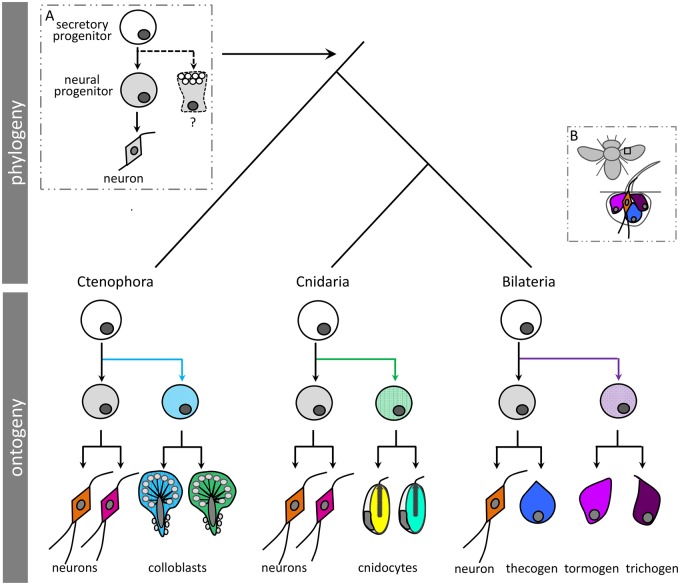
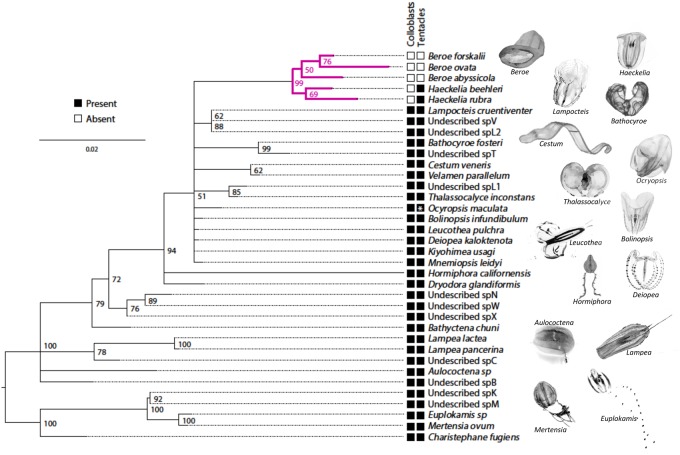
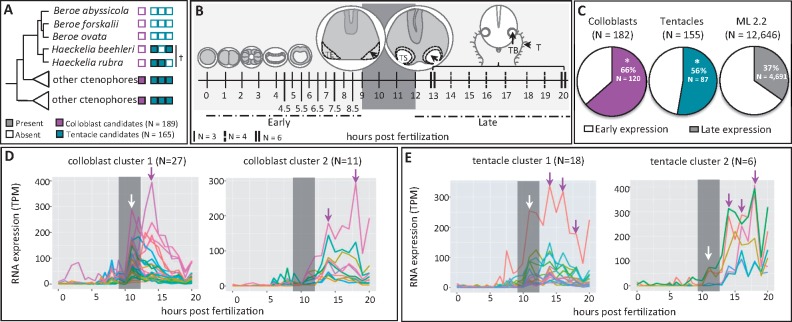
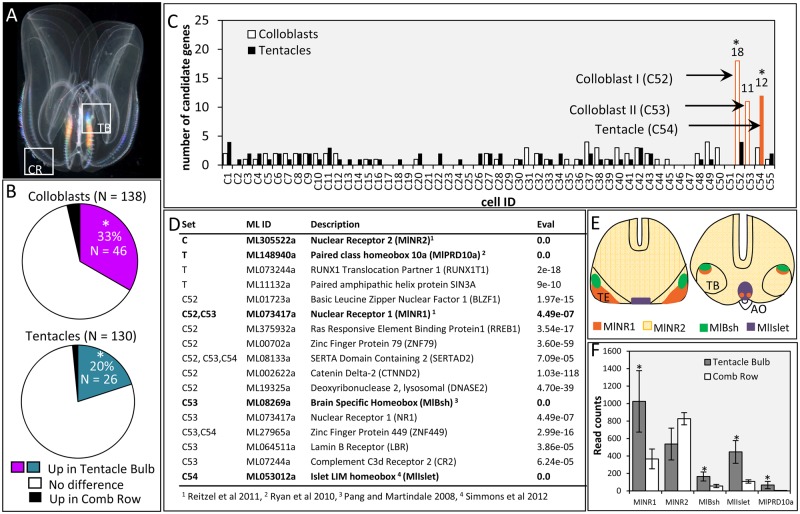
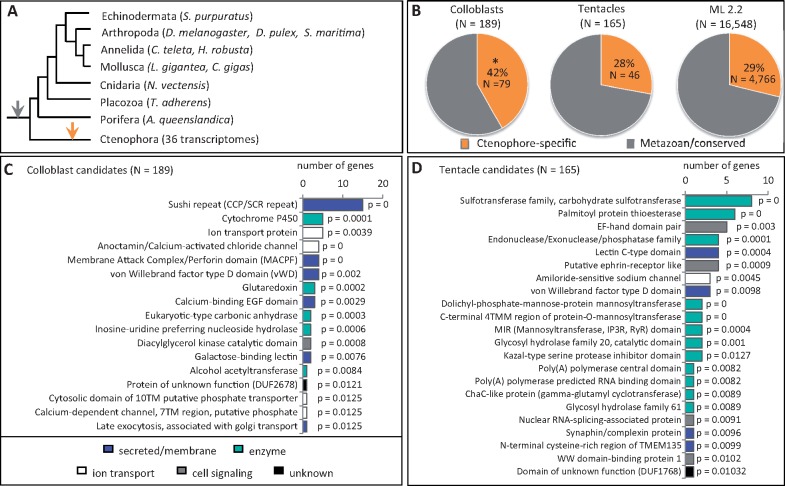
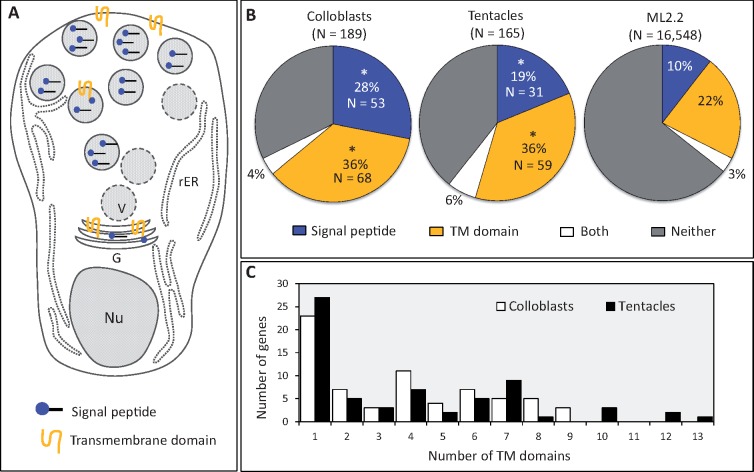
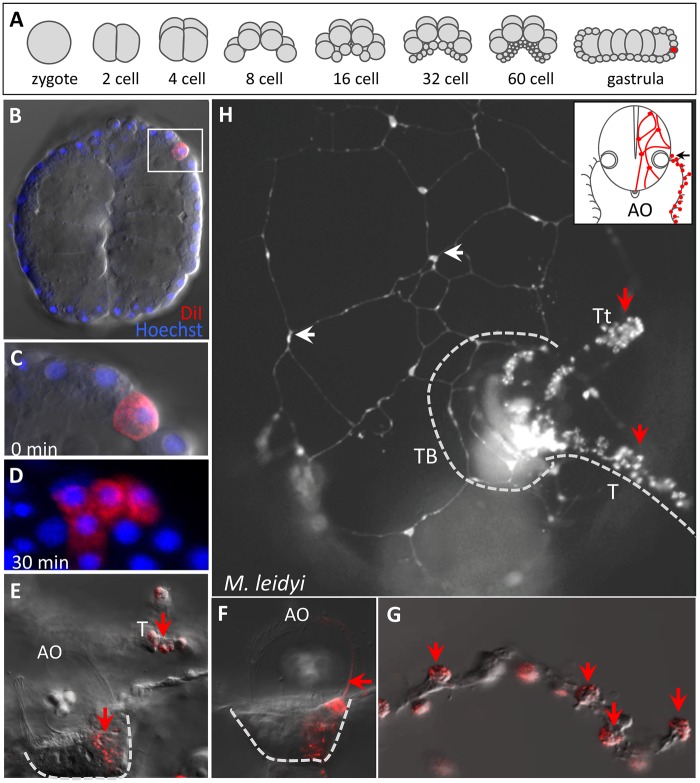
The origin of novel traits can promote expansion into new niches and drive speciation. Ctenophores (comb jellies) are unified by their possession of a novel cell type: the colloblast, an adhesive cell found only in the tentacles. Although colloblast-laden tentacles are fundamental for prey capture among ctenophores, some species have tentacles lacking colloblasts and others have lost their tentacles completely. We used transcriptomes from 36 ctenophore species to identify gene losses that occurred specifically in lineages lacking colloblasts and tentacles. We cross-referenced these colloblast- and tentacle-specific candidate genes with temporal RNA-Seq during embryogenesis in Mnemiopsis leidyi and found that both sets of candidates are preferentially expressed during tentacle morphogenesis. We also demonstrate significant upregulation of candidates from both data sets in the tentacle bulb of adults. Both sets of candidates were enriched for an N-terminal signal peptide and protein domains associated with secretion; among tentacle candidates we also identified orthologs of cnidarian toxin proteins, presenting tantalizing evidence that ctenophore tentacles may secrete toxins along with their adhesive. Finally, using cell lineage tracing, we demonstrate that colloblasts and neurons share a common progenitor, suggesting the evolution of colloblasts involved co-option of a neurosecretory gene regulatory network. Together these data offer an initial glimpse into the genetic architecture underlying ctenophore cell-type diversity.
新特征的起源可以促进向新生态位扩张,并推动物种形成。栉水母(栉水母)因其拥有一种新型细胞类型而被统一:栉水母,一种仅在触手上发现的粘性细胞。尽管栉水母的栉水母状触须对于栉水母的猎物捕获至关重要,但有些物种的触须没有栉水母,而有些物种则完全失去了触须。我们使用 36 种栉水母物种的转录组来鉴定特定于缺乏栉水母和触须的谱系中发生的基因丢失。我们将这些栉水母和触须特异性候选基因与 Mnemiopsis leidyi 胚胎发生过程中的时间 RNA-Seq 进行交叉引用,发现这两组候选基因都在触须形态发生过程中优先表达。我们还证明了两组候选基因在成体的触须球中都有显著上调。两组候选基因都富含与分泌相关的 N 端信号肽和蛋白结构域;在触须候选基因中,我们还鉴定出刺胞动物毒素蛋白的同源物,这为栉水母触须可能与粘性物质一起分泌毒素提供了诱人的证据。最后,通过细胞谱系追踪,我们证明栉水母和神经元共享一个共同的祖细胞,这表明栉水母栉水母的进化涉及神经分泌基因调控网络的共适应。这些数据共同为栉水母细胞类型多样性的遗传结构提供了初步的见解。