Higaki Ryo, Miyazaki Aya, Tajiri Yujiro, Shoji Mikihito, Saito Shun, Yoshimura Shin-Ichiro, Miki Naoki, Hatta Kazuhiro, Doi Hiraku
Department of Pediatrics, Tenri Hospital, 200 Mishima-cho, Tenri, Nara, 631-8552, Japan.
Department of Pediatric Cardiology, Tenri Hospital, 200 Mishima-cho, Tenri, Nara, 631-8552, Japan.
J Med Case Rep. 2018 Sep 2;12(1):266. doi: 10.1186/s13256-018-1769-x.
Takayasu's arteritis is extremely rare in children aged below 6 years. At the onset of Takayasu's arteritis in children, symptoms are varied but differ from those in adults. Corticosteroids are the mainstay of treatment for preventing irreversible vascular damage but there is no standard treatment for progressive vascular stenosis.
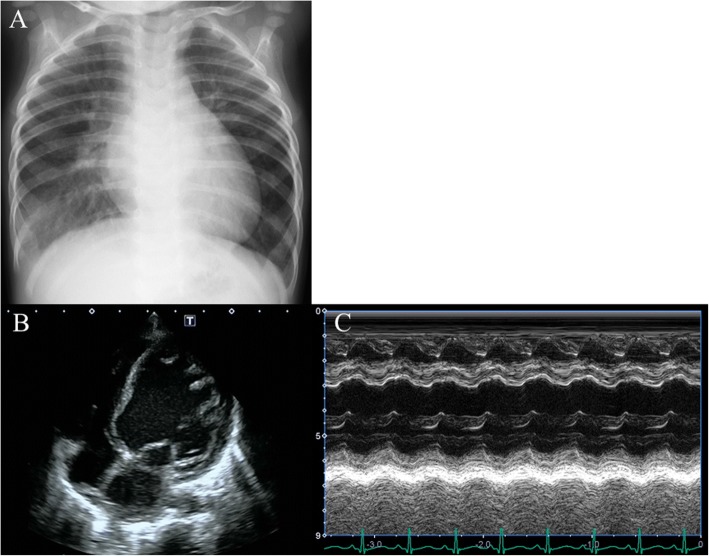
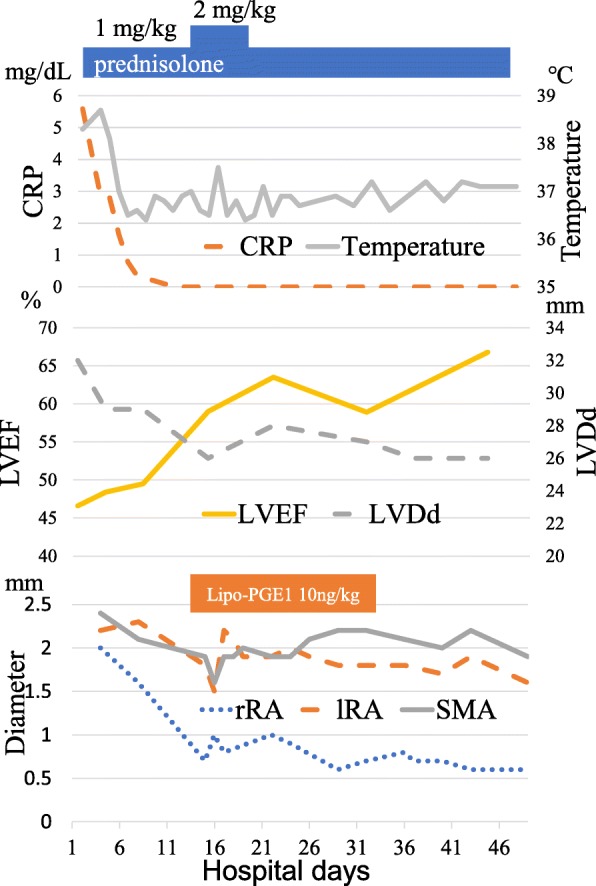
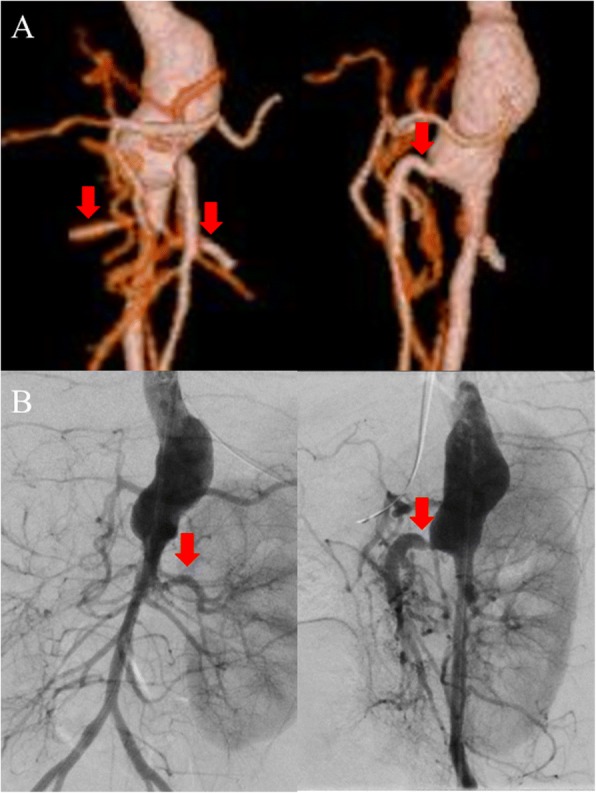
A Japanese 11-month-old baby boy presented with Takayasu's arteritis and heart failure, possibly due to afterload mismatch caused by high blood pressure. Computed tomography was performed and revealed thoracic and abdominal aortic aneurysms. It also revealed severe celiac artery stenosis and bilateral renal artery stenosis. Prednisolone was initiated as first-line therapy. The fever resolved, and C-reactive protein levels returned to normal. Although his general condition improved, deterioration of vascular lesions was evident. Celiac artery occlusion, severe right renal artery stenosis, and new superior mesenteric artery stenosis were observed. We decided to use a continuous infusion of lipo-prostaglandin E1 for prevention of branch stenosis of his abdominal aorta. The progression of vascular stenosis was stopped and our patient's cardiac function gradually improved.
A differential diagnosis of heart failure with high blood pressure should be considered in babies. The progression of vascular stenosis may be suppressed by lipo-prostaglandin E1.
高安动脉炎在6岁以下儿童中极为罕见。儿童高安动脉炎发病时症状多样,但与成人不同。皮质类固醇是预防不可逆血管损伤的主要治疗方法,但对于进行性血管狭窄尚无标准治疗方案。
一名11个月大的日本男婴患高安动脉炎并伴有心力衰竭,可能是由高血压导致的后负荷不匹配引起。进行了计算机断层扫描,结果显示胸主动脉瘤和腹主动脉瘤,还显示严重的腹腔动脉狭窄和双侧肾动脉狭窄。开始使用泼尼松龙作为一线治疗。发热消退,C反应蛋白水平恢复正常。尽管他的总体状况有所改善,但血管病变的恶化很明显。观察到腹腔动脉闭塞、严重的右肾动脉狭窄和新出现的肠系膜上动脉狭窄。我们决定持续输注脂微球载前列地尔E1以预防腹主动脉分支狭窄。血管狭窄的进展得以停止,患者的心脏功能逐渐改善。
对于婴儿,应考虑高血压伴心力衰竭的鉴别诊断。脂微球载前列地尔E1可能抑制血管狭窄的进展。