Na Zhijing, Qiao Xinbo, Hao Xuanyu, Fan Ling, Xiao Yao, Shao Yining, Sun Mingwei, Feng Ziyi, Guo Wen, Li Jiapo, Li Jiatong, Li Dongyang
Department of Post-graduate, Shengjing Hospital of China Medical University, Shenyang, Liaoning 110004, People's Republic of China.
Department of Rheumatology and Immunology, Shengjing Hospital of China Medical University, Shenyang, Liaoning 110022, People's Republic of China.
Onco Targets Ther. 2018 Aug 20;11:4913-4944. doi: 10.2147/OTT.S167422. eCollection 2018.
Beta-blockers are antihypertensive drugs and have shown potential in cancer prognosis. However, this benefit has not been well defined due to inconsistent results from the published studies.
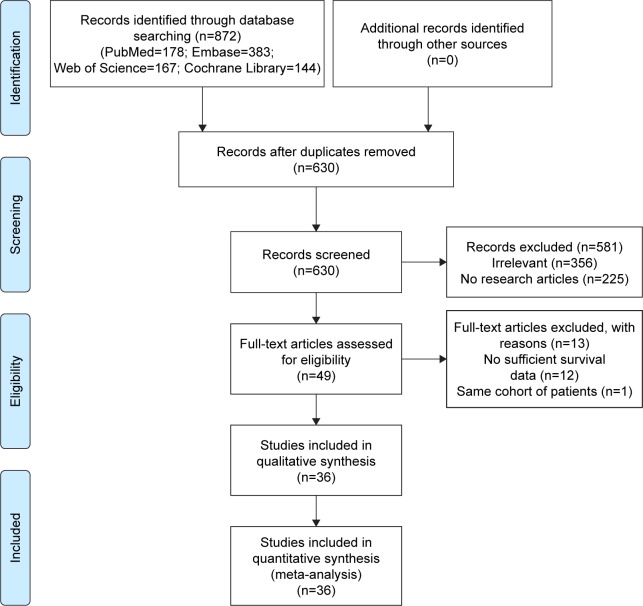
To investigate the association between administration of beta-blocker and cancer prognosis, we performed a meta-analysis. A literature search of PubMed, Embase, Cochrane Library, and Web of Science was conducted to identify all relevant studies published up to September 1, 2017. Thirty-six studies involving 319,006 patients were included. Hazard ratios were pooled using a random-effects model. Subgroup analyses were conducted by stratifying ethnicity, duration of drug use, cancer stage, sample size, beta-blocker type, chronological order of drug use, and different types of cancers.
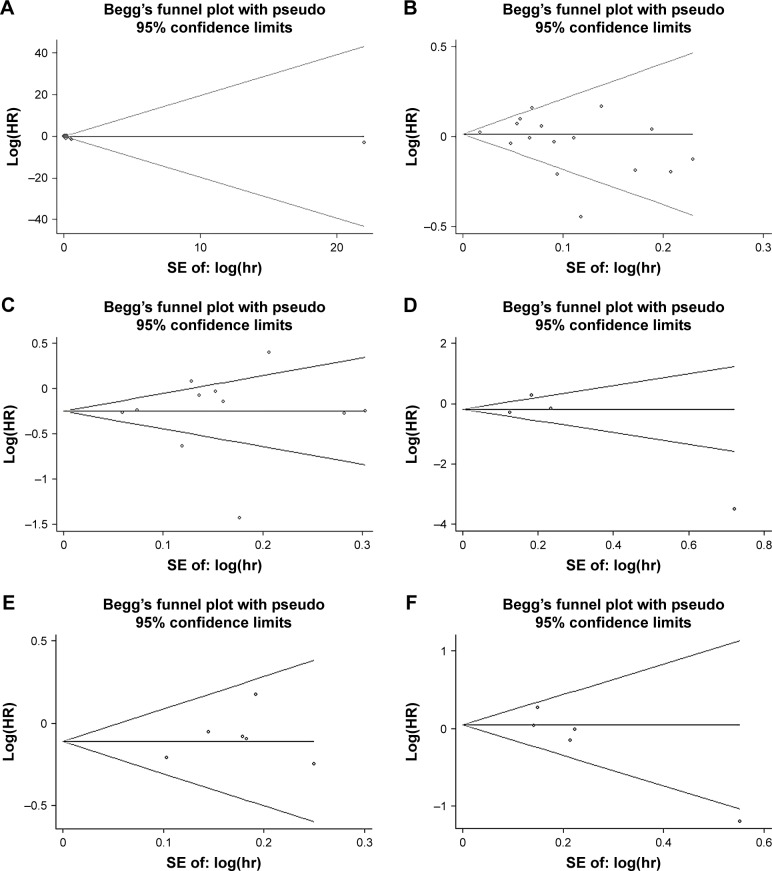
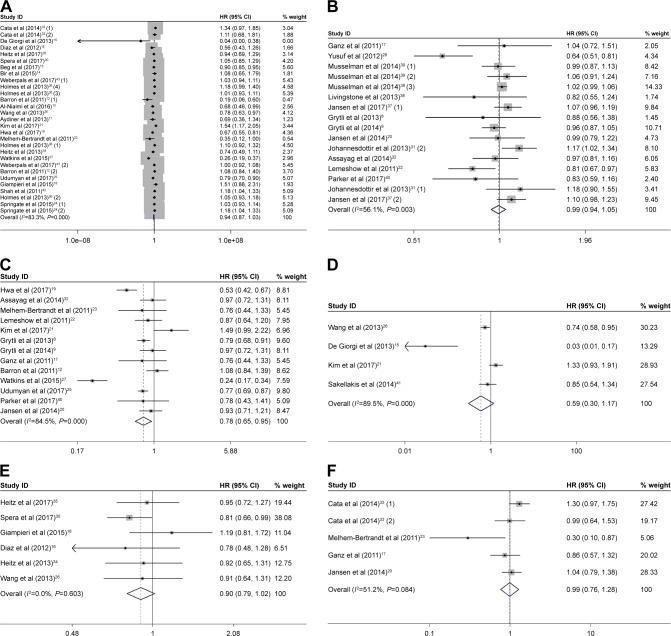
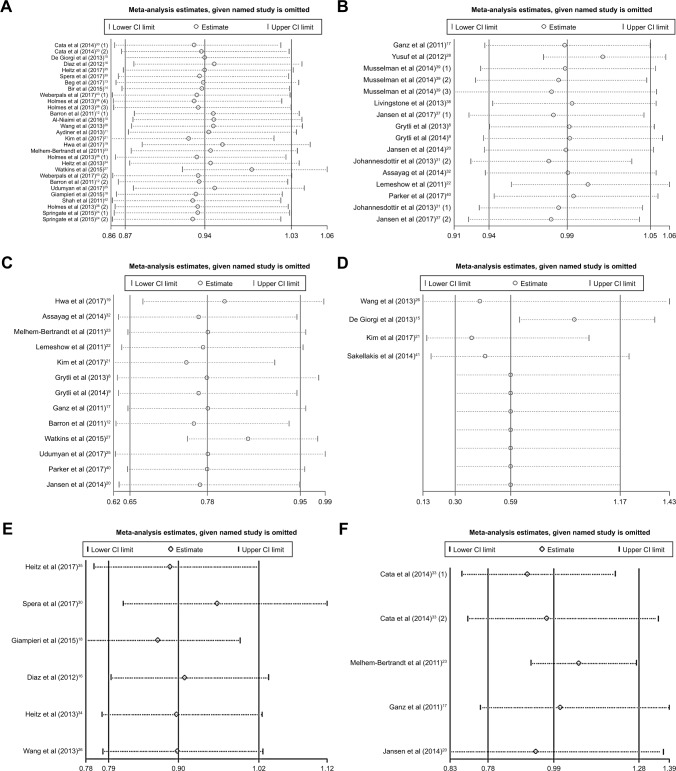
Overall, there was no evidence to suggest an association between beta-blocker use and overall survival (HR=0.94, 95% CI: 0.87-1.03), all-cause mortality (HR=0.99, 95% CI: 0.94-1.05), disease-free survival (HR=0.59, 95% CI: 0.30-1.17), progression-free survival (HR=0.90, 95% CI: 0.79-1.02), and recurrence-free survival (HR=0.99, 95% CI: 0.76-1.28), as well. In contrast, beta-blocker use was significantly associated with better cancer-specific survival (CSS) (HR=0.78, 95% CI: 0.65-0.95). Subgroup analysis generally supported main results. But there is still heterogeneity among cancer types that beta-blocker use is associated with improved survival among patients with ovarian cancer, pancreatic cancer, and melanoma.
The present meta-analysis generally demonstrates no association between beta-blocker use and cancer prognosis except for CSS in all population groups examined. High-quality studies should be conducted to confirm this conclusion in future.
β受体阻滞剂是抗高血压药物,在癌症预后方面显示出潜力。然而,由于已发表研究结果不一致,这种益处尚未得到明确界定。
为了研究β受体阻滞剂的使用与癌症预后之间的关联,我们进行了一项荟萃分析。对PubMed、Embase、Cochrane图书馆和Web of Science进行文献检索,以识别截至2017年9月1日发表的所有相关研究。纳入了36项涉及319,006名患者的研究。使用随机效应模型汇总风险比。通过对种族、药物使用持续时间、癌症分期、样本量、β受体阻滞剂类型、药物使用时间顺序和不同类型癌症进行分层来进行亚组分析。
总体而言,没有证据表明使用β受体阻滞剂与总生存期(HR = 0.94,95%CI:0.87 - 1.03)、全因死亡率(HR = 0.99,95%CI:0.94 - 1.05)、无病生存期(HR = 0.59,95%CI:0.30 - 1.17)、无进展生存期(HR = 0.90,95%CI:0.79 - 1.02)和无复发生存期(HR = 0.99,95%CI:0.76 - 1.28)之间存在关联。相比之下,使用β受体阻滞剂与更好的癌症特异性生存期(CSS)显著相关(HR = 0.78,95%CI:0.65 - 0.95)。亚组分析总体上支持主要结果。但在癌症类型之间仍存在异质性,即使用β受体阻滞剂与卵巢癌、胰腺癌和黑色素瘤患者生存期改善有关。
本荟萃分析总体表明,在所研究的所有人群组中,除CSS外,使用β受体阻滞剂与癌症预后之间无关联。未来应开展高质量研究以证实这一结论。