Department of Endocrinology, Southwest Hospital of Third Military Medical University (Army Medical University), Chongqing 400038, China.
J Diabetes Res. 2018 Aug 5;2018:9817308. doi: 10.1155/2018/9817308. eCollection 2018.
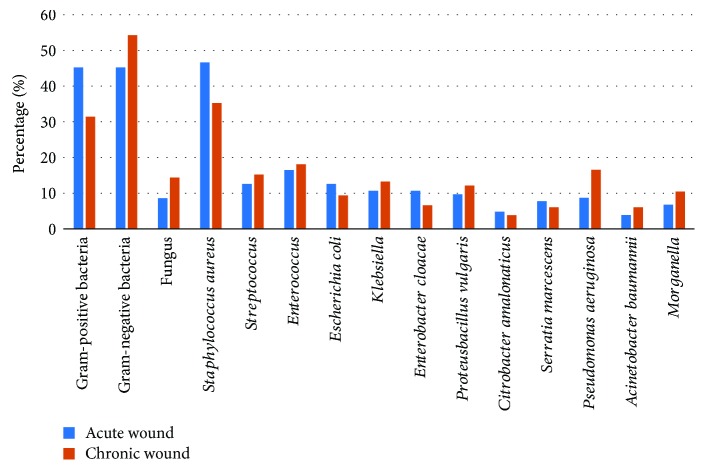
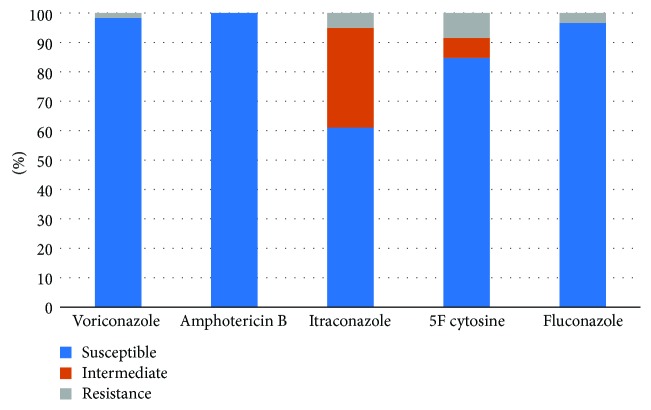
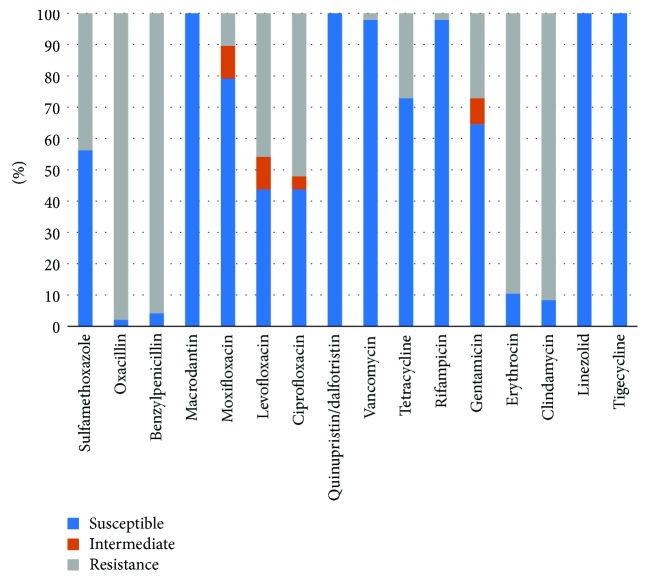
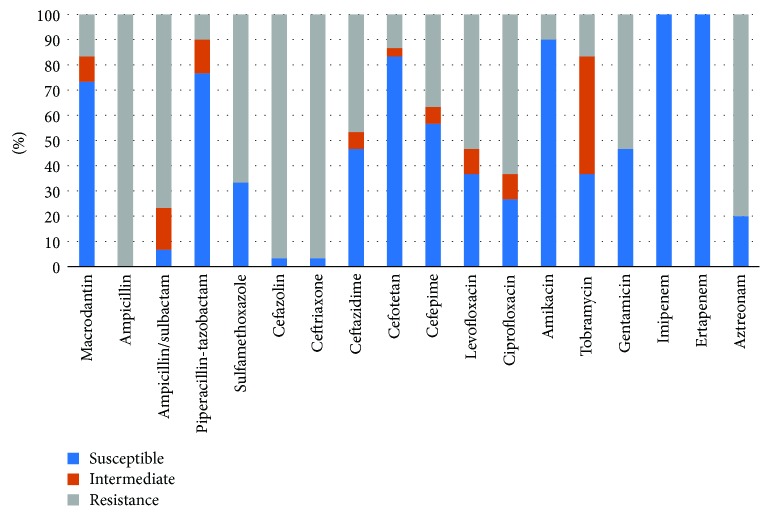
To investigate the microbial distribution and drug susceptibility among diabetic foot ulcers (DFUs) with different Wagner grades and between acute and chronic DFUs. We enrolled 428 DFU patients who were hospitalized and treated in the Southwest Hospital. We collected deep ulcer secretion for microbial culture and drug susceptibility tests and analyzed the results. We reexamined 67 patients with poor anti-infection efficacy and analyzed microbial species. : The 354 positive samples included 201 cases (56.8%) of single-pathogen infections and 153 cases (43.2%) of multiple-pathogen infections before antibiotic therapy. A total of 555 strains were cultivated, including 205 (36.9%) strains of gram-positive organisms (GPOs), 283 (51.0%) gram-negative bacilli (GNB), and 67 (12.1%) fungal strains. In terms of distribution, patients with different Wagner grades had different bacterial composition ratios ( < 0.01). Patients with Wagner grades 3-5 mainly had GNB. The specimens from chronic ulcer wounds were primarily GNB (54.2%), whereas fungi accounted for 14.4% of the infections; the distribution was significantly different from that of acute ulcers ( < 0.01). The susceptibility tests showed that the genus was more susceptible to vancomycin, linezolid, and tigecycline. Tobramycin was the most effective drug (97%) for the treatment of , followed by ertapenem (96.4%), imipenem (93.5%), and cefotetan (90%). Most of the remaining GNB were susceptible to antibiotics such as carbapenems, aminoglycosides, fluoroquinolones, ceftazidime, cefepime, and piperacillin-tazobactam (>63.2%). After antibiotic therapy, the positive rate of microbial culture was 52.2%, and the proportion of GNB and fungi increased to 68.9% and 20%.
The distribution and types of bacteria in diabetic foot infection (DFI) patients varied with the different Wagner classification grades, courses of the ulcers, and antibiotic therapy. Multidrug resistance were increased, and the clinical treatment of DFIs should select the most suitable antibiotics based on the pathogen culture and drug susceptibility test results.
探讨不同 Wagner 分级及急慢性糖尿病足溃疡(DFU)中微生物分布及药敏情况。我们纳入了 428 例在西南医院住院治疗的 DFU 患者,采集深部溃疡分泌物进行微生物培养和药敏试验,并对结果进行分析。对 67 例抗感染疗效不佳的患者进行了再检查,并分析了微生物种类。结果:354 例阳性标本中,抗生素治疗前,单一致病菌感染 201 例(56.8%),多致病菌感染 153 例(43.2%)。共培养出 555 株,其中革兰阳性菌(GPO)205 株(36.9%),革兰阴性杆菌(GNB)283 株(51.0%),真菌 67 株(12.1%)。分布上,不同 Wagner 分级患者细菌构成比不同(<0.01)。Wagner 分级 3-5 级患者主要为 GNB,慢性溃疡创面标本以 GNB 为主(54.2%),真菌占 14.4%,与急性溃疡分布差异有统计学意义(<0.01)。药敏试验显示属对万古霉素、利奈唑胺、替加环素较敏感,治疗 效果最好的药物为妥布霉素(97%),其次为厄他培南(96.4%)、亚胺培南(93.5%)、头孢替坦(90%)。其余 GNB 对碳青霉烯类、氨基糖苷类、氟喹诺酮类、头孢他啶、头孢吡肟、哌拉西林他唑巴坦等抗生素的敏感性较高(>63.2%)。抗生素治疗后,微生物培养阳性率为 52.2%,GNB 和真菌比例增加至 68.9%和 20%。结论:糖尿病足感染(DFI)患者的细菌分布和类型随 Wagner 分级、溃疡病程及抗生素治疗而变化,多重耐药性增加,DFIs 的临床治疗应根据病原菌培养和药敏试验结果选择最合适的抗生素。