Mao Xiangbing, Ren Man, Chen Daiwen, Yu Bing, Che Lianqiang, He Jun, Luo Junqiu, Luo Yuheng, Wang Jianping, Sun Hui
Animal Nutrition Institute, Sichuan Agricultural University, Ya'an 625014, China.
Animal Science Collage, Anhui Science and Technology University, Chuzhou 233100, China.
Anim Nutr. 2018 Sep;4(3):316-321. doi: 10.1016/j.aninu.2018.03.006. Epub 2018 Apr 5.
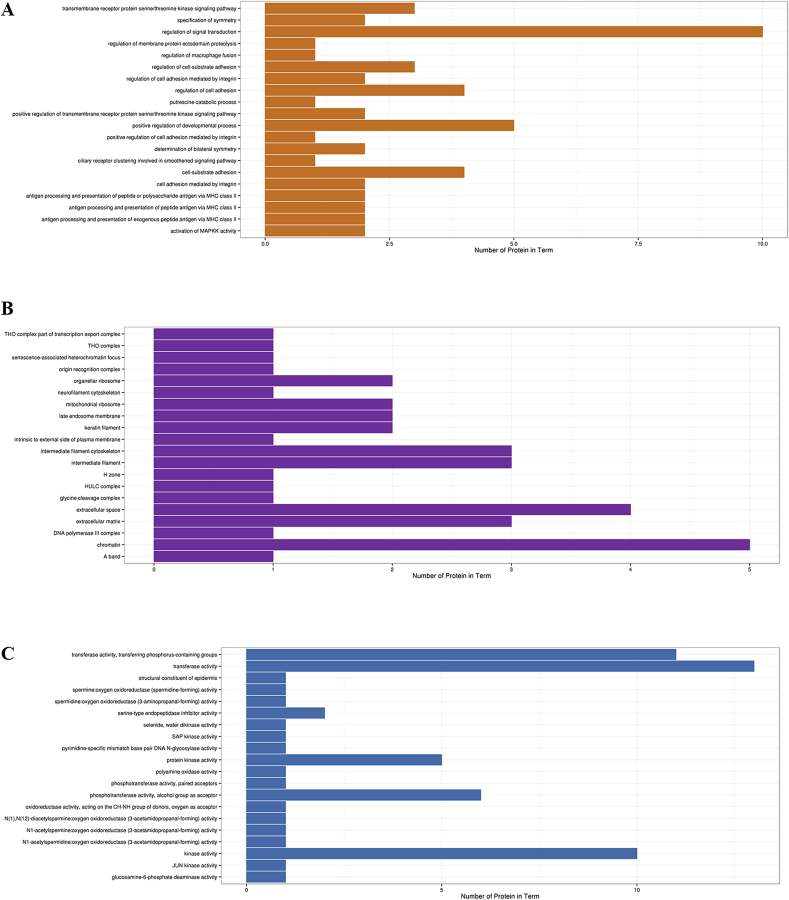
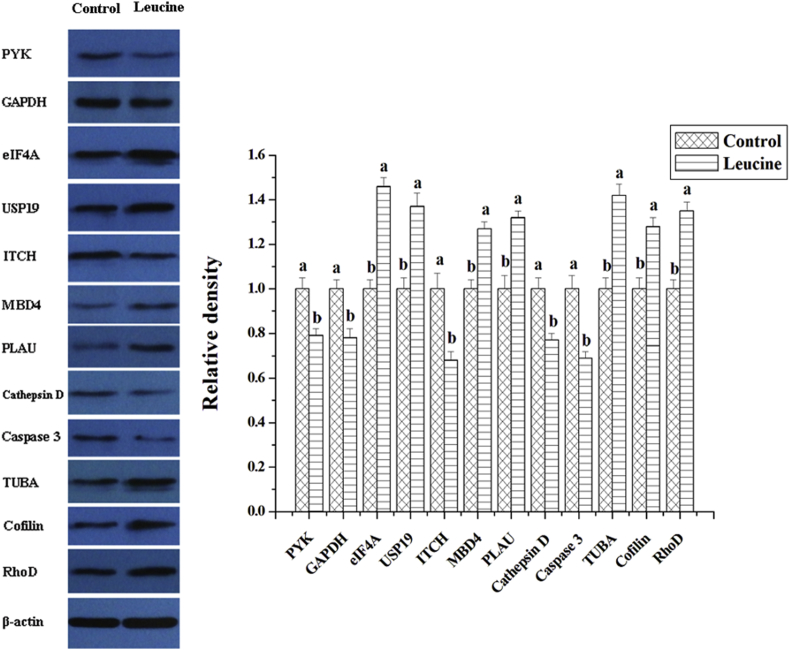
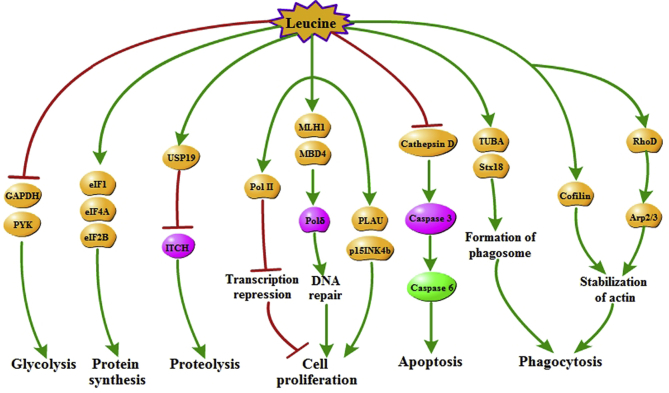
Leucine can affect intestinal protein expressions, and improve mucosal immune function. However, little study has been conducted to determine the change of protein component by leucine treatment in intestine epithelial cells. The present study was to cover the key proteins and cell pathways that could be regulated by leucine treatment in porcine intestinal epithelial cell line (IPEC-J2) cells with the approach of proteome analysis. A total number of 3,211 proteins were identified in our approach by searching the database of Uniprot . Among identified proteins, there were 101 proteins expressed differently between control group and leucine group. Compared with the control group, there were 50 up-regulated proteins and 51 down-regulated proteins in leucine group. In these proteins, leucine treatment decreased the expression of some proteins including pyruvate kinase, glyceraldehyde-3-phosphate dehydrogenase, E3 ubiquitin ligase, cathepsin D, caspase 3 and caspase 6, and increased the levels of some proteins, such as some eukaryotic translation initiation factors, ubiquitin carboxyl-terminal hydrolase, DNA-related RNA polymerase II, urokinase plasminogen activator, cyclin-dependent kinase inhibitor 2b, MutL homolog 1, 5-methylcytosine binding domain 4, polymerase δ, α-tubulin, syntaxin 18, Ras homolog D, actin related protein 2/3 complex and cofilin. Via the analysis of Gene Ontology and pathways, these proteins in IPEC-J2 cells were related with some physiological functions, such as protein metabolism, glycolysis, cell proliferation, apoptosis and phagocytosis. Thus, these results suggest that leucine affects gut barrier function possibly via regulating cell proliferation and apoptosis, metabolism and phagocytosis.
亮氨酸可影响肠道蛋白质表达,并改善黏膜免疫功能。然而,关于亮氨酸处理对肠上皮细胞蛋白质成分变化的研究较少。本研究旨在通过蛋白质组分析方法,揭示猪肠上皮细胞系(IPEC-J2)中受亮氨酸处理调控的关键蛋白质和细胞信号通路。通过搜索Uniprot数据库,我们的方法共鉴定出3211种蛋白质。在鉴定出的蛋白质中,对照组和亮氨酸组之间有101种蛋白质表达存在差异。与对照组相比,亮氨酸组有50种蛋白质上调,51种蛋白质下调。在这些蛋白质中,亮氨酸处理降低了一些蛋白质的表达,包括丙酮酸激酶、甘油醛-3-磷酸脱氢酶、E3泛素连接酶、组织蛋白酶D、半胱天冬酶3和半胱天冬酶6,同时增加了一些蛋白质的水平,如一些真核翻译起始因子、泛素羧基末端水解酶、DNA相关的RNA聚合酶II、尿激酶型纤溶酶原激活剂、细胞周期蛋白依赖性激酶抑制剂2b、MutL同源物1、5-甲基胞嘧啶结合结构域4、聚合酶δ、α-微管蛋白、 syntaxin 18、Ras同源物D、肌动蛋白相关蛋白2/3复合物和丝切蛋白。通过基因本体论和信号通路分析,IPEC-J2细胞中的这些蛋白质与一些生理功能相关,如蛋白质代谢、糖酵解、细胞增殖、凋亡和吞噬作用。因此,这些结果表明亮氨酸可能通过调节细胞增殖和凋亡、代谢及吞噬作用来影响肠道屏障功能。