Evolution and Cancer Laboratory, Barts Cancer Institute, Barts and the London School of Medicine and Dentistry, Queen Mary University of London, London, UK.
Molecular and Population Genetics Laboratory, Wellcome Trust Centre for Human Genetics, University of Oxford, Oxford, UK.
Nat Ecol Evol. 2018 Oct;2(10):1661-1672. doi: 10.1038/s41559-018-0642-z. Epub 2018 Aug 31.
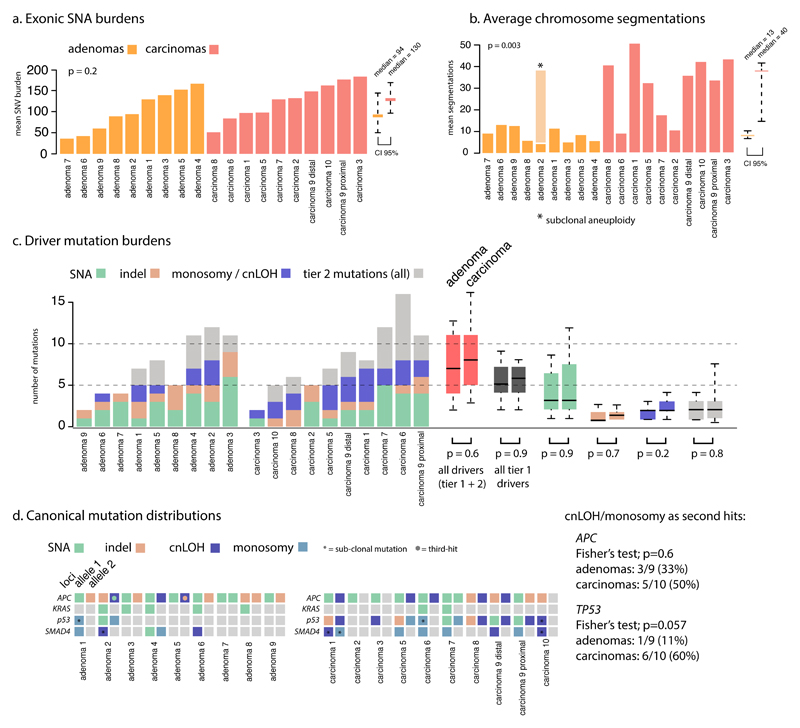
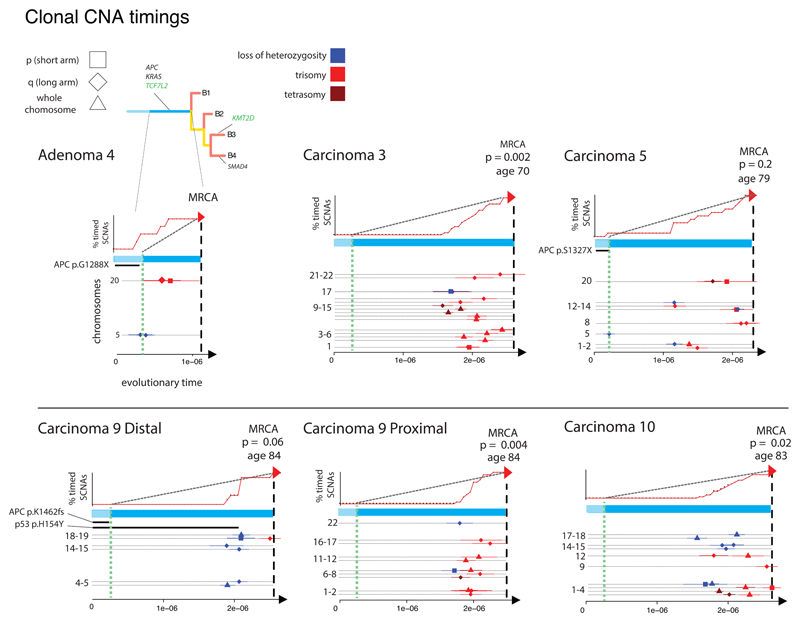
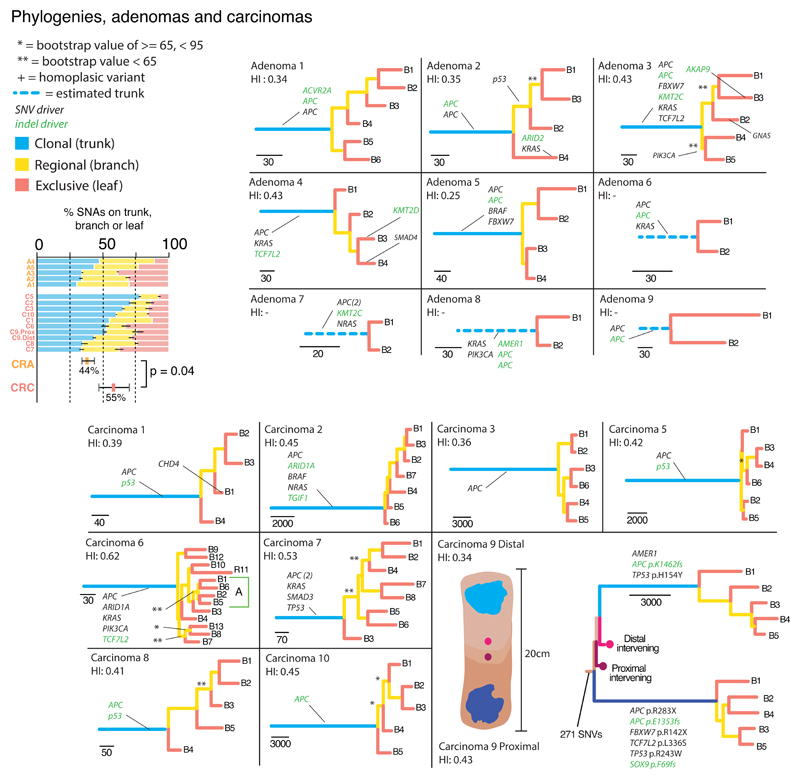
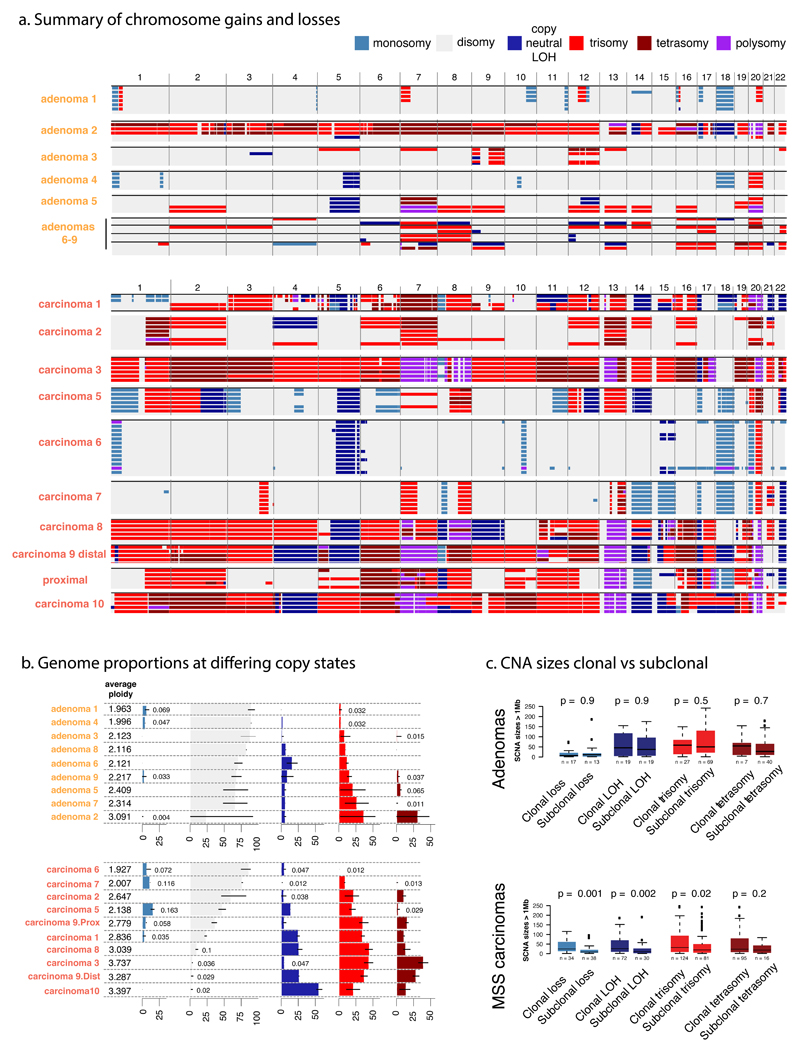
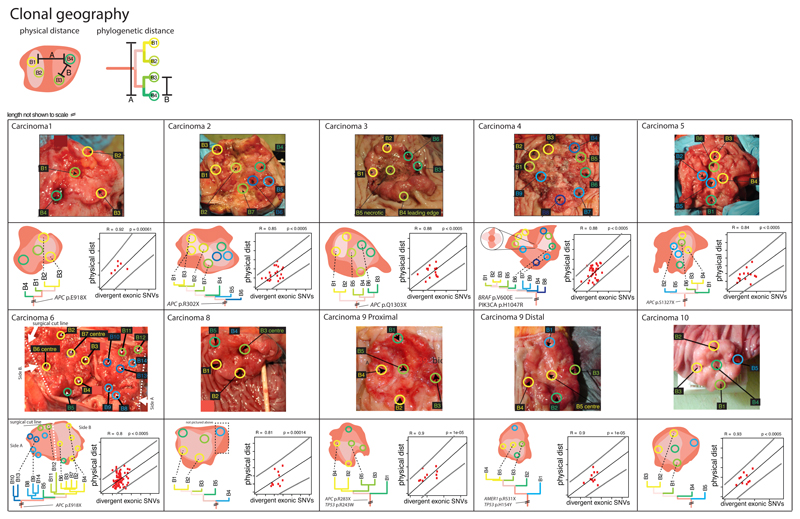
The evolutionary events that cause colorectal adenomas (benign) to progress to carcinomas (malignant) remain largely undetermined. Using multi-region genome and exome sequencing of 24 benign and malignant colorectal tumours, we investigate the evolutionary fitness landscape occupied by these neoplasms. Unlike carcinomas, advanced adenomas frequently harbour sub-clonal driver mutations-considered to be functionally important in the carcinogenic process-that have not swept to fixation, and have relatively high genetic heterogeneity. Carcinomas are distinguished from adenomas by widespread aneusomies that are usually clonal and often accrue in a 'punctuated' fashion. We conclude that adenomas evolve across an undulating fitness landscape, whereas carcinomas occupy a sharper fitness peak, probably owing to stabilizing selection.
导致结直肠腺瘤(良性)进展为癌(恶性)的进化事件在很大程度上仍未确定。我们通过对 24 个良性和恶性结直肠肿瘤的多区域基因组和外显子组测序,研究了这些肿瘤所占据的进化适应度景观。与癌不同的是,高级腺瘤经常存在亚克隆驱动突变——被认为在致癌过程中具有重要功能,但尚未固定下来,且具有相对较高的遗传异质性。癌与腺瘤的区别在于广泛的非整倍体,这些非整倍体通常是克隆的,并且经常以“间断”的方式积累。我们的结论是,腺瘤在起伏的适应度景观中进化,而癌则占据更陡峭的适应度峰,这可能是由于稳定选择。