Barthes Julien, Dollinger Camille, Muller Celine B, Liivas Urmas, Dupret-Bories Agnes, Knopf-Marques Helena, Vrana Nihal E
PROTiP Medical, Strasbourg, France.
INSERM UMR 1121, Strasbourg, France.
Front Bioeng Biotechnol. 2018 Aug 20;6:108. doi: 10.3389/fbioe.2018.00108. eCollection 2018.
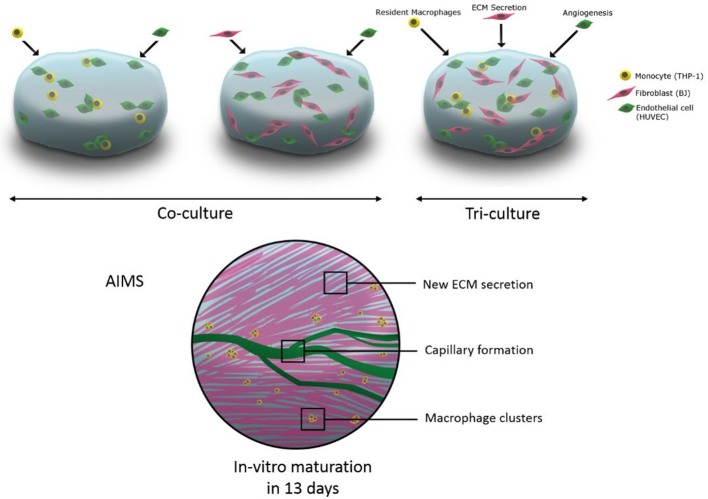
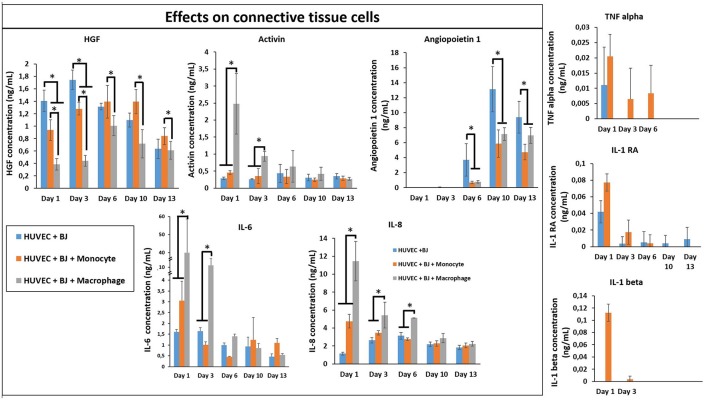
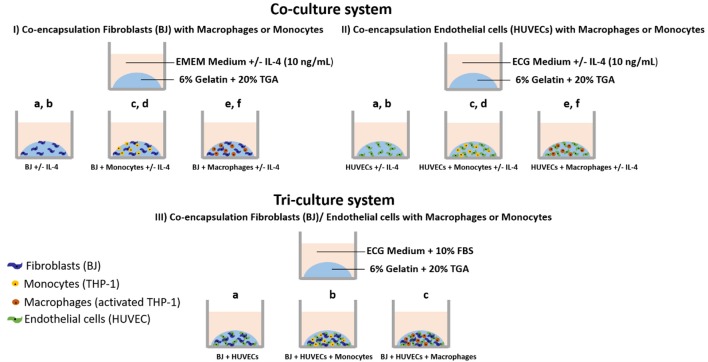
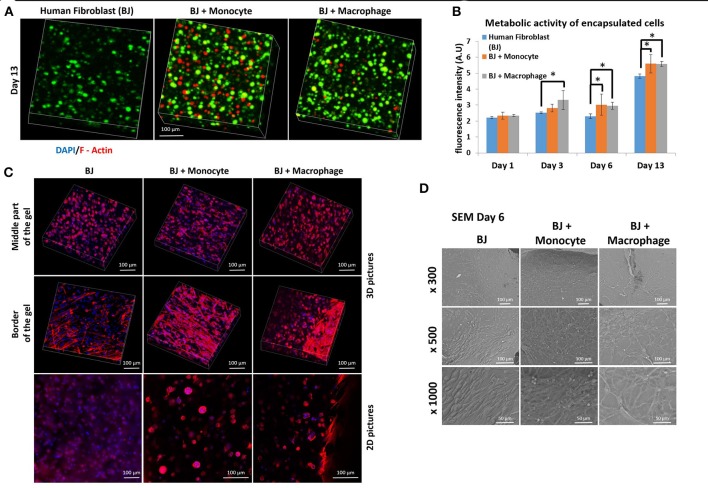
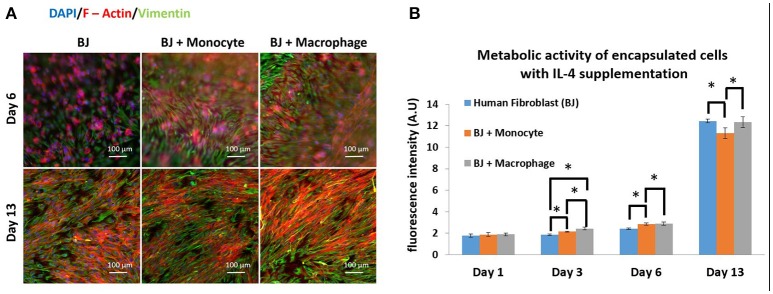
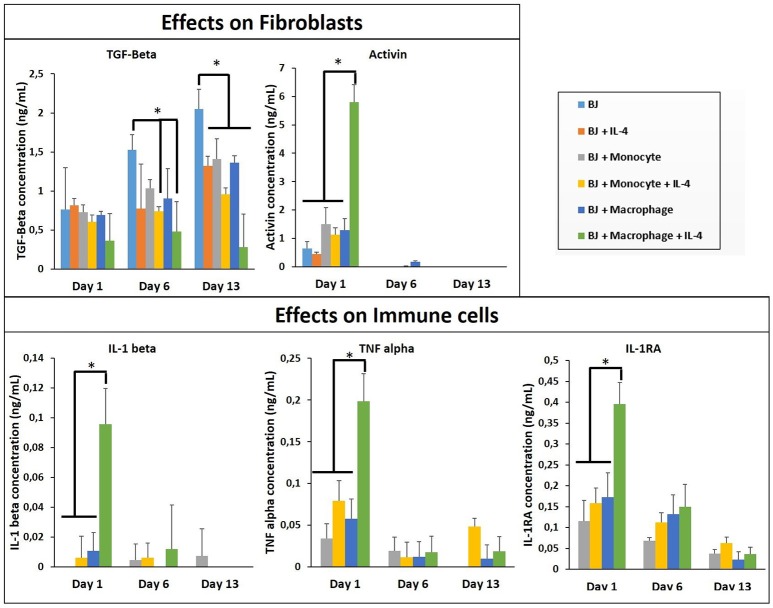
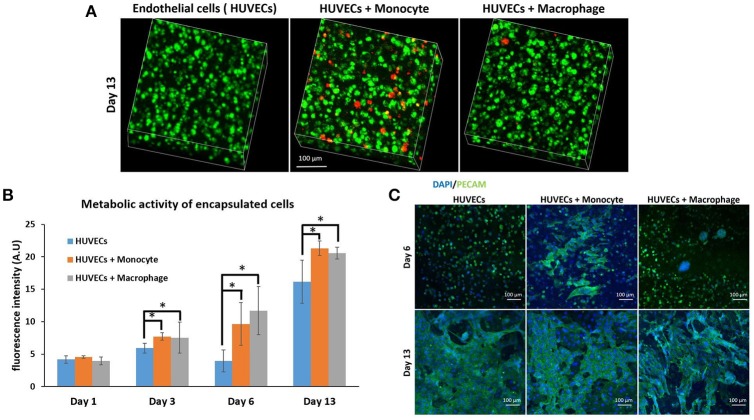
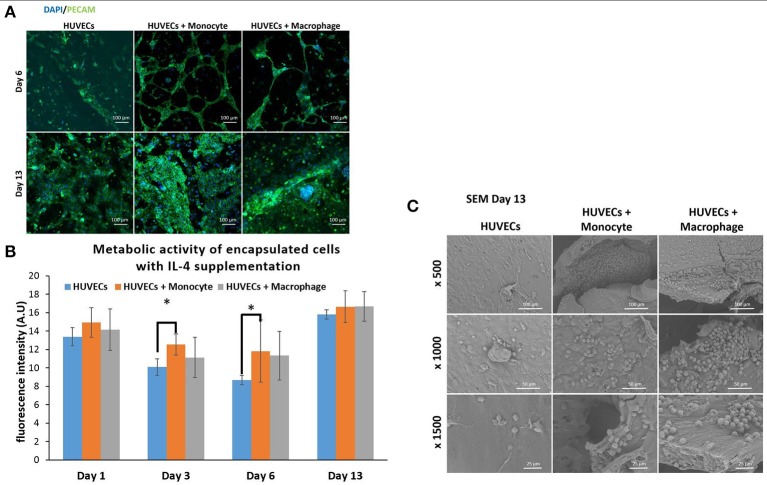
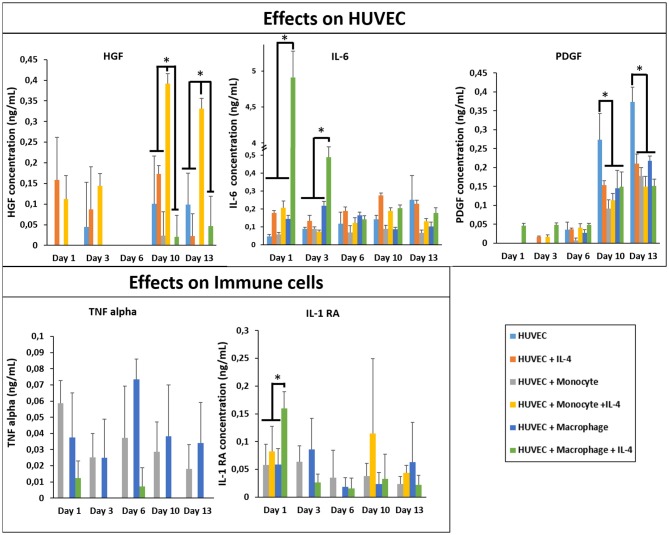
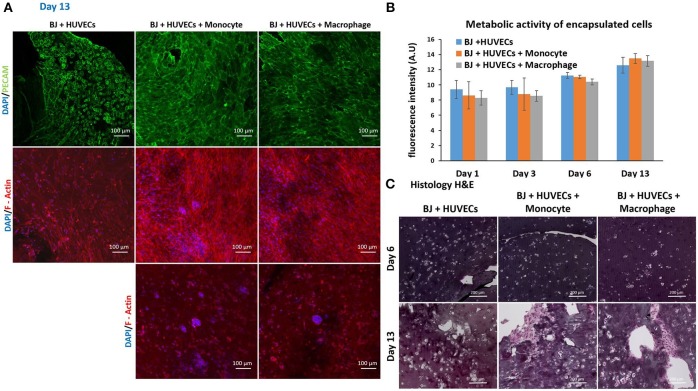
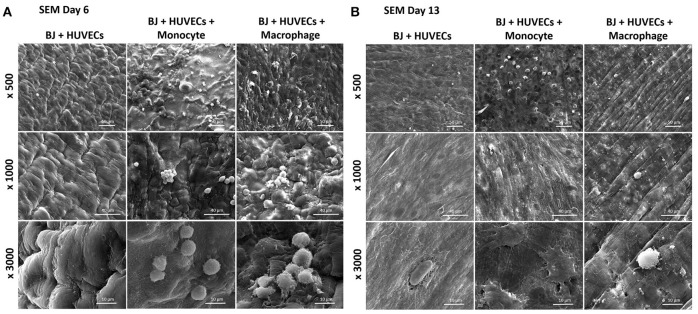
The function of soft tissues is intricately linked to their connections with the other systems of the body such as circulation, nervous system, and immune system. The presence of resident macrophages in tissues provides a means to control tissue homeostasis and also a way to react to the physical/biological insults and tissue damage. Thus, incorporation of resident macrophage like phenotype-controlled macrophages in engineered tissues can improve their fidelity as model tissues and also improve their rate of integration and facilitate the resolution of inflammation for regenerative medicine applications. Herein, we demonstrate two potential ways to immunoassist the remodeling process of engineered soft tissues in three-dimensional (3-D) gelatin based hydrogels containing fibroblasts and/or endothelial cells: (i) with supplementation of interleukin-4 (IL-4) in the presence of macrophages and (ii) in tri-culture via naive monocytes or differentiated macrophages. The presence of IL-4 had a proliferative effect on fibroblasts, with a significant boosting effect on proliferation and cytokine secretion in the presence of differentiated macrophages with an upregulation of activin, interleukin-1 receptor antagonist (IL-1RA), tumor necrosis factor alpha (TNF-α), and interleukin-1 beta (IL-1β), creating a more stimulating microenvironment. The addition of IL-4 in endothelial cell/macrophage co-culture configuration improved the organization of the sprout-like structures, with a boost in proliferation at day 1 and with an upregulation of IL-6 and IL-1RA at the earliest stage in the presence of differentiated macrophages creating a favorable microenvironment for angiogenesis. In tri-culture conditions, the presence of monocytes or macrophages resulted in a denser tissue-like structure with highly remodeled hydrogels. The presence of differentiated macrophages had a boosting effect on the angiogenic secretory microenvironment, such as IL-6 and IL-8, without any additional cytokine supplementation. The presence of fibroblasts in combination with endothelial cells also had a significant effect on the secretion of angiopoietin. Our results demonstrate that incorporation of macrophages in a resident macrophage function and their phenotype control have significant effects on the maturation and cytokine microenvironment of 3-D multiple cell type-laden hydrogels, which can be harnessed for better integration of implantable systems and for more physiologically relevant tissue models with an immune component.
软组织的功能与其与身体其他系统(如循环系统、神经系统和免疫系统)的连接密切相关。组织中驻留巨噬细胞的存在为控制组织内稳态提供了一种手段,也是对物理/生物损伤和组织损伤做出反应的一种方式。因此,将具有驻留巨噬细胞样表型的可控巨噬细胞整合到工程组织中,可以提高其作为模型组织的保真度,还能提高其整合速率,并促进再生医学应用中炎症的消退。在此,我们展示了两种在含有成纤维细胞和/或内皮细胞的三维(3-D)明胶基水凝胶中免疫辅助工程软组织重塑过程的潜在方法:(i)在巨噬细胞存在的情况下补充白细胞介素-4(IL-4);(ii)通过未成熟单核细胞或分化巨噬细胞进行三细胞共培养。IL-4的存在对成纤维细胞有增殖作用,在分化巨噬细胞存在的情况下,对增殖和细胞因子分泌有显著的促进作用,激活素、白细胞介素-1受体拮抗剂(IL-1RA)、肿瘤坏死因子α(TNF-α)和白细胞介素-1β(IL-1β)上调,从而创造了一个更具刺激性的微环境。在内皮细胞/巨噬细胞共培养体系中添加IL-4改善了芽状结构的组织形态,在第1天增殖增强,在分化巨噬细胞存在的最早阶段IL-6和IL-1RA上调,为血管生成创造了有利的微环境。在三细胞共培养条件下,单核细胞或巨噬细胞的存在导致形成更致密的组织样结构以及高度重塑的水凝胶。分化巨噬细胞的存在对血管生成分泌微环境有促进作用,如IL-6和IL-8,无需额外补充细胞因子。成纤维细胞与内皮细胞的共同存在对血管生成素的分泌也有显著影响。我们的结果表明,将巨噬细胞整合到驻留巨噬细胞功能中并对其表型进行控制,对三维多种细胞类型负载水凝胶的成熟和细胞因子微环境有显著影响,这可用于改善可植入系统的整合以及构建具有免疫成分的更具生理相关性的组织模型。