Department of Medical Oncology and Internal Medicine VI, National Center for Tumor Diseases, University Hospital Heidelberg, Heidelberg, Germany.
German Cancer Consortium, Heidelberg, Germany.
Elife. 2018 Sep 4;7:e36967. doi: 10.7554/eLife.36967.
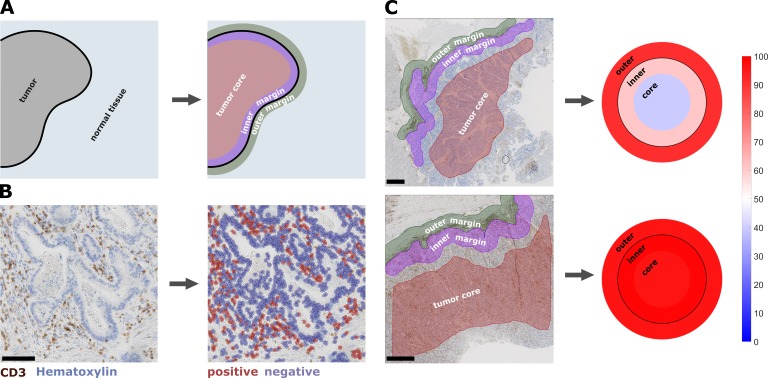
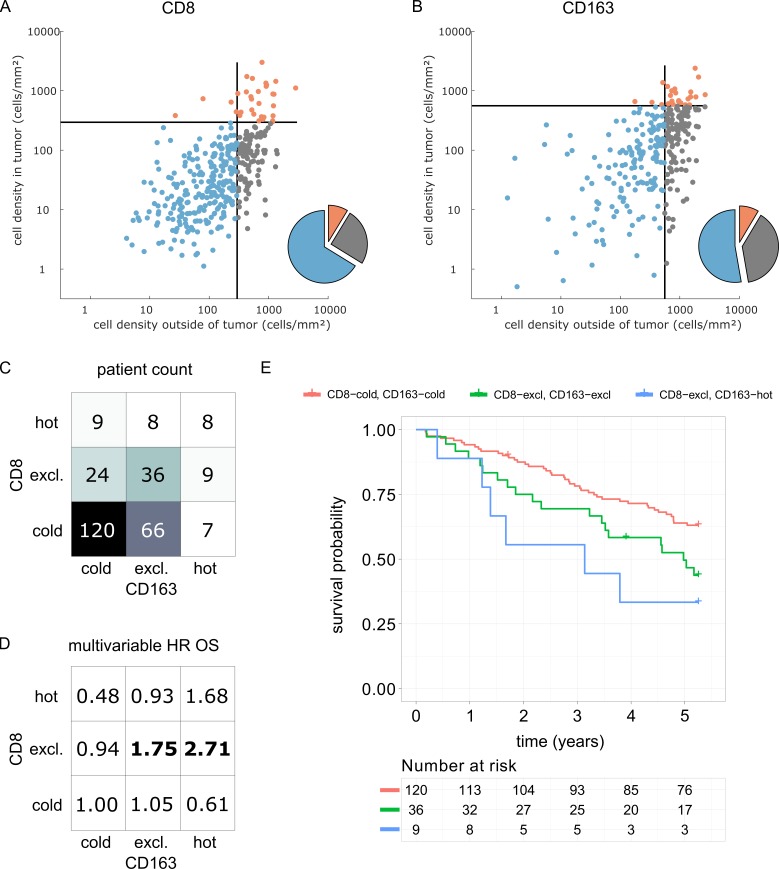
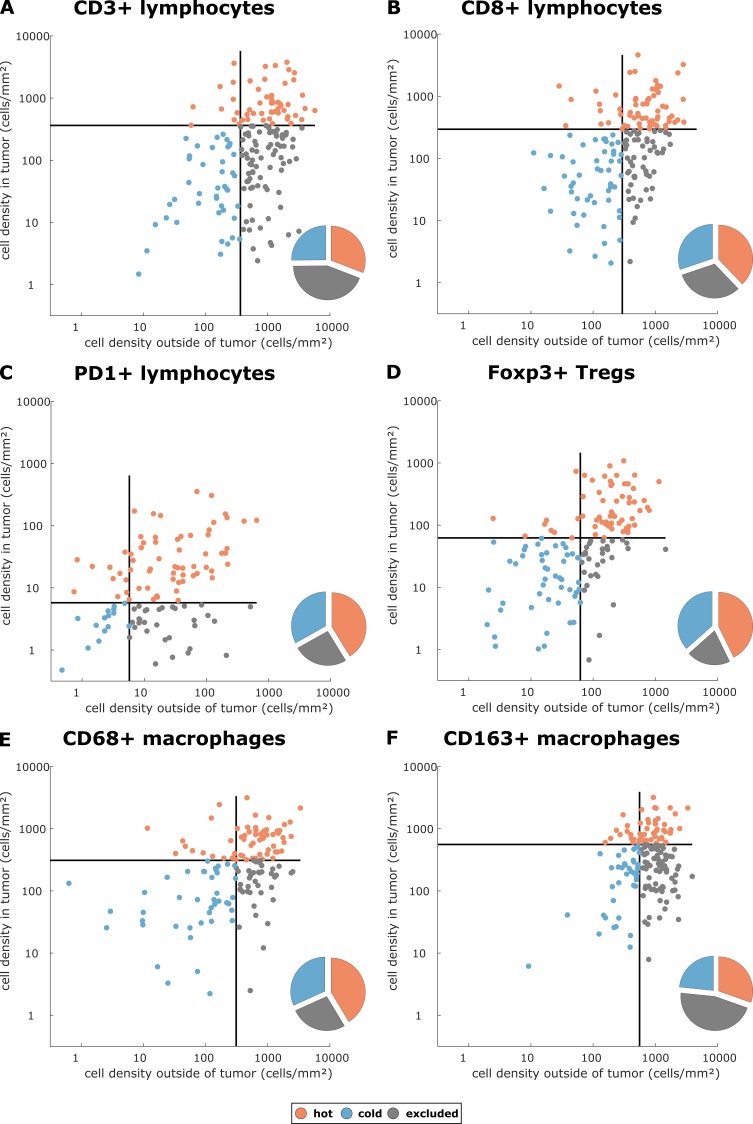
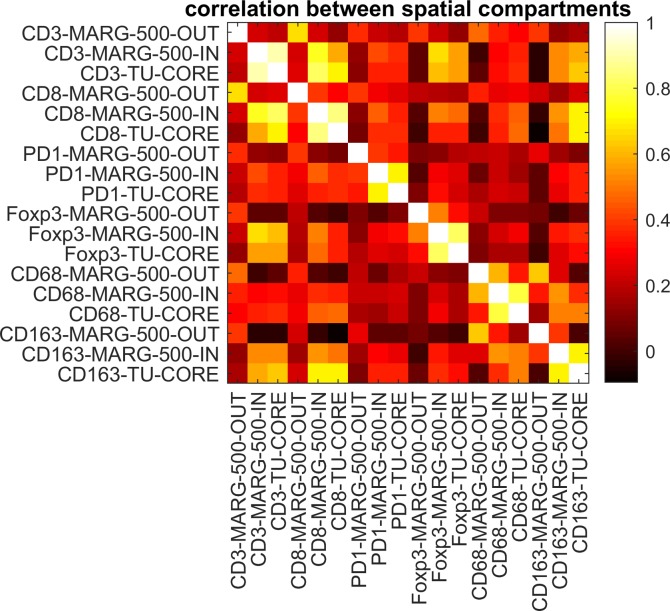
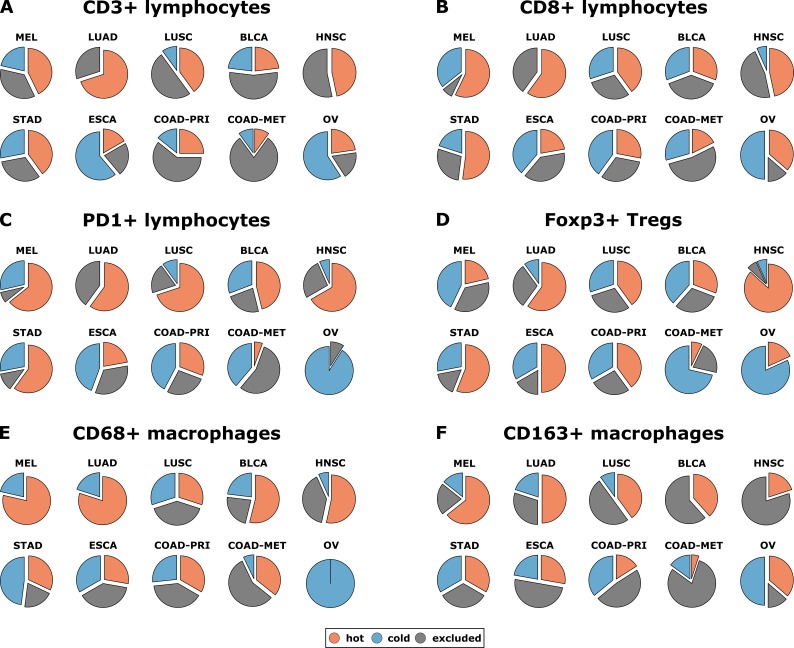
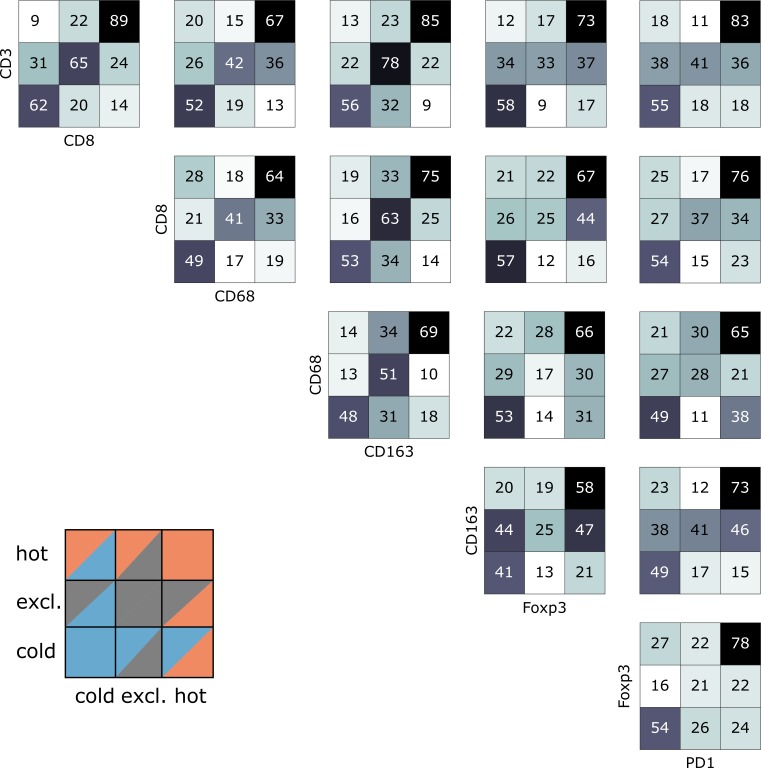
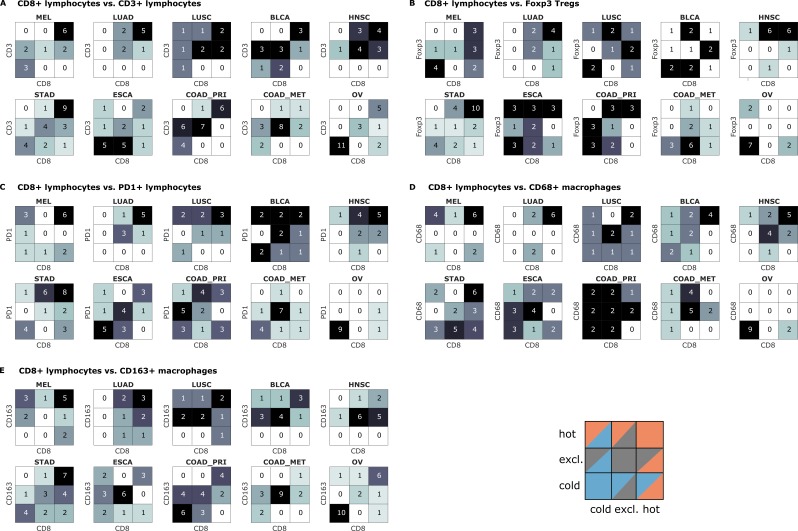
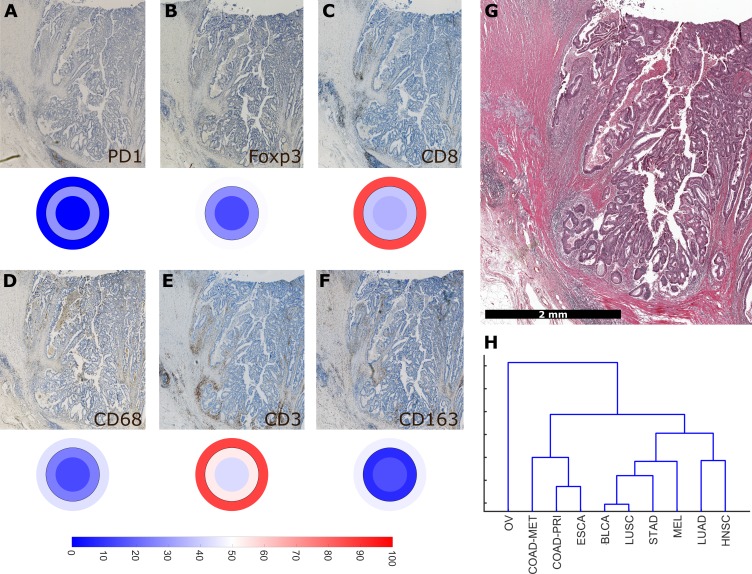
Lymphoid and myeloid cells are abundant in the tumor microenvironment, can be quantified by immunohistochemistry and shape the disease course of human solid tumors. Yet, there is no comprehensive understanding of spatial immune infiltration patterns ('topography') across cancer entities and across various immune cell types. In this study, we systematically measure the topography of multiple immune cell types in 965 histological tissue slides from N = 177 patients in a pan-cancer cohort. We provide a definition of inflamed ('hot'), non-inflamed ('cold') and immune excluded patterns and investigate how these patterns differ between immune cell types and between cancer types. In an independent cohort of N = 287 colorectal cancer patients, we show that hot, cold and excluded topographies for effector lymphocytes (CD8) and tumor-associated macrophages (CD163) alone are not prognostic, but that a bivariate classification system can stratify patients. Our study adds evidence to consider immune topographies as biomarkers for patients with solid tumors.
淋巴样细胞和髓样细胞在肿瘤微环境中丰富,可通过免疫组织化学进行定量,并影响人类实体瘤的病程。然而,人们对癌症实体和各种免疫细胞类型的空间免疫浸润模式(“地形”)没有全面的了解。在这项研究中,我们系统地测量了来自泛癌队列的 177 名患者的 965 张组织学切片中多种免疫细胞类型的地形。我们定义了炎症(“热”)、非炎症(“冷”)和免疫排斥模式,并研究了这些模式在免疫细胞类型和癌症类型之间的差异。在一个独立的 287 名结直肠癌患者队列中,我们表明效应淋巴细胞(CD8)和肿瘤相关巨噬细胞(CD163)的热、冷和排斥地形本身不能预测预后,但双变量分类系统可以对患者进行分层。我们的研究为将免疫地形作为实体瘤患者的生物标志物提供了证据。