Chaluvadi Srinivasa, Bennetzen Jeffrey L
Department of Genetics, University of Georgia, Athens, GA, United States.
Front Plant Sci. 2018 Aug 21;9:1183. doi: 10.3389/fpls.2018.01183. eCollection 2018.
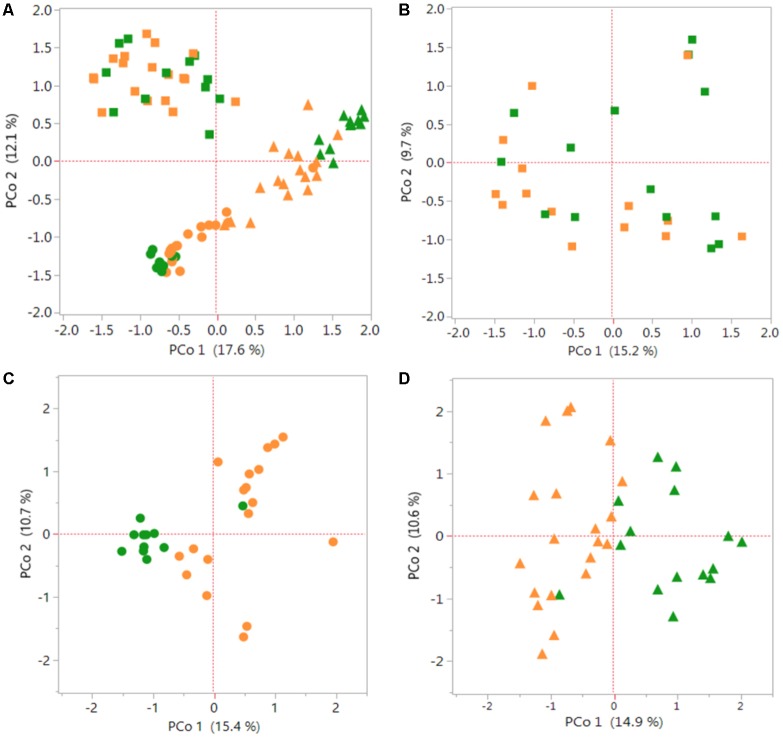
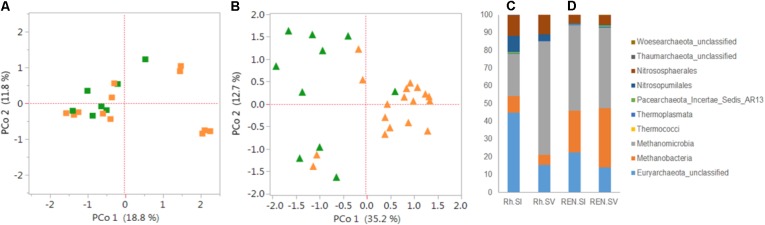
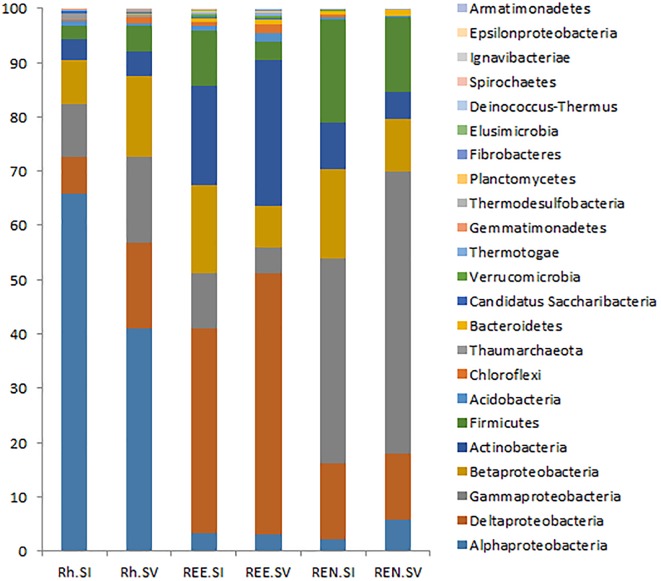
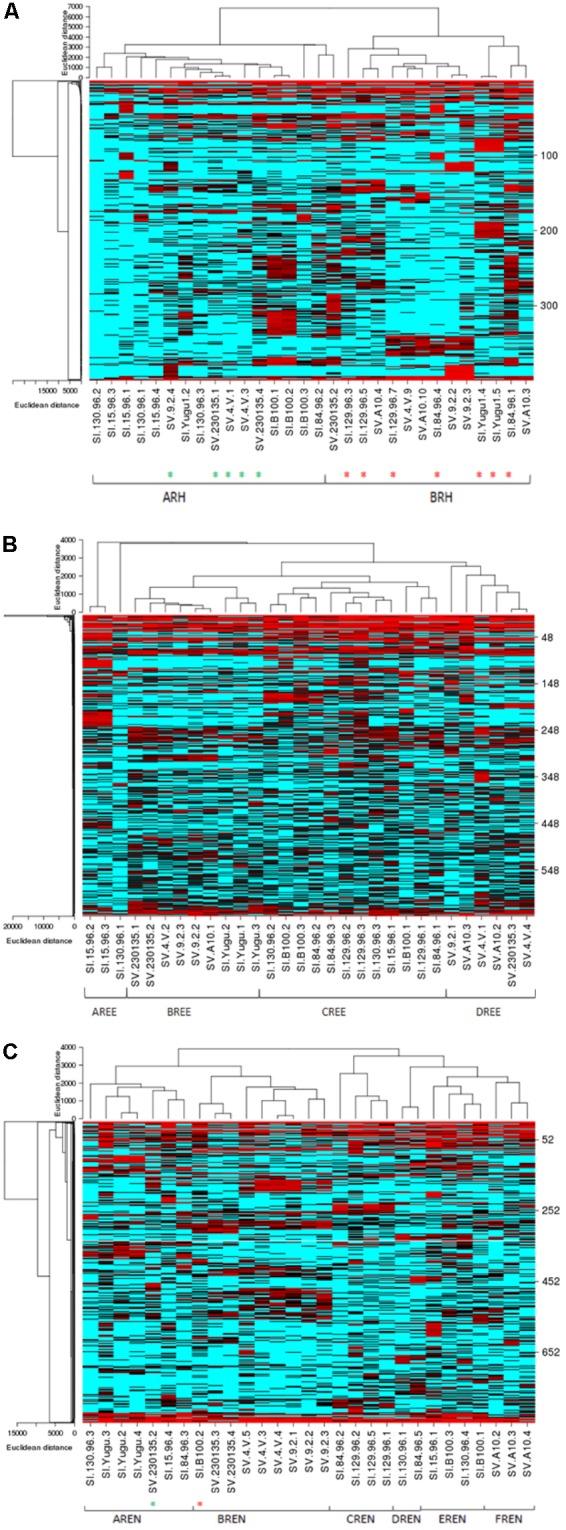
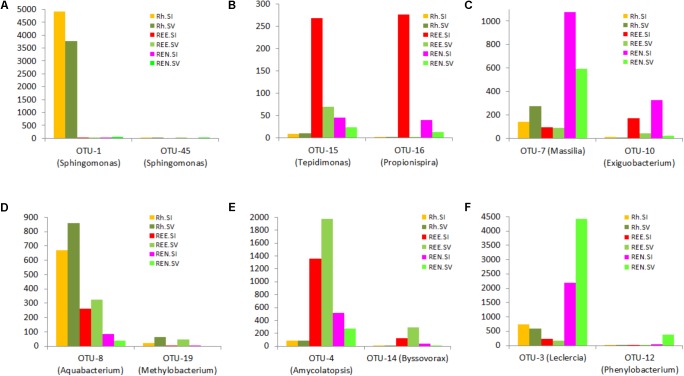
The rhizosphere microbiome is known to play a crucial role in promoting plant growth, partly by countering soil-borne phytoparasites and by improving nutrient uptake. The abundance and composition of the rhizosphere and root-associated microbiota are influenced by several factors, including plant species and genotype. We hypothesize that crop domestication might influence the composition and diversity of plant-associated microbiomes. We tested the contribution of domestication to the bacterial and archaeal root and soil composition associated with six genotypes of domesticated and four genotypes of its wild ancestor, The bacterial microbiome in the rhizoplane and root endophyte compartments, and the archaea in the endophyte compartment, showed major composition differences. For instance, members of the Betaproteobacteria and Firmicutes were overrepresented in root samples compared to Metagenomic analysis of samples that contained both root surface-bound (rhizoplane) and inside-root (endophytic) bacteria defined two unique microbial communities only associated with roots and one only associated with roots. Root endophytic bacteria were found in six discernible communities, of which four were primarily on and two primarily on . Among archaea, Methanobacteria, and Methanomicrobia exhibited species-associated differences in the rhizosphere and root compartments, but most detected archaea were not classified more specifically than at the level of phylum. These results indicate a host genetic contribution to the microbial composition in , and suggest that domestication has selected for specific associations in the root and in the rhizosphere.
已知根际微生物群在促进植物生长方面发挥着关键作用,部分原因是它能对抗土壤传播的植物寄生虫并改善养分吸收。根际和与根相关的微生物群的丰度和组成受多种因素影响,包括植物物种和基因型。我们假设作物驯化可能会影响与植物相关的微生物群的组成和多样性。我们测试了驯化对六种驯化基因型及其四种野生祖先基因型相关的细菌和古菌根系及土壤组成的贡献。根际平面和根内生菌区室中的细菌微生物群以及内生菌区室中的古菌,显示出主要的组成差异。例如,与[野生祖先]相比,β-变形菌门和厚壁菌门的成员在[驯化作物]根样本中占比过高。对包含根表面附着(根际平面)和根内(内生)细菌的样本进行宏基因组分析,确定了两个仅与[驯化作物]根相关的独特微生物群落和一个仅与[野生祖先]根相关的独特微生物群落。在六个可辨别的群落中发现了根内生细菌,其中四个主要存在于[驯化作物]上,两个主要存在于[野生祖先]上。在古菌中,甲烷杆菌属和甲烷微菌属在根际和根区室中表现出与物种相关的差异,但大多数检测到的古菌在分类上仅比门水平更具体。这些结果表明宿主基因对[驯化作物]中的微生物组成有贡献,并表明驯化选择了根和根际中的特定关联。